• Brands
  • News
  • Dealers
  • About/Contact
Menu

Well Pleased Audio Vida

  • Brands
  • News
  • Dealers
  • About/Contact

Merason Frerot + Pow1 review - Positive Feedback

July 22, 2022

Together in Bits and Pieces. First Bit.

The least expensive way to get great sound out of your system is to "cheat." Don't buy new gear, buy really well recorded music. The sound your system exhibited with pedestrian recordings will now sound much better, because the source is literally better. This is no joke. Sure, those better recordings without other upgrades won't show the full extent of that recording, but your system will now sound better, perhaps much better, and it could be said to be "free."

There is a penalty to this trick, however, which is too much for me to pay. I'd be shackled to a few recordings of music I wouldn't pay to listen to live—they're not musically interesting they're just well recorded sound, a kind of parlor trick for myself and others. Many are the audiophiles who've collected music that they play to show off their system to other people or to confirm for themselves that the money spent on their system was worth it. But why anchor yourself and your system to music you wouldn't listen to if you were not obsessing about your system? Insanity, that's why.

Second Bit

You can also spend a ton of money on your system—duh!—and maybe your system will sound better than it did, or maybe it's just different. Sometimes new gear is an across the board improvement. But often when I've obtained "better performance" maybe certain elements are better, but other elements... not so much. The "not so much" becomes apparent over time, long after the lather of new pleasures has disappeared.

A quick way to spend a ton of money is to buy from a European company—they do make great gear—and if you'd like to burn the contents of your wallet really fast, hunt down some gear made in Switzerland. FM Acoustics is a brand that has a reputation for great sound and... is their lowest cost preamplifier the price of a new entry level car? That's too rich for my wallet. I'm picking on the Swiss, because... I'll be writing about my experience with a Swiss DAC here. And, because I have a fair bit of familiarity with the Teutonic (German) sensibility.

Third Bit

Germans and German Swiss have a reputation for being cool and analytical, even amongst themselves, see Sabrina Winter's comments below, note it's her description, not mine, but hee hee hee!* As for a personal example, I offered my mother-in-law in Germany a treat I really liked. When asked how she liked it she said, "I didn't." For me, the American, the offering was an act of love. I hoped she'd like the food, but really, I wanted to be acknowledged for sharing something precious to me. My mother-in-law, who is actually wonderful in that role, was answering the question asked, did you like it? I was annoyed and thwarted but my mostly "Americanized" wife understood the underlying intention. My Schwiegermutter answered the literal question but missed the underlying emotion. Can the Teutonic audio mindset include the literal (analytic?) notes AND the underlying emotion?

Teutonic "sound?"

Is there a Teutonic sound, e.g. Germany and Switzerland that matches my Schwiegermutter and a literal/analytical mindset? I owned the Swiss Ensemble Figura speakers for several years, and spent three months with that company's Dirondo/Dichrono digital combination ($15,000 ca 2003) DAC and transport. Paired with analytical components and a dry recording, the Ensemble equipment tilted toward the lean and analytical—emotion was not as present. That said, one of the most beautiful and emotionally engaging systems I've ever heard—EVER—occurred around 1990 and featured Ensemble's electronics and Primadonna speakers. I have not since heard anything the equal to its rendering of Linda Ronstadt's What's New LP. This, to me, is an element of the Swiss question—is it all between the ears or does it extend to the heart?

Today, I have on hand the Merason frerot, from the German part of Switzerland. The obvious question is does Merason's frerot speak from the head? The heart? Does it speak from both? First, let's look under the hood.

Assembling Bits

The gear on hand here is Merason's "frerot DAC" and "pow1" power supply. frerot is french for "little brother." I divine the lower case spelling used by Merason is to telegraph that this is the entry point before reaching Merason's top line DAC 1: note the matter of fact description and its lack of flourish in the big brother's nomenclature! Merason was founded by Daniel Frauchiger. Frauchiger's impetus to create Merason came from the idea that he could build a better mouse trap using a Chinese DIY DAC he liked by using the design and manufacturing rigor of Switzerland's orientation to excellence to provide something remarkable.

While more products may arrive in the Merason livery, there are, at this point, just the three products I've mentioned. Their DAC 1, ($6000) and the subject of this review, the Merason frerot DAC ($1475) and the pow1 power supply. ($950) Surprisingly, given their low relative prices, they are all made in Switzerland.

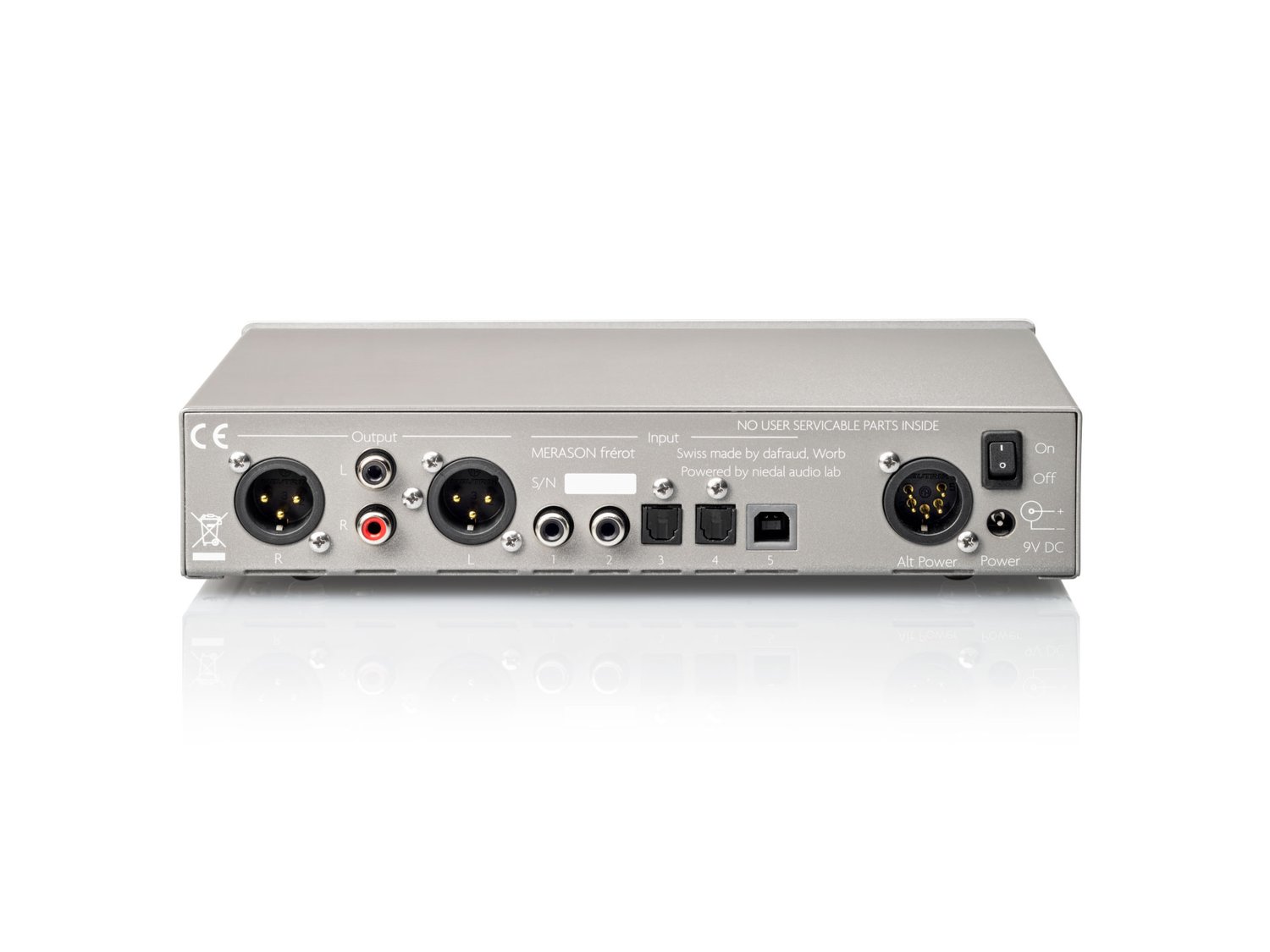
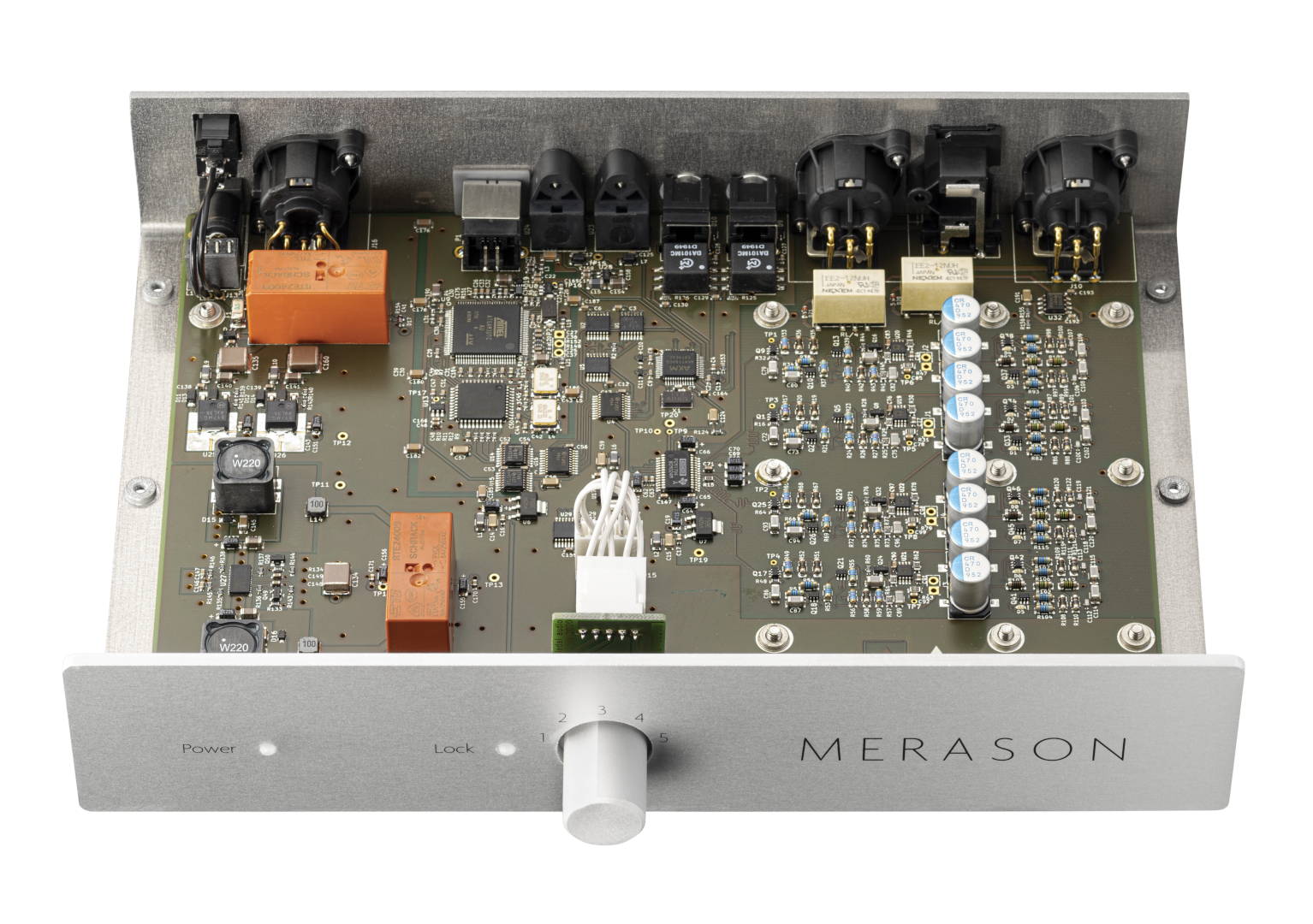
Where the DAC 1 features dual Burr Brown PCM 1794A chips in a mono mode, the frerot runs the same single chip in stereo as a way to lower costs. The frerot features five selectable digital inputs, including two S/PDIF, two optical and one USB (Class 2) all accepting up to 24-bit inputs. I'm surprised that the frerot has two Toslink connections rather than two USB or two S/PDIF connections as Toslink is generally not regarded as audiophile quality. Decoding is for both 44.1kHz and 48kHz and their multiples up to 176.4kHz and 192kHz, respectively. Output via the balanced and single outputs max out at 4 volts and 2 volts, RMS for unbalanced (RCA). Signal to noise ratio is reported as greater than 120dB with responses from 20 Hz to 20kHz, =/- 0.2dB. All this in a device weighing just 2.2 lbs.

The front panel is Swiss beauty / simplicity itself. There is a light to the left indicating power is on, a second light indicating the signal has been locked and a rotary knob showing which of the five inputs have been selected. The frerot is tiny, approximately 8.86" x 0.197" x 0.71" (WHD) and weighs a mere 2.2 lbs.

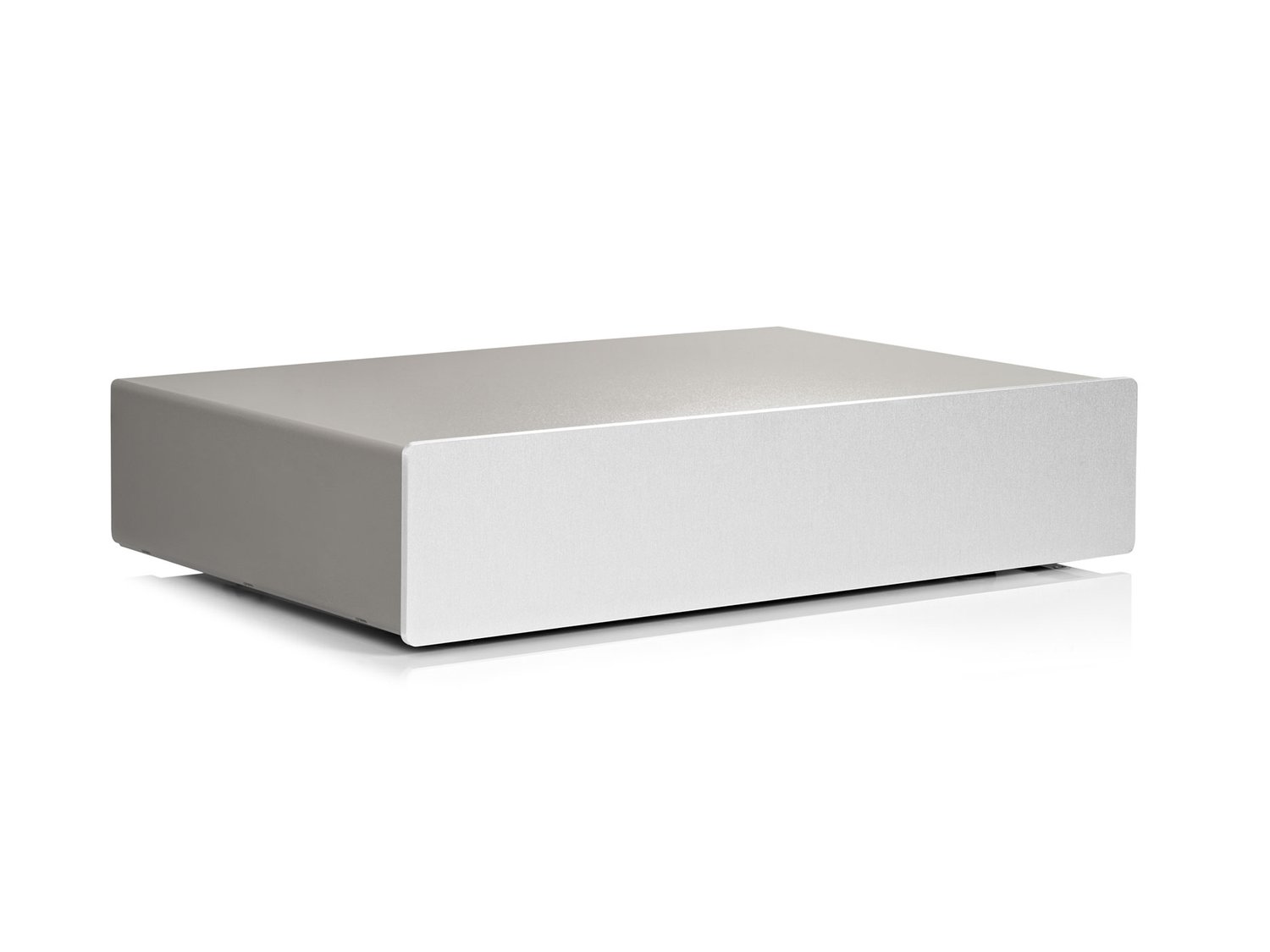
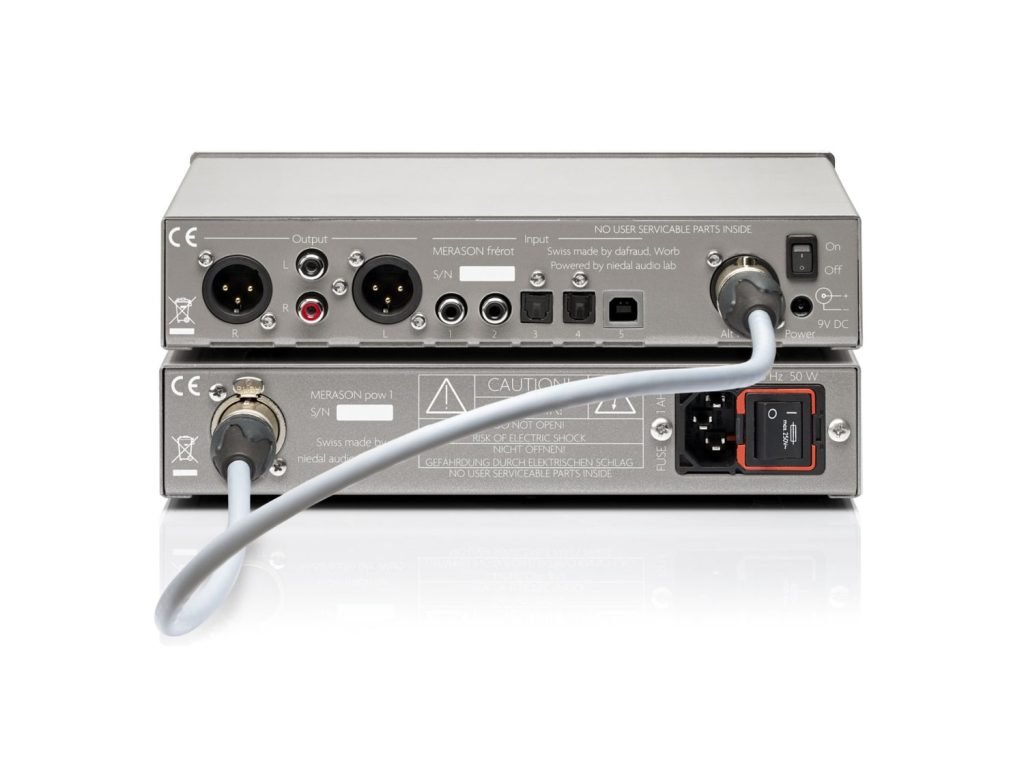
The pow1 is an upgrade to the switch mode power supply (SMPS) that comes as standard with the frerot. The pow1 has an identical physical profile. It is based on a toroidal transformer with three separate power supplies, a symmetrical analog power supply and a power supply for the digital section. The pow1 and frerot are connected by an umbilical cord that is sufficiently long to allow placement as needed, but the cord is short enough to reduce its antenna qualities.
Visual Experience

The workmanship is what I expect of Swiss built gear; very good. The frerot and pow1 are in a typically understated Swiss-style, i.e. well composed and balanced in appearance. The build quality was robust, as expected, and well executed. Despite their small size these are sturdily built and surprisingly heavy, suggesting they will last a long time.

Listening experience

Allow me to gut any story telling suspense and just say that I really liked the sound of the frerot; a lot. This is one of my favorite DACs because it does so much that I like. Live music never sounds threadbare or lean—even if a live venue has a slightly lean or sharp character. Audio gear, however, can sound lean and sharp and even gray. The frerot with its SMPS was not lean, and featured a well mannered tone and timbre.

To appreciate the frerot I had to overcome the sound, and shortcomings, of Schiit's Modi Multibit—($250 when purchased) which I'd grown accustomed to. I know the Modi isn't a proper comparator for the frerot, but my personal life and digital setup has undergone substantial... distractions the past few years. Having a proper comparator was difficult during the pandemic. (This review is a long time in the making) While I will reference the Schiit Modi Multibit, the true reference in this review is the level of performance achieved with my six or seven (?) times more expensive analog setups. 

The Modi MB, Schiit's entry level ladder DAC, is sonically rotund and friendly, but short on the contours of musical insight. I've gotten used to digital being my less attractive, though never ugly, music partner. If the frerot is smartly dressed in a pantsuit or an understated skirt and blouse, the Modi MB would be more like an ample figure in a beige sack dress—a less clear profile, if you will. Whatever else the Modi MB was, it was more pleasing though less detailed and precise than the DAC in my Classe Sigma SSP ($5000 when new) preamp processor. Using my profile metaphor, the Classe would be a bit more like a black and white stick figure. Is the Classe terrible? No, it's just less pleasing to me than the Schiit.

Big Picture

As a counterpoint to the Modi's zaftig, fun loving, but ultimately obscuring sound, came the poised and even handed Swiss frerot. The Merason presented itself as more svelte, intelligent, and self-contained, with charms to discover rather than to see all of its appeal in a first glance. Initially, however, it did not occur as particularly "attractive." The Modi's sweetening of recordings was absent and music, for better or worse, was just more clearly rendered. I don't usually listen to audiophile fare and... there's a lot of bland music and performance there. Initially, I found the frerot more like my mother-in-law than my wife, who has happily learned to address the underlying request first.

After randomly ransacking my files for various genres and ages of recordings, the even keeled character of the frerot was hard to determine. To switch metaphors (shame on me) the Modi might be a pleasant comedy—reaching for the pleasant laugh, the Classe might be mainstream news and the frerot?

Property of Pepe and the Bottle Blondes

To test what the frerot was doing I gathered three recordings: 1) "Unnamed" from Late Night Betty by Pepe and the Bottle Blondes; 2) Frank Sinatra's "You Make Me Feel So Young" from Songs for Swinging Lovers; and 3) "Ode d'Espagne for Double Bass" (Dan Styffe, Simex Recordings but on an Ensemble Audio sampler disc). I chose those recordings collectively because they're simple recordings of music rather than simple recordings of... sound, and hoped that would open the door to understanding what it was doing more quickly. "Unnamed" is a female a capella duet with a dash of instrumentation; the second... is Frank in good form and the third is a very well recorded and masterful solo double bass track.

Allow me to reference the late Alan Watts' model of "prickles" and "goo." Prickles are rational, classical, labeling the parts of all of it. Where "goo" is a sort of miasmic or vaporish quality where boundaries between elements are much less defined. The Modi Multibit rendered all three in a "goo" sense. I enjoyed all of the music and... it was a pleasant trip but... not very insightful. My Classe SSP rendered them more in a "prickles" sense. I use prickles to describe music as a collection of notes that may not add up to a "musical story." Reality, as most of us know is a fluid balance of prickles and goo.

Remember this is a comparison

Adjustment was the name of the game for me. There was more precision with the frerot than with the Modi, but it was distinctly different than the black and white Classe. An initial impression was of tone and timbre in a firm (clear) but not tight grip. Instrumental sounds were more immediate and slightly more intense than the more languorous and "beige" (rather than "inky") color of the Modi.

The vocals on "Unnamed" were slightly clearer, and slightly higher pitched, lessening a certain human warmth, but making the a capella duet more nimble and impressive. And, at the risk of a clumsy metaphor, more female. The "lyrics" are an invented, nonsensical language, but through the frerot's clarity the tone and rhythmic qualities of their vocals created a tempo that suggested a story.

Frank Sinatra was rendered more uniquely Frank than at any time with the Modi. His voice and phrasing was rich and real, but a bit less warm. This was much closer to the sound of my analog setup. The arrangement and performance evince a sense of a curated tempo, and that Frank's signature voice is a practiced "relaxed and natural" vocal style. The frerot allowed the quintessential Frank I hear from my much more expensive analog setup to make an appearance. Frank's voice was a bit less deep and resonant, but also, it seemed to me, well distinguished from other male singers.

The Modi's looser and more zaftig plucked bass on "Ode d' Espagne for Double Bass" was replaced with bass that seemed a bit less deep, slightly more highly pitched and faster—overall it was a more interesting recording. It was also less like the "looser" bass I'm accustomed to hearing through 50s stand up bass recordings. I had the sensation that the strings in "Ode d' Espagne" were tightened "just so."

All was well to this point, music was working like a musical equation. Mix the Swiss DAC's presentation of attack, with its way with a well developed sustain followed by an appropriate decay, and voila the elements added up to a story that seemed to be clicking with me. But something got under my skin. Was the frerot's presentation of "Ode d' Espagne" perhaps too tight, maybe truncated or overdamped rendering everything like a marine's boot camp bed—correct but unnaturally tight? As I was wondering if there was much bass below 40Hz—without notice my son pirated my Mac Mini with his rap music, and suddenly volcanic bass erupted from my speakers—a complete disconnect from what had been playing. From a fluid, neat. and tidy presentation of the bass of my music, my son's music was a mix of tight, loose, and wild bass. Good reproduction of a riot is... a bit difficult to picture, but that's what I thought the frerot presented with my son's music—I love the kid but his music... not so much. Clearly it seemed it can play wild, if fed the proper oats.

Returning to goo and prickles, in my system the frerot with its SMPS was slightly turned toward the prickles, but... that's not a definitive take—your source material and system will likely have greater weight than the frerot. I liked it, respected it, and comfortably recommend it at its price. But, being an audiophile is... to be someone immersed in a pursuit, even if it's an insane one. It's probably a chase of "perfection," the definition of which is constructed and reconstructed ongoingly that protracts and thwarts arriving at "the destination." To the sober audiophile—probably an oxymoron—there is no perfection but there can be satisfaction with the prize found/captured.

As I grew more comfortable with this newer, more precise rendering I wanted to see what the external power supply would offer. Many years ago an industry friend remarked, rightly or wrongly, that the power supply of a component is foundational to its performance. While not inexpensive, the $1475 frerot is within reach of many audiophiles, but adding $950 might change the calculus. The increase in performance has to warrant the expenditure. Given it's "only" a power supply, and based on my limited experience... that seemed unlikely to me.

POW!

The pow1 connects to the frerot through an umbilical cord. Flip the power switch on the back of the frerot and the SMPS is disengaged and the pow1 is powering things.

Is the pow1 a useful addition? Pow! is right. Tone and timbre didn't "fundamentally" change, but the tonal intensity (richness) flowered. Flowered as in individual timbres were inky rich—colors were... more colorful and evident, increasing my experience of instruments that existed in a reality beyond a recording of a sound. I did not and do not hear the pow1-less frerot as grayish, but with the pow1, the frerot simply presented more sonic color, it was rich and inky like live music rather than like a recording.

"Unnamed" with the pow1 in place now became more intense, more real, and the intake of breaths became part of an exciting adventure through nonsense lyrics. Words with no meaning seemed more precious, revealing breathing rather than accentuating it, as a key component of emotion in music. How often do we unconsciously include breathing as a piece of the realism of an experience? It seems what unveils the falsity of a computer generated voice is the absence of breathing pauses. On this spare recording, without distracting, the intensity of the breathing as a part of the vocalizing was part of the pleasure of the frerot.

"You Make Me Feel Young Again" was fuller, richer, and warmer. Surprisingly, the sound to me was less spatially differentiated from attack to sustained tones. This, it appears, had more to do with my digital sample. Hmm.

Surprisingly, the double bass of "Ode d'Espagne" seemed to pick up some deeper bass undertones the SMPS obscured perhaps because those undertones occur at a lower amplitude? This time the double bass seemed to have more in common with the less tautly strung double basses of jazz trios; yet still seeming to be strung "just so."

Overall the pow1 stayed the same, but like a final draft versus a rough draft: more things were in place, timing, tone, and timbre were better defined and more easily accessed, really well presented.

I respect people who listen for "you are there" or "they are here" in recordings. However, I cringe hearing that sort of recording that features a superb recording of a bored female singer fronting a three piece band that might be asleep. I got into audio to make music I've liked sound good, however well recorded.

The Kronos Quartet recorded with a continental Indian singer Asha Bhosle on You've Stolen My Heart - Songs From R.D. Burman's Bollywood "Piya Tu Ab To Aaja (Lover, Come to Me Now)." An audiophile friend hates her singing and the strings because... it's a bad recording. Her voice and the strings are shrill, no argument from me. I still enjoy the music and easily listen past a poor recording much as I do at a venue with poor sound. Yes, the recordings problems were telegraphed by the frerot, but the message and pleasure of the music shone through.

John Prine's Tree of Forgiveness has a wide range of recording qualities from awful to quite excellent. I loved this recording through the frerot. Tracks like "I've Met My Love Today," "No Ordinary Blue" as well as "God Only Knows" were stark evidence that a CD is a collection of different recording sessions, locations and successes and misses.

I pulled up Victoria de los Angeles singing Heitor Villa Lobos' Aria from his Bachiana Brasilieras. Nearly every time I listen to it, the song is over before I notice it. The recording quality becomes... irrelevant to my enjoyment. The kinder Modi allows me to enjoy it, the Classe, no thanks! Why, you may ask, would I revel in enjoying poorly recorded music? Music is a transportation device, entertaining as a diversion should be. The frerot's performance did not exacerbate the recordings problems and did not further bleach the richness on the recording.

I asked my wife to drop her unending "type A" tasks and give a listen. Usually, she'll listen dutifully and then run back to whatever checklist is trying to free itself of the force of her will—I cued up something, I don't remember now, and left to pick up dinner. Returning a half hour later she was still in the seat working her way through my Audirvana library exclaiming "this is really good." Usually she humors me when I ask her opinion, but this time she stayed seated and engaged. God knows what else—the Hadron Collider?—would keep her seated. Yes, she loved it. My system, in my estimation, is pretty good and yet she rarely praises it. My LPs often get praise, but digital? No.

My German-born wife has a mix of the emotionally available and hyper rational. But, when it comes to "art" she's decidedly more engaged by the emotional aspects of music than the technical (analytical). Her preference and my experience of the frerot and pow1 slightly tilted toward the emotional. Neither her praise nor my pleasure were because of the reproduction of bass or detail or imaging (I apologize but I still don't weight imaging or soundstaging as important) or any of the elements that would fall into the prickly characterization. The frerot's mix in my system was of more goo emotional than analytic prickles. This is how I've experienced live music throughout my life. If you want with the frerot you can track an instrument or the phrasing of a piece if you want, but what enters the door is an emotional experience of beauty. If I did not already have about 1200 LPs , some of which I've been toting around with me for 40 years, I don't think I'd get into analog. The frerot/pow1 makes sticking with digital a comfortable choice to me. Yeah, I love my analog setup, but I love the convenience and the quality of sound of the two Swiss pieces in my system.

So, it's perfect, right? No.

Criticisms? On a technical side, why two Toslink connections? To fit more av sources? Fifteen hundred dollars for an AV system? Hmm, I think another USB input would be more useful. The choice of sources is, however, a suggestion that Merason sees the frerot as part of a mixed two channel and AV system. Another petty complaint is I'd prefer fewer boxes on my rack for space and aesthetic reasons. Although there was no evidence of RFI leaking through the umbilical cord, I prefer to have fewer cords near one another.

My last criticism will likely be interpreted as more negative than I intend. I imagine, in a perfect world, that with dual mono DACs (think Merason's DAC1) I think dynamic shading would be better. Maybe, maybe, the pow1 provided the lift that let the frerot rise to a superlative performer. The pow1 is, in my system, a very valuable step up from the frerot and its stock SMPS. Your system, I think, would also have to be of a level to appreciate such distinctions.

To contextualize my distinction, imagine you're listening to a world class singer. You might think, hmm, she sounded better on another occasion. "Better" doesn't necessitate either performance is less than excellent, one is simply superior. If you listen to an amateur sing that same song you think "that's pretty good" they got through the whole song without making you flinch! "Pretty good" is a world apart from "could have been better." Dynamics, an almost "inky" tone and timbre are my sonic trinity - you may not care about those but they are my sine qua non. The frerot/pow1 sail through tone and timbre excellently and do dynamics well. This is a product that fits my wheelhouse.

Conclusion

The frerot tells a very musical story, but is not falsely nice telling fairy tales about your music. If you want the beauty and emotion of your music, the frerot alone or the frerot/pow1 could end your pursuit. At the end of her listening session my wife asked me expectantly, are you buying it? I could and not look back. I seem to have trouble making decisions right now because of so much personal... "change." So I've placed a marker with the frerot / pow1. The frerot / pow1 are on a short list I'm constructing. It's well priced, performs really well, is built to last and... it took me on a trip. I think many would love the view and sound of the frerot. Very highly recommended.
AKR Magazine review of the QLN One & Merason Frerot + Pow1

July 9, 2022

Photo Courtesy of Stereophile

QLN at T.H.E. SHOW Long Beach - Stereophile

June 23, 2022

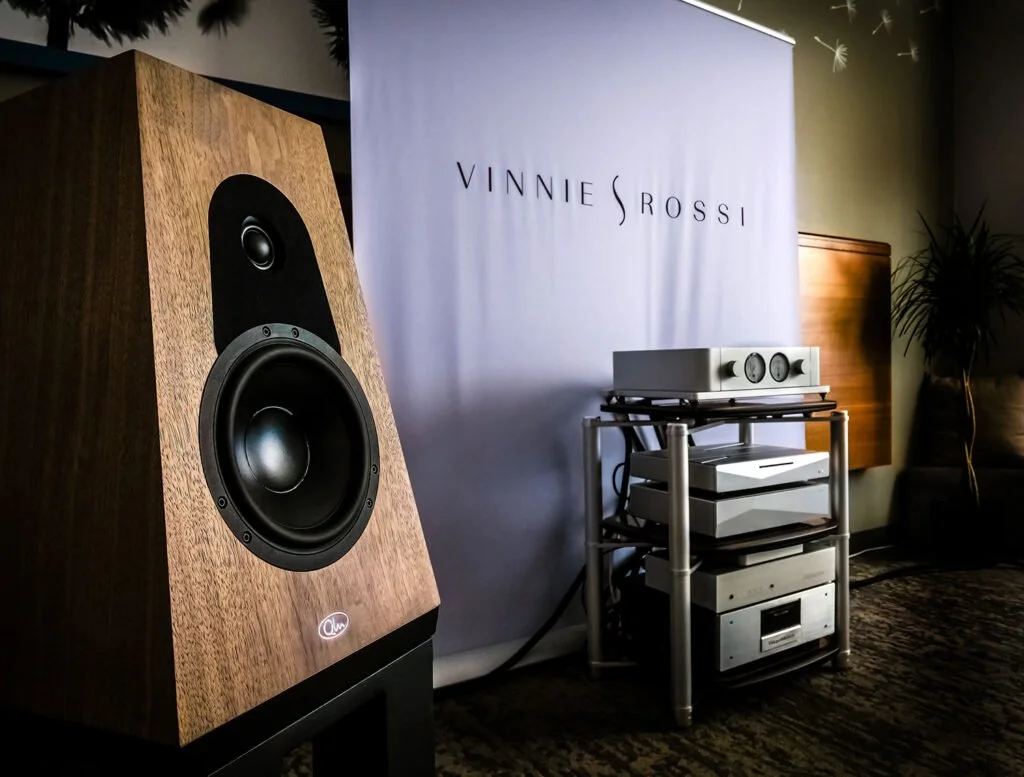
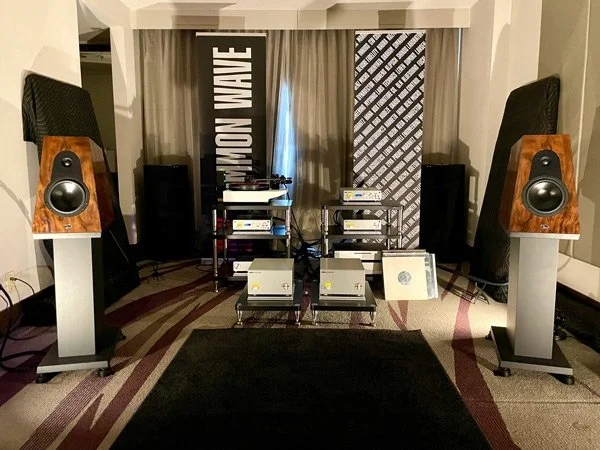
"This has to be one of the best sounding rooms at T.H.E. Show," said self to self. Listening to Count Basie and his Orchestra's rendition of "After the Rain," the beauty, clarity, and absolute spot-on rightness of every single high-end parameter I could think of impelled me to write in my notes, "The price reflects the pedigree of the sound."

Not that anything in this system approached the six-figure range. The impressive, infrequently encountered QLN Signature SE Monitors ($17,995/pair in standard finish—$23,995/pair as shown) from Sweden and the virtually ubiquitous at T.H.E. Show Innuos Statement music server with 2TB storage ($15,750—the price will rise with the forthcoming audible power supply upgrade that I covered at AXPONA) from Portugal are below $25,000, and the only components to exceed that were Nagra's. But the sound suggested even higher prices.

Back to the Count Basie, which I think was on an LP played on a Kuzma Stabi R Custom Finish belt-driven turntable ($10,900) with 4Point 11" VTA jeweled bearing tonearm ($9240) and Dynavector DRT XV-1s MC cartridge ($5650). Let's talk about the beautiful silence between the notes and the liquid sound of a speaker that, I was told after the fact, was still breaking in. Or the brass that was brazen but not strident—a quality of reproduction lost to many systems. Or the wonderful three-dimensionality on a 24/44.1 file of "Wooden Church" from the Bobo Stenson Trio. Or the intelligence with which room treatment was employed in a room that also included an HY-3 three-shelf audio rack ($1999). Or the AudioQuest Niagara 5000 power conditioner and full complement of Hurricane, Blizzard, Thunderbird, and Diamond cabling that made everything possible. That you can go higher in AQ's cable line makes the sonic achievement of this room even more impressive.

Complete article here

Photos courtesy of Twittering Machines

QLN Prestige 5 - Twittering Machines

May 12, 2022

Loudspeakers convert an electrical signal into acoustic energy, i.e. sound waves. Sounds simple. With such a simple sounding job, I find it more than fascinating that the world of available loudspeakers diverge more than they converge when it comes to the mechanics of approaching this task and the resultant sound.

If you’ve ever attended a hifi show, going from room to room listening to different systems, this divergent world of speakers mimics the divergence found in the people who design them, who exhibit them, and who attend hifi shows to hear what’s what. This reality should come as no surprise for obvious reasons—namely, people design loudspeakers and people are different so expecting similar results from difference is a fool’s errand.

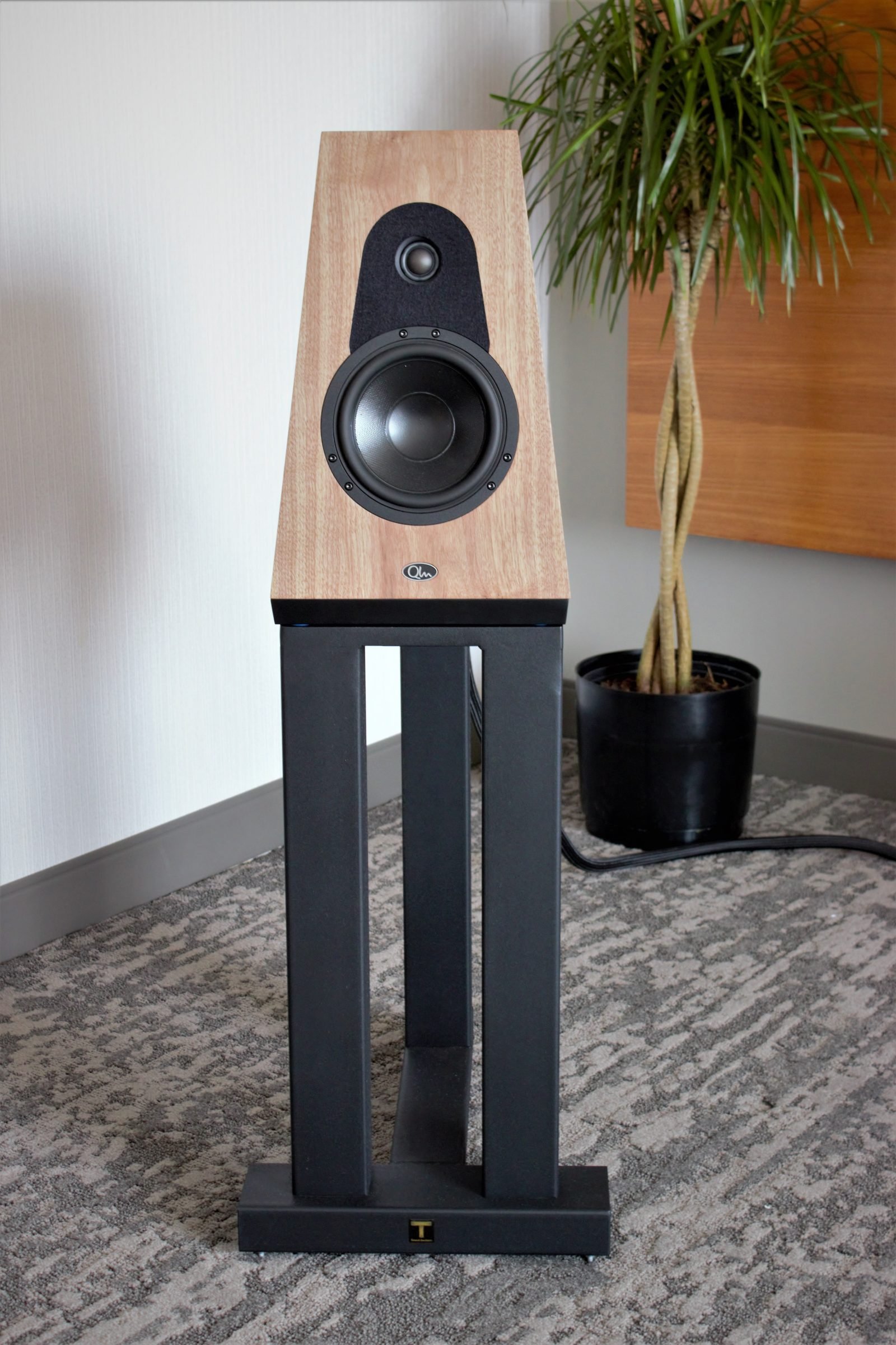
Sweden’s Qln Acoustics was founded in 1977 by Nils Liljeroth and Lars Quicklund, while Mats Andersen joined the company in 1982. The current Qln lineup of loudspeakers consists of seven models—three in the Prestige line which includes the model under review, the One which premiered at CES in 1981 and represents the company’s first foray into its truncated pyramid cabinet design, the Qubic 10 a more traditionally shaped stand mount, the high efficiency floorstanding Sonora, and the Qln Signature Stand Mount Speakers which saw their debut at the Axpona 2022 show.

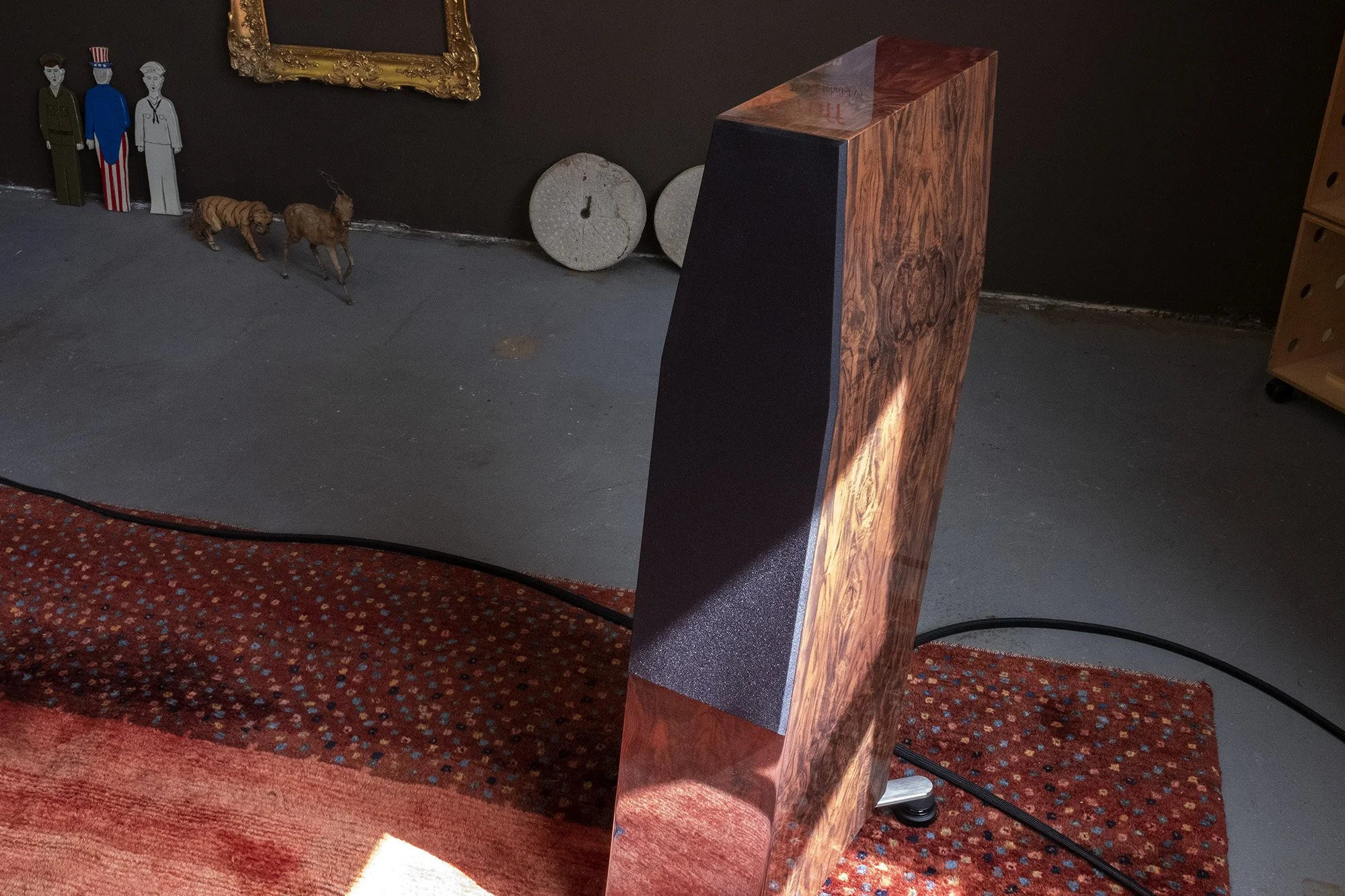
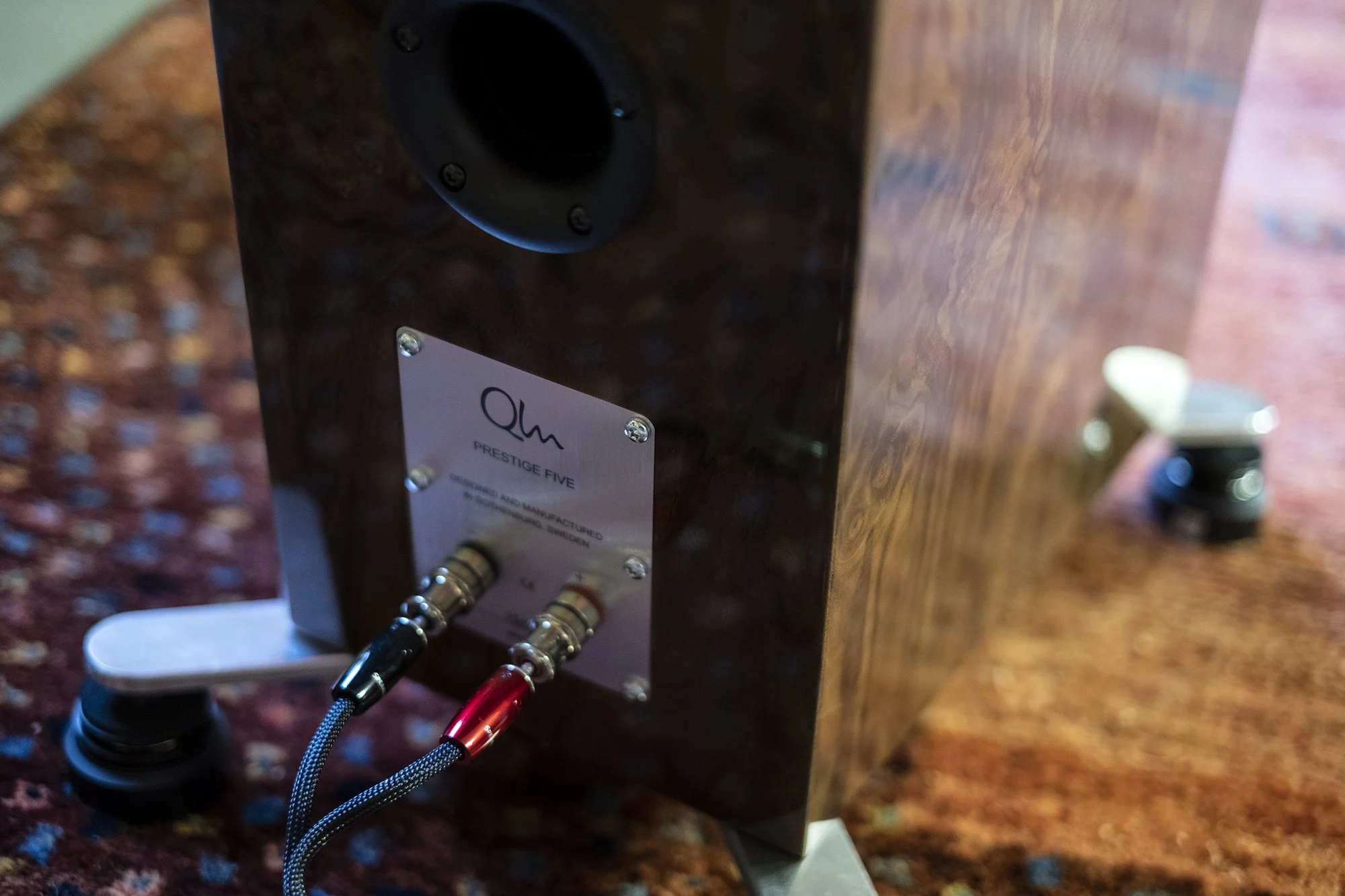
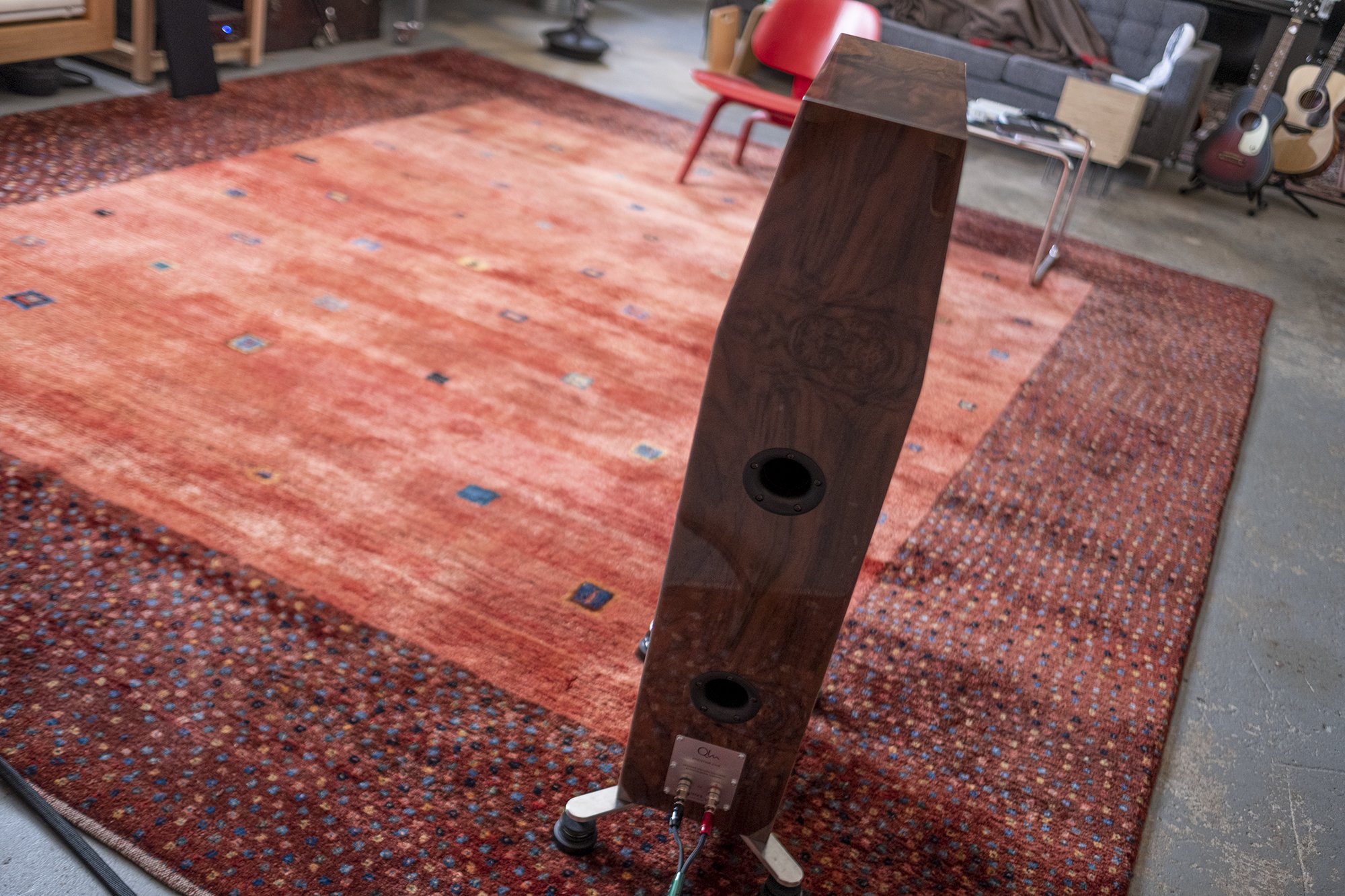
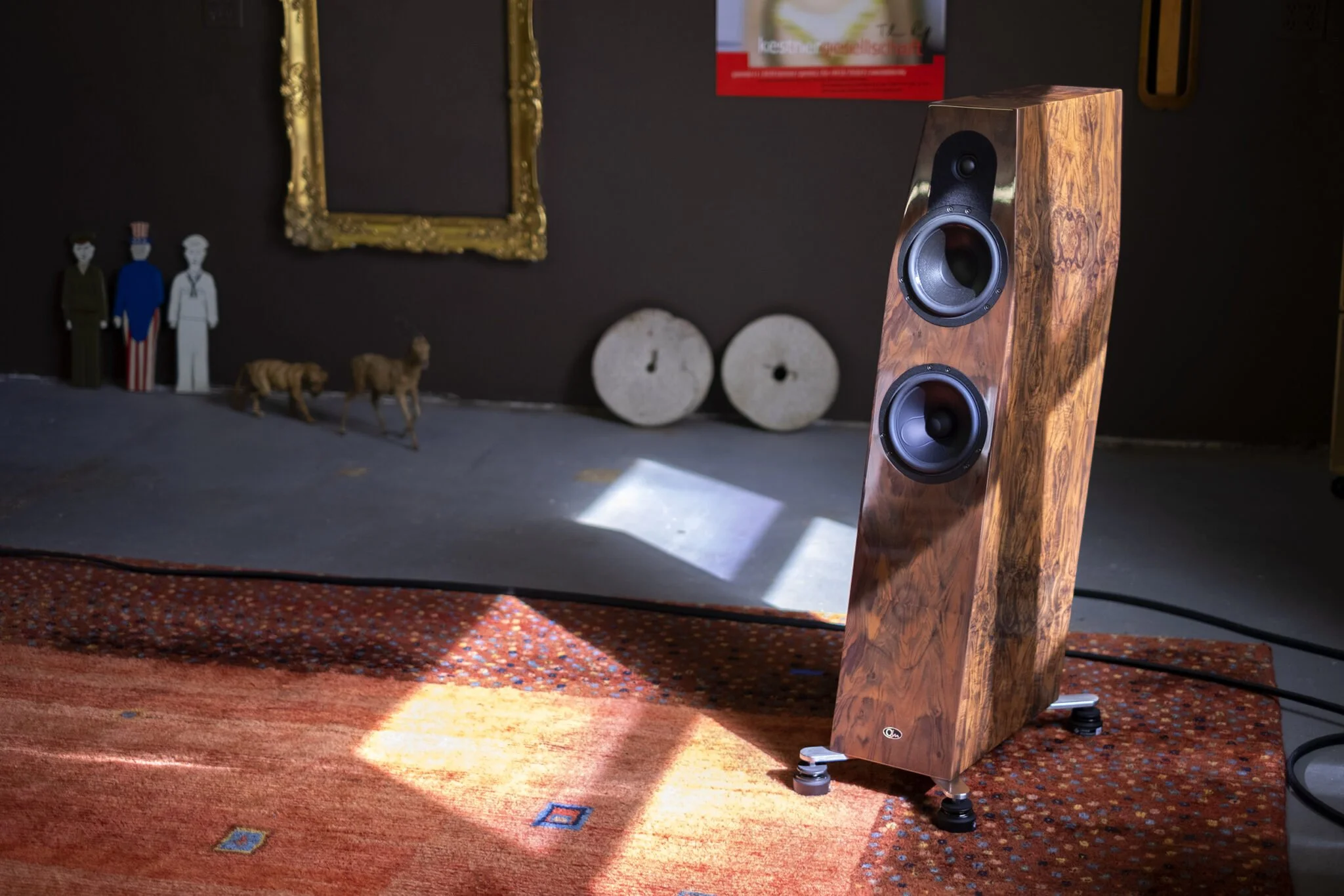
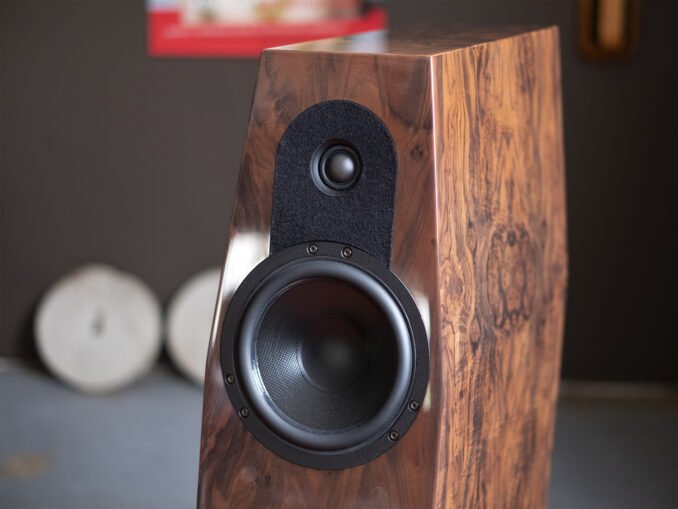
The Qln Prestige Five is a 2.5-way design with a 25mm soft dome tweeter from Scan-Speak that employs their AirCirc magnet, a 184mm Kevlar cone mid-woofer custom developed by Qln together with Scan Speak, and a 184mm hard cone woofer. Frequency response is rated as reaching down to 26Hz (-3dB) with a 89dB (1 Watt/1m) sensitivity. As you can see, the Prestige Five has a slanted baffle, that provides perfect time alignment between woofer and tweeter. The cabinet utilizes Qln’s Qboard® technology which is designed to minimize internal vibrations while the internal wiring is Qln’s design. A pair of trumpet shaped bass reflex ports can be found on the back of the speaker, along with single wire WBT Nextgen binding posts.

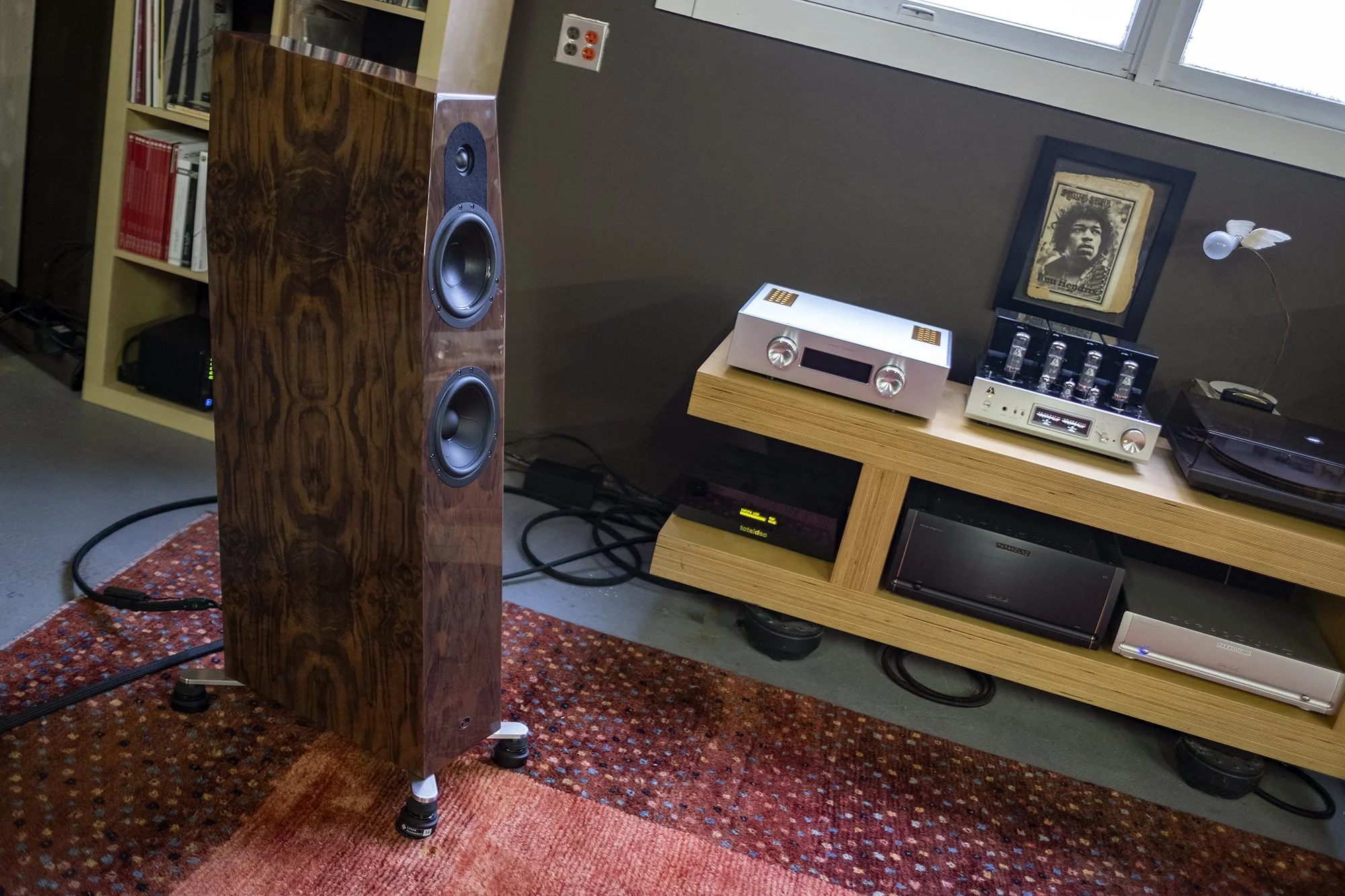
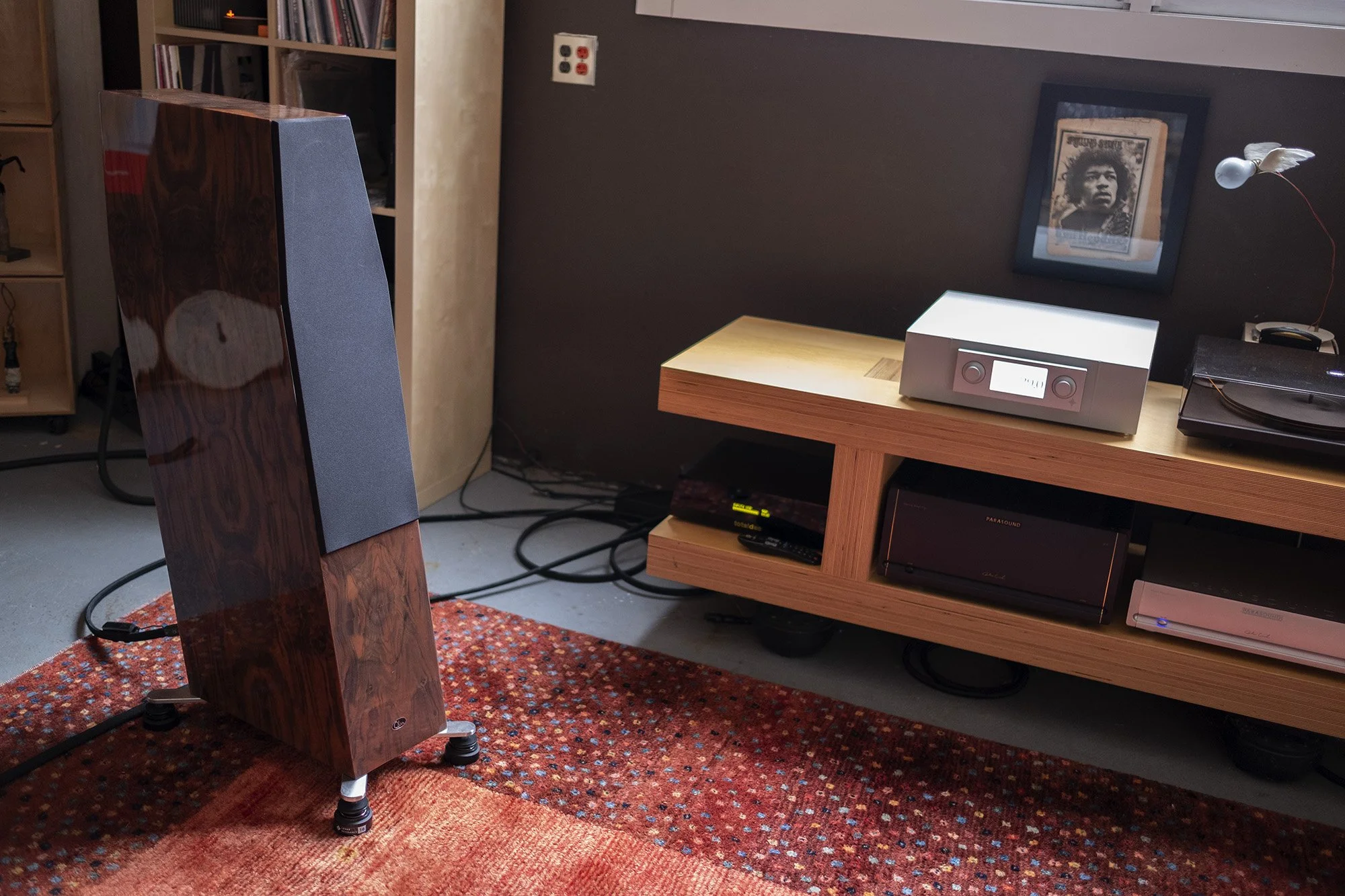
The review pair is finished in a non-standard eye-catching Piano Burl Walnut, while standard finishes include Walnut Piano, Walnut matte, and White satin. The Prestige Five stand about 39” high with a slender 8” width and 23” depth. The cabinets sit on X-shaped metal stands that employ footers at each corner.

To quote Qln:

Every part of the speaker has one thing in common – non-resonant behavior. From connectors, cables, crossover components, speaker drivers, the cabinet, and even the damping feet are all characterized by non-resonant behavior. This suppresses disruptive noise, vastly improving dynamics and preserving silence between tones as a result of the low noise floor.

I prefer the look of the Prestige Five sans magnetic grill covers but to each her own. I also find their overall look to be rather elegant, and that rear-leaning rake gives the Five’s a ready-for-action stance. One thing about gloss finishes is they show fingerprints and dust like forensic detectives, and I find myself gravitating toward matte finishes even though I’ve got a nice collection of feather and microfiber dusters at the ready.

As timing would have it, I had a bevy of fine integrated amplifiers on hand during the Qln’s Barn residence including the Constellation Inspiration Integrated 1.0 (review), Kinki Studio EX-M1 (details), AVM OVATION A 8.3 (details), and the LSA VT-70 Integrated Tube Amplifier (details). On the front end side, the totaldac d1-tube DAC/Streamer (review) passed on the converted bits to each integrated amp. All cabling came from AudioQuest and included their new and very impressive Thunderbird interconnects.

The review pair of Qln Prestige Five came with time on them, so they were pretty much ready to play within a few hours of their arrival. And I was impressed with the music I heard coming out of them in short order as well. While I tend to avoid first impressions, the Qln seduced me into enjoyment-mode faster than you can say double-blind. But I’m getting ahead of myself.

Part of the magic of listening to music lies in its ephemeral nature—just as you’re becoming attached, it’s gone. Poof! So we relish as many hooks as we can get into this passing beauty, and the more physically involving, the more emotionally engaging the reproduction the better because this makes music stick well past the fleeting has fled. The Qln Prestige Five hang music in the air in a wonderfully fulfilling way, in a manner that allows the thoughts of the day to evaporate replaced by a living, breathing cloud of sound floating in space as if it was being created by a holographic projector, all life-like rich and dimensional.

The Prestige Five also offer up a full bodied and richly textured music image, walking that fine line between resolution and tone like an old pro who knows that too much in one direction or the other can shatter the allure and illusion. Music through the Prestige Five’s is captivatingly physical and leans toward the rich, ripe and full side on the sonic spectrum which is exactly where my preferences reside.

I often wonder at praise for hifi systems that are described as being ruthlessly revealing, as if this is a good thing. As if music was made at the bequest of, and in service to, some bland abstract notion of machine-measured accuracy. As if the ideal in music reproduction is best determined by a null test between input and output, humans need not apply.

The Qln Prestige Five are highly detailed yet never fall over the edge into unwanted, unwarranted, and unnatural surgical precision. Playing through a long list of test tracks, my test track playlist count currently runs at over 13 hours, I heard into all too familiar tracks as deeply as I ever have, while the bigger sonic picture was portrayed as convincingly and as seductively as I’ve heard in Barn. While I enjoyed each amplification partner that saw playtime with the Prestige Fives, my favorites sat at near opposite ends of price and sound qualities—the stunningly smooth and refined Constellation Integrated 1.0 and the how the hell can they sell it for $1299 LSA VT-70.

One thing about reviewing loudspeakers is you can shift their sonic character to some extent with the associated amplification. With the Constellation Integrated in control, the Prestige Five were super supple and smooth, with as much refined charm as I’ve heard in Barn. While the Qln are not as wildly lit up and energized as the very impressive and similarly-priced Perlisten S7t Loudspeakers (review), they proved to be just as engaging albeit in a slightly different way—namely by offered up as believable a disappearing act as the S7t while also making that apparition of sound image feel more fleshy.

Sharon Van Etten’s new album We’ve Been Going About This All Wrong puts her voice up front which is exactly where it belongs. Her ability to change shape, character, and emotive energy is at its most potent here, and the Prestige Five/Constellation 1.0 combination made for an intimate and powerfully moving experience with the mechanics of reproduction fading away, replaced by music as vital and compelling as my attention allowed. And that’s as important a part of this equation as any—our ability to get lost in music is under constant connected attack, so these moments of one-on-one time with music is becoming all the more precious. When I’m sitting in the Red chair ready to do nothing other than listen, I get greedy and want nothing more or less than complete communion with music and the Prestige Five satisfied this hunger.

Calamita’s album Nemesis is a power trio lover’s dream come true, if part of that dream yearns for an angular and challenging onslaught of pure adrenaline rush. Bass, drums, and guitar are the only items on this menu, the recording is big, bold, and bass rich and the Prestige Five ate this music up as if they were designed for each other, designed to turn the Barn into a hothouse of high octane fire, flash, and energy. The Qln struck me as hitting that delicate balance between micro and macro on the slightly fleshier side, which in my experience and according to my tastes means—fasten your seat belt, this is going to be one helluva fun ride.

This combination of Constellation and Qln also excelled at delicate detailed harmonic richness as is on full display in Maurizio Pollini’s way with Chopin’s late piano works. While Pollini’s mastery nearly overwhelms with impossible mechanical wonder, the Qln did a better than fine job of communicating delicacy, power, force, touch, and speed welling up from silence to ring, sing and mingle in air, only to fade back into silence over time and in a convincingly real space. How piano sounds exist in space, from origin to end, can pull the listener along for the entire ride, shattering time along the way and this system in Barn proved more than capable of leading the way. From sound, to energy, to emotion, to wonder, to silence.

This same music through the Perlisten S7t had more shimmer, more sparkle and perhaps even a bit more micro snap, while the Five’s offered more flesh and body. Which presentation is better can only be determined by a prospective owner.

Replacing the Constellation with the LSA VT-70 integrated tube amplifier moved music’s character even deeper into fleshy fun. Nilüfer Yanya’s PAINLESS is infectious get-up-and-move-your-ass music and with the LSA/Prestige Five shaking things up in Barn, there was a heavy helping of rich fat tone, gut-hitting bass, and a cinematic soundscape big enough to run around in without ever hitting a side. Compared to the Constellation, the LSA skims over some delicacy and detail while loosening things up a bit down low, but the result is still infectious.

Now is as good a time as any to also point out that the Qln Prestige Five sound as seamless as a single driver speaker, transforming drivers, crossover, wires, and cabinet construction into single-minded musical machines.

My getting acquainted period took all of a few minutes with the Qln Prestige Five. Regardless of the accompanying amplification, they remained as resolving as music demanded, as seamless and transparent as I’ve heard from a multi-driver speaker, with that extra pound of flesh on music’s bones to communicate the all to human nature of whatever music you choose to send their way. Bravo!

Qualiton x200 Integrated Amplifier - AKR Magazine

May 9, 2022

Many thanks to Andre Marc for the fantastic review of the Qualiton x200 review starting on page 68.

AXPONA 2022 Recap

May 5, 2022

AXPONA 2022 was a resounding success and we want to thank all of our supporters and colleagues for making this possible! Below are links to a selection of reports on our system.

https://parttimeaudiophile.com/2022/04/24/vinnie-rossi-brama-integrated-and-qln-signature-axpona-2022/

https://www.stereophile.com/content/vinnie-rossi-audio-qln-innuos-merason-gigawatt-and-swiss-cables


https://positive-feedback.com/show-reports/axpona-2022-my-six-favorite-rooms/

 https://twitteringmachines.com/axpona-2022-vinnie-rossi-brama-a-favorite/

Coming to AXPONA 2022

April 13, 2022

We are incredibly proud and excited to be presenting this phenomenal system at AXPONA 2022 - room 488.

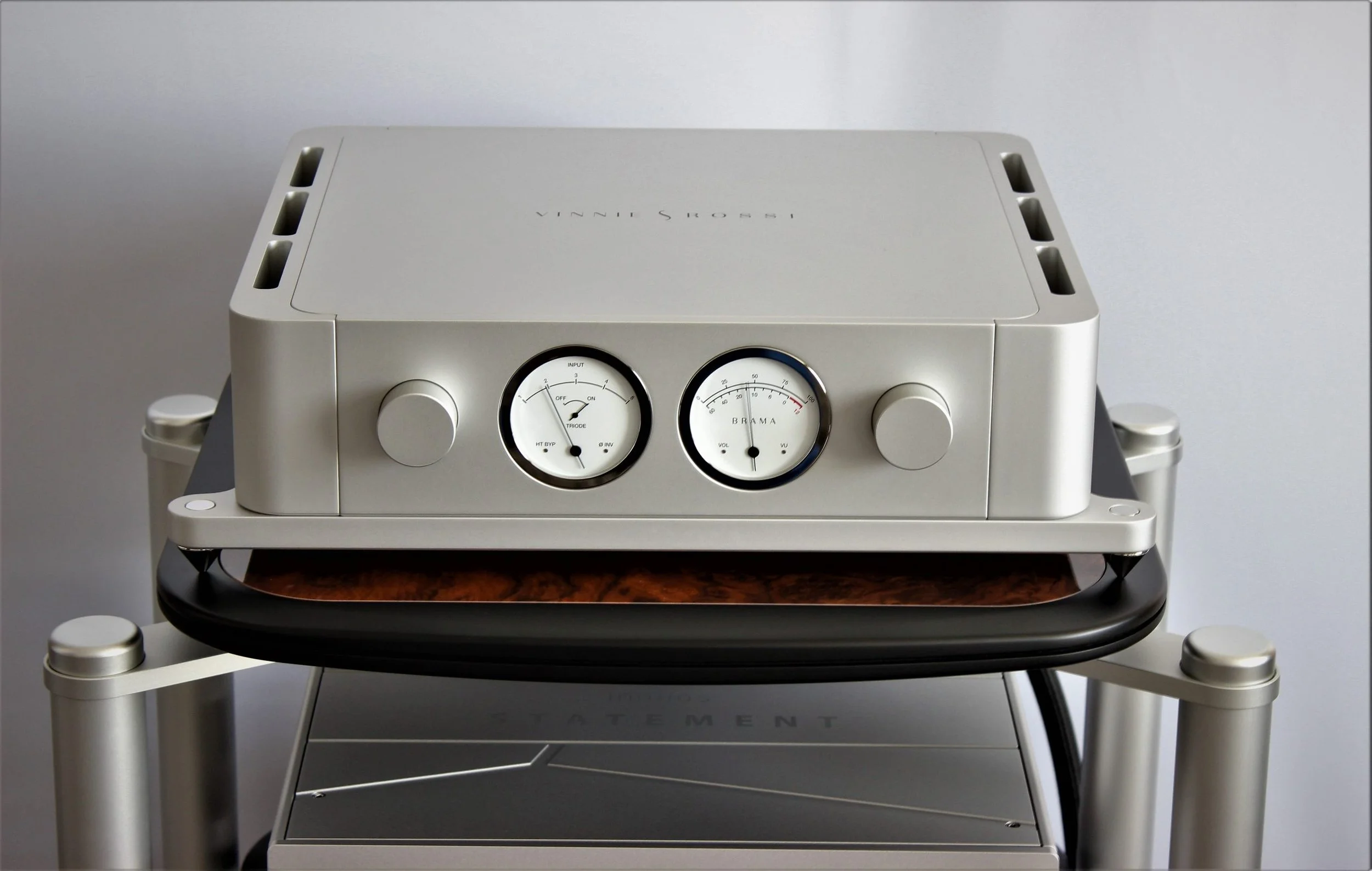
1. Vinnie Rossi Brama Integrated Amplifier - $39,000

2. QLN Signature 5 Loudspeakers - $18,000

3. Innuos Statement Music Server - $15,100

4. Innuos Phoenix NET - $3,500

5. Merason DAC1 - $6,000

6. Gigawatt PC-4 EVO+ Power Conditioner - $14,500

7. Swiss Cables Diamond Series

Speaker Cable (3m) - $7,150

XLR Interconnects (1.5m) - $3450

Power Cord (1.5m) - $2,800

8. SGR Statement Rack (3 levels) - $12,000

Introducing Levar Resonance Magnetic Absorbers

March 1, 2022

We are very happy to introduce this innovative levitation technology for use with high performance audio systems here in North America. The optimal effect of the resonance damper is achieved with symmetrical loading. If the weight of the component is unevenly distributed, the height adjustment (HA) is used to compensate.

The decisive advantages

  • Unique and patented functionality

  • Purely magnetic oscillation and vibration damping

  • Audio component rests on an air cushion

  • Self-levelling system (no wobbling and vibration)

  • No bouncing or rocking

  • Significant sound improvement in all frequency ranges

  • High insensitivity to external interference

  • Optimum resonance decoupling from the floor space

  • High load capacity of up to 50 kg per foot

  • Total carrying capacity can be increased at will with additional dampers

  • No signs of aging or fatigue

  • Loadable in both pressure and tension directions

  • Very stable design (important for slim and high floor standing speakers)

  • Suitable for free standing or can be screwed to the component using a thread

  • Optically inconspicuous due to the very compact size

Dimensions

The challenge

Sound waves are the basis of everything we perceive acoustically with our ears. Sound waves are triggered by vibrations and oscillations, which reach our hearing via the ambient air that has been set in motion. The human ear “usually” perceives vibrations from musical instruments or singing voices as pleasant. The best way to experience music in a real and authentic way is of course a live performance. For this one is forced to attend a concert.

However, in order to be able to reproduce music as realistically as possible in the home environment using a hi-fi system, a sometimes quite high level of technical effort is required. Since our human hearing is very sensitive and can precisely perceive even the smallest nuances, hi-fi enthusiasts often spend a lot of money on suitable equipment.

But where there is light, there is also shadow. The vibrations and oscillations generated when listening to music inevitably cause disruptive resonances and feedback effects in the room. The sound radiation from loudspeakers causes everything else in the listening room to vibrate, which is physically unavoidable. The floor of the room, on which the hi-fi system naturally stands, reacts very sensitively, as do the walls and all objects in the room. The feedback effects that affect the music system in this way undeniably have a negative effect on the quality and purity of the sound. No matter how heavy the base, such as granite slabs, will help. Regardless of their weight, these swing happily. In addition, footfall noise or the finest vibrations from surrounding roads or even railway lines are unpleasant.

A record player reacts most sensitively to resonances and vibrations. But CD players and tube amplifiers don't like this either (microphonic effect).

So what can be done to eliminate disruptive resonances as efficiently as possible? Of course, this is where damping elements come into play. There are heaps of these on the market. However, despite their advantages, these all have one decisive disadvantage in common: Due to their design, they also represent a firm connection to the floor space. Because even the best and softest base hardens due to the applied load (e.g. loudspeakers) according to the weight and ultimately forms but again a firm contact to the ground. The material-specific signs of fatigue of the soft materials used should not be concealed.

Optimal resonance damping would inevitably be an air cushion without any intermediate material for the audio component to rest on. This is where our innovative and patented LEVAR RESONANCE MAGNETIC ABSORBER with magnetic functionality come into play. These damping elements were specially developed to produce the best possible and therefore optimal damping without the use of soft materials (rubber, gel, etc.). There is a magnetic field here, only with air in the damping area, which is extremely effective in eliminating vibrations.

Functionality

Contrary to the levitation designs already on the market, the new Levar Resonance magnetic dampers are constructed according to the principle of gravitation, i.e. magnetic attraction, which makes them highly resilient and stable as a unit and with extremely compact dimensions. This solid and high-quality mechanical design ensures trouble-free use.

The dampers can absorb forces in both the compression and tension directions, which enables a damping function in both directions and thus significantly increases the stability of tall loudspeaker boxes, for example.

For optimal use, the dampers should be placed directly under the bottom of the device so that a level connection is guaranteed.

Using the height adjustment (except LR5-NA) an exact alignment can be made. In order to make the right selection, the exact support weight must be known. Any critical weight distribution, as is often the case with loudspeakers or tube amplifiers, must be clarified in advance. A combination of damper types of different strengths as a balance set would be recommended here or even indispensable.

If necessary, the dampers can be screwed to the respective audio component using an M8 thread. In most cases, however, simply placing it underneath is completely sufficient due to the non-slip foam rubber pads.

A special feature of this magnetic damper, which is manufactured in Germany, is the complete decoupling of components in connection with the absorption of the finest resonances and vibrations, both from the underground into the device and vice versa. In this way, undesirable microphonic effects are avoided.

The friction effects when guiding the piston are extremely low. This can never be completely avoided with magnetic dampers. Internal resonances in the air gap of the piston (approx. 0.05 mm) are avoided here by applying a highly viscous film of grease.

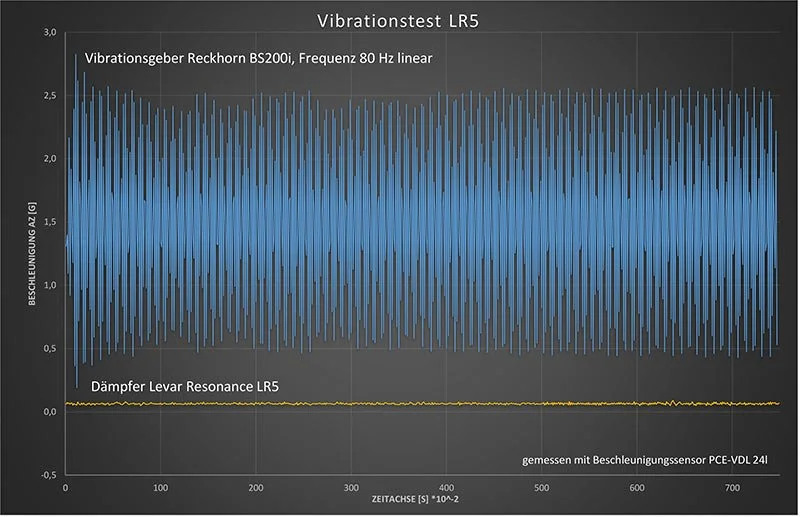
Components ultimately float on a magnetically generated air gap. There is no "breakaway torque", no rebound and no rocking. The responsiveness is also minimal. The vast majority of decoupling variants fail at this hurdle, with the result that such components are basically too hard and therefore also largely undamped. LEVAR RESONANCE MAGNETIC ABSORBER, on the other hand, react to the smallest of excitations. The positive sound effect is enormous and clearly understandable even for untrained ears.

With our LEVAR RESONANCE MAGNETIC ABSORBERS, all vibration-sensitive components of a hi-fi system can be decoupled extremely effectively. Whether speakers, amplifiers, turntables, CD players and even power supplies. Every sensitive hi-fi device benefits from this and the overall result is an enormous increase in sound.

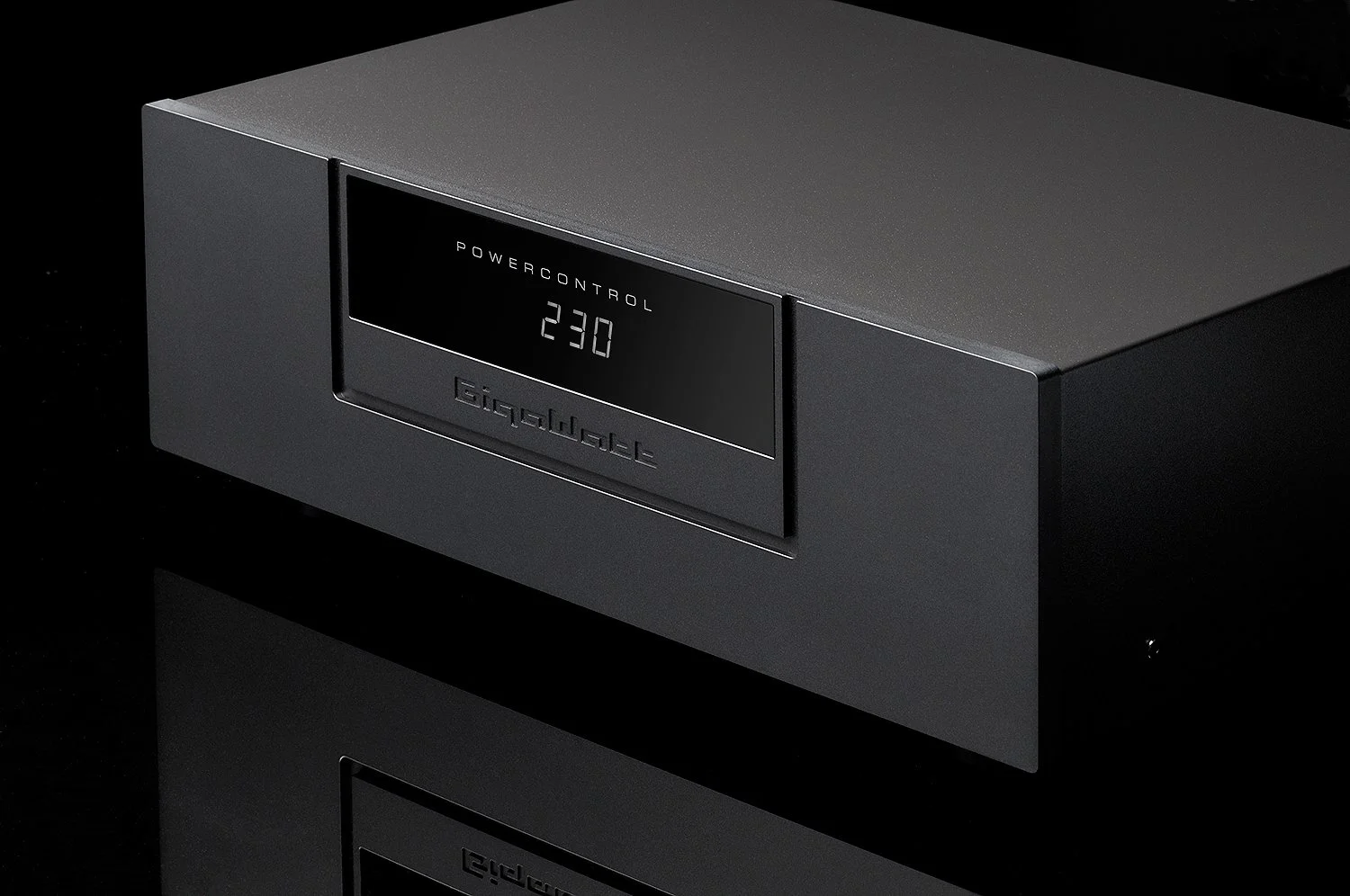
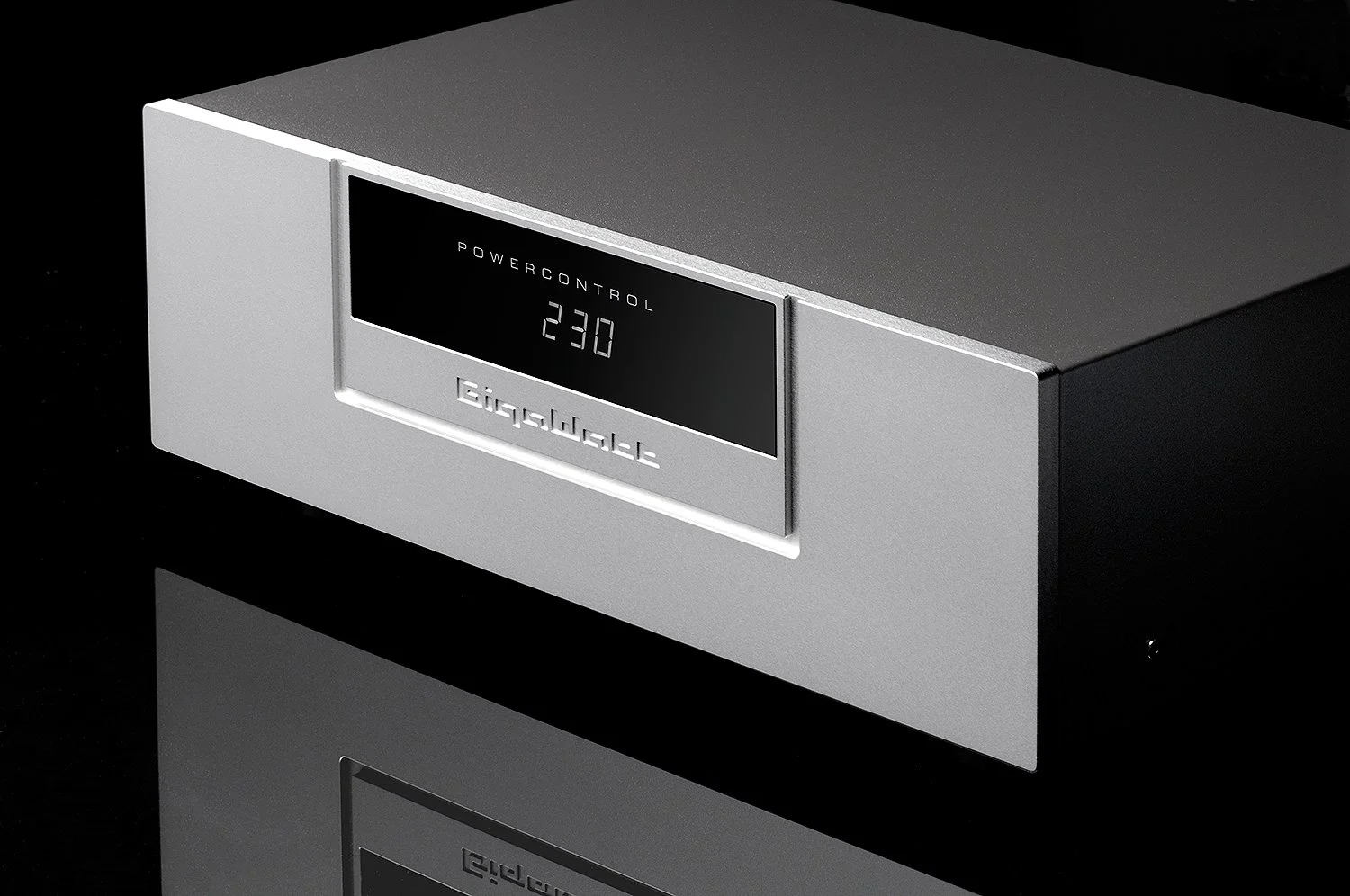
Introducing the new GigaWatt PowerControl Conditioner

February 22, 2022

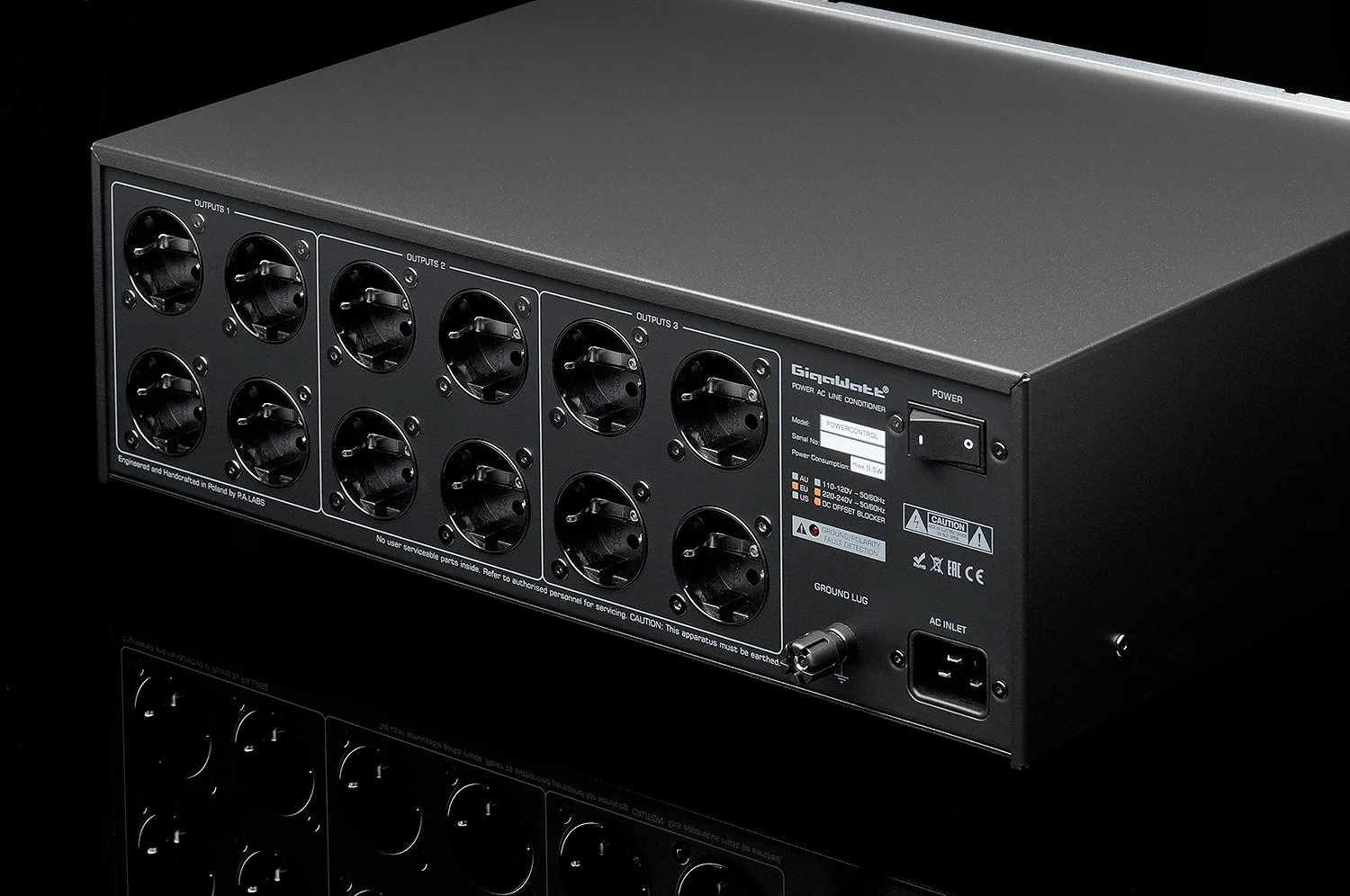
The main PowerControl features:

– Twelve high quality, silver plated proprietary power outlets to keep ZERO contact resistance

– New LED Voltmeter display, with switch OFF button. White colour as a standard, 9 custom colors on request (extra charge)

– Compact chassis depth to reduce footprint in space restricted applications

– Anti-vibration, GigaWatt aluminum feet with softpads to absorb vibrations

– Top cover damped with a bitumen-polymer composite mat

– Ground/Polarity fault detection indicator, to avoid wrong polarity or faulty grounding of the unit

– Filtering architecture with special GigaWatt Audio Grade EMI Suppression Capacitors to keep ultimate filtering performance

– Massive, outlets distribution rails, 30 QMM polished copper (OFHC 10100, 99.995%) to keep stable power distribution for outlets in star connection topology

– Internal wiring - OFC 4,0 QMM by GigaWatt Powerlink to keep ultimate conductor transmission

– Dual layer PCB, silver-plated copper with ultra wide traces to reduce power losses

– RLC type filtering block with HF (High Flux) core filter to allow maximum interference damping

– Ultimate Surge protection based on plasma spark-gaps and UltraMOV varistors

– DC Offset Blocker on board to eliminate unwanted DC component of the power grid

– Advanced switch from Carling Technologies to allow no compromise switching

– Internal electric construction to allow load up to 100A peak

– Non-magnetic screws, at points of current flow, to avoid degradation of the electric field

– Enhanced buffer circuit with GigaWatt Audio Grade compensation battery for power factor improve and for maximum impulse response

– Special internal sandwich base to prevent the transmission of resonant vibrations from the chassis to the filter elements

– Internal elastomer Shock dampers that prevents transmission of external vibrations to filter elements

– IEC C20 inlet allowing for better contact and power flow

– Ground lug for turtables, cables (ect) additional earthing


Pricing starts at $7,000 USD


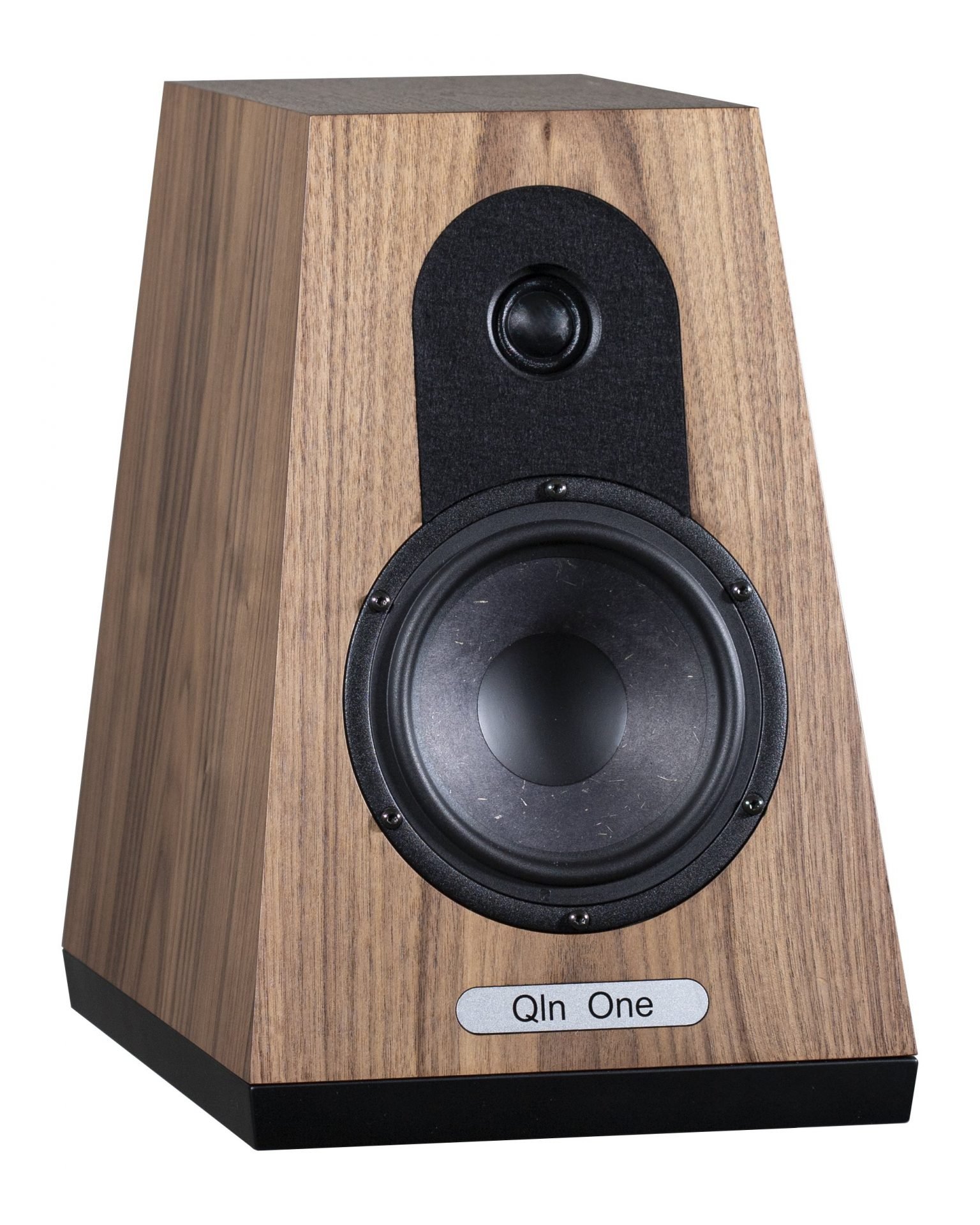
Introducing the Qln One

February 16, 2022

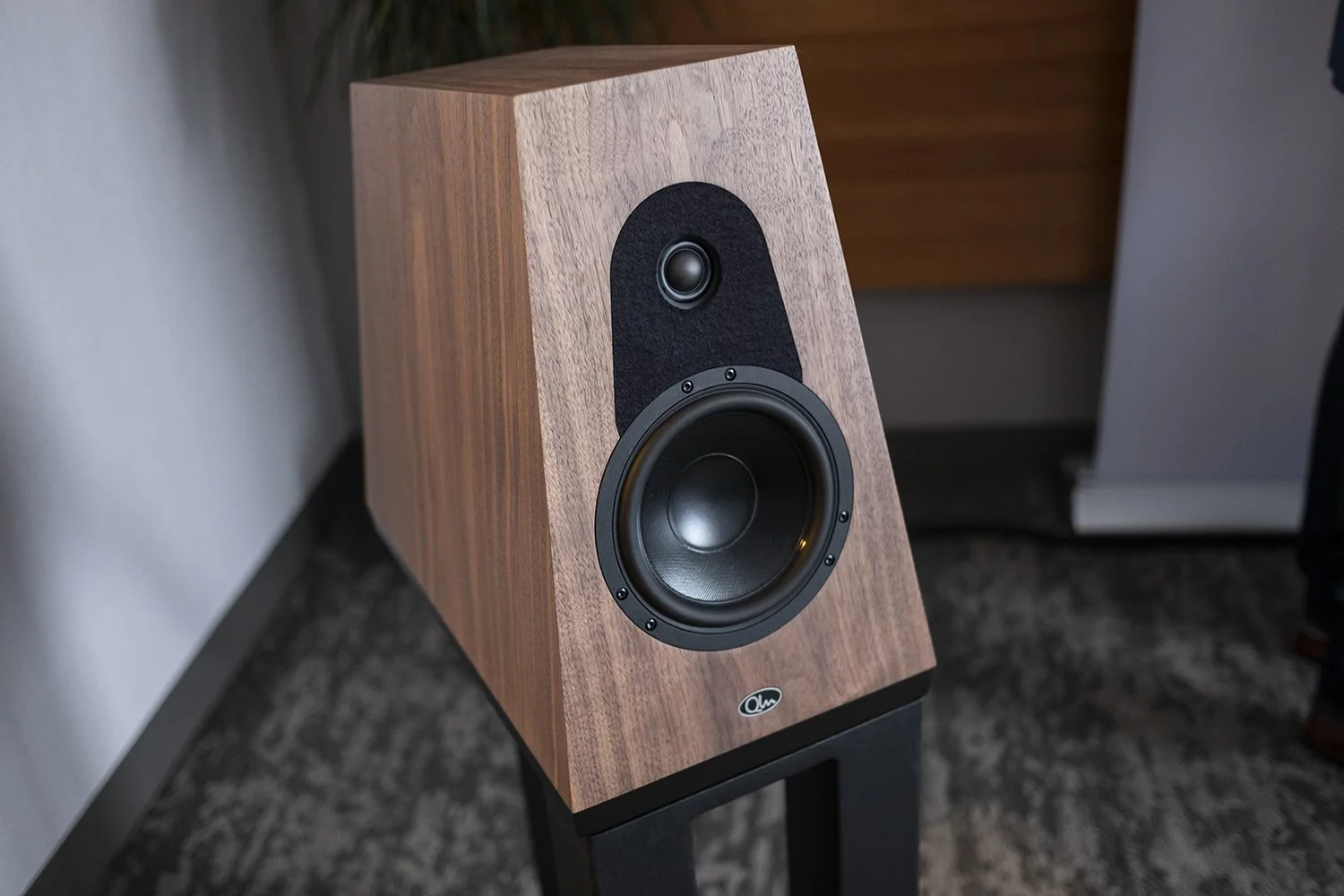
“The One marks the beginning of Qln’s truncated pyramid design. The One debuted in 1981 at CES as the first truncated pyramid speaker in the world. The shape is an original Qln design combining aesthetic expression with functionality. We are proud to re-introduce this important speaker 40 years later as a testament to Qln’s commitment to advanced design and excellence in sound reproduction.

We don’t draw attention to our technical acumen but rather a piece of furniture that can elegantly find its place in your living room. All the technical parameters for quality sound reproduction are present in our designs but the only role for them is to recreate recorded music from your source. We must not forget that the purpose of a speaker is to recall an original sound event. Our goal is to provide the same emotion you feel when listening to a big orchestra, a string quartet, a rock band, a jazz trio, or vocalist performance. It is this wholistic pursuit along with music’s subtleties and nuances that we strive to capture.

Qln thinks of speakers as musical instruments. We know that good sound depends on the acoustic chamber just like an acoustic instrument. But unlike music instruments we don’t create sound, we reproduce it.

Qln has always searched for cabinet shapes and proportions that will guarantee exceptional control of internal resonance, perfect acoustics, excellent driver stability, phase response and easy room integration.

The Qln One is that speaker.”

Cabinet
A slanted front baffle provides perfect time alignment between woofer and tweeter. The truncated pyramid cabinet with its minimized baffle area suppresses any standing waves inside the cabinet while also offering improved three-dimensional imaging.
By again basing the cabinet construction around Qln’s unique Qboard® technology, structural resonances are significantly minimized. The bass reflex port with its trumpet shape eliminates air turbulence.
The cabinet is heavily braced for stiffness, but we utilize damping pads to reduce internal resonances which distort sound in the time domain. Natural wool is used to further dampen the internal acoustic chamber. We use minimum damping material and apply it strategically.

Crossover
We utilize the same constant impedance crossover technology found in the Prestige series with fine tuning for the compact two-way design.  All coils are air core, and all capacitors are of polypropylene material. All coils are baked so the wires are glued together to reduce internal vibration.
The constant impedance crossover produces an even impedance response that eases the load an amplifier sees (especially tube amps) providing better phase coherence for the driver. The crossover is hard wired for best contact between components with as few contact points as possible. Every component is soft glued to increase damping and minimize vibrations.

Drivers
The drivers have been specifically selected and custom developed by us along with Scandinavian manufacturers to offer the latest in driver technology. The Reed paper cone mid/bass driver with its built-in copper ring in the magnet system and Titanium voce coil offers symmetric drive and higher dynamics in the midrange while concurrently suppressing intermodulation distortion. This results in spectacular voice reproduction, and astonishing micro/macro dynamics uncommon for a compact 2-way speaker design.
The 25mm wide surround tweeter offers superb vocal presentation and excellent imaging in a wide listening area. Its large roll surround, built-in copper ring and textile dome diaphragm provides a flat frequency response above 30 KHz with outstanding off-axis dispersion. The rear acoustic chamber delivers low compression and lowers the tweeter’s system resonance far below the crossover point.

Cables and speaker connectors
Internal cabling is our own specially designed cable optimized for use inside the speaker. All components are carefully hand selected and individually tested for any deviances. WBT pure copper NexgenTM pole screws are used with grip-friendly screws.

Impedance: 8 ohms
Amplifier requirements: 25-250 Watt RMS
Tweeter: 25mm, wide surround, soft dome with back chamber
Woofer: 176mm, Reed paper cone
Sensitivity: 87,5 dB SPL 1 Watt 1m
Low frequency performance: -3dB 45Hz
Cabinet: 21mm with Qboard® philosophy design
Terminal: WBT Single wire
Dimensions (HxWxD): 390x265x372
Weight: 14,0 kg each
Finish: Walnut piano, Walnut matt , White satin(available later this year)

Price: $4800 USD

Image courtesy of Twittering Machines

Qualiton x200 - Twittering Machines

February 2, 2022

Back in my early Bennington College days, a local bar just across the Vermont border in NY State decided to make Thursdays dance night. They were clearly trying to attract a Bennington crowd and it worked.

I remember the first dance night. I arrived well into the evening, dance music blaring from the strained sound system, to find a very crowded smoky dance floor filled with all manner of Bennington types moving with a kind of energy that felt like escape – as if these kids had been locked up in a tight box and dance night was the first time they’d been let out in years.

You didn’t see this, but I put air quotes around “dance”. Have you ever seen modern dance majors dance to dance music? I have, and here in a local beer and shot joint in NY State the dance majors had room around them, like a force field, because their movements appeared to involve an exploration of space more than a shift and shimmy to the beat. In some ways, the beat didn’t seem to influence their movements at all, all arms and legs and twisting torsos.

Mix in a bunch of hard core punks, the chic set from either coast, sons and daughters of the rich and famous and powerful, a few locals, and some of us suburban strays and you’ve got a spicy jambalaya that no one in their right mind would ever consider putting together in one serving. Except here at a local beer and shot joint in the middle of nowhere NY State.

Have you ever heard a tube amp? I’ve heard a bunch and if I were to throw a tube amp party here in the Barn, inviting as rich and varied a group as that beer and shot joint in NY State, we’d have as spicy a jambalaya of different sounding amps as dancing Bennington kids. When we say “dance”, it could well mean a world of difference in movement. When we say “tube amp”, it could well mean a world of difference in sound.

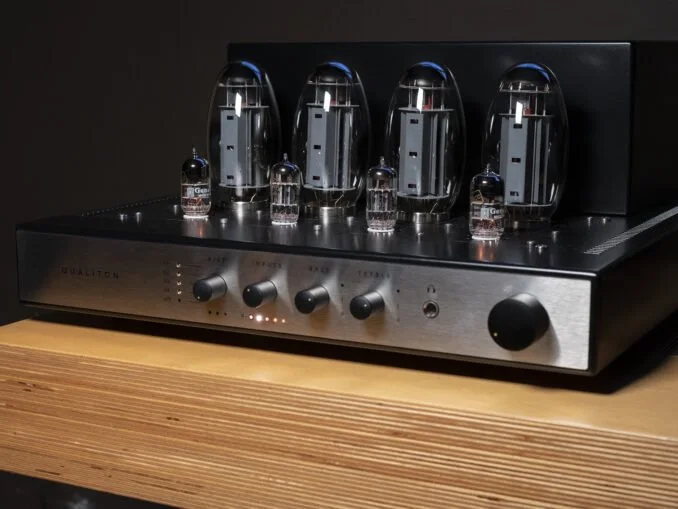
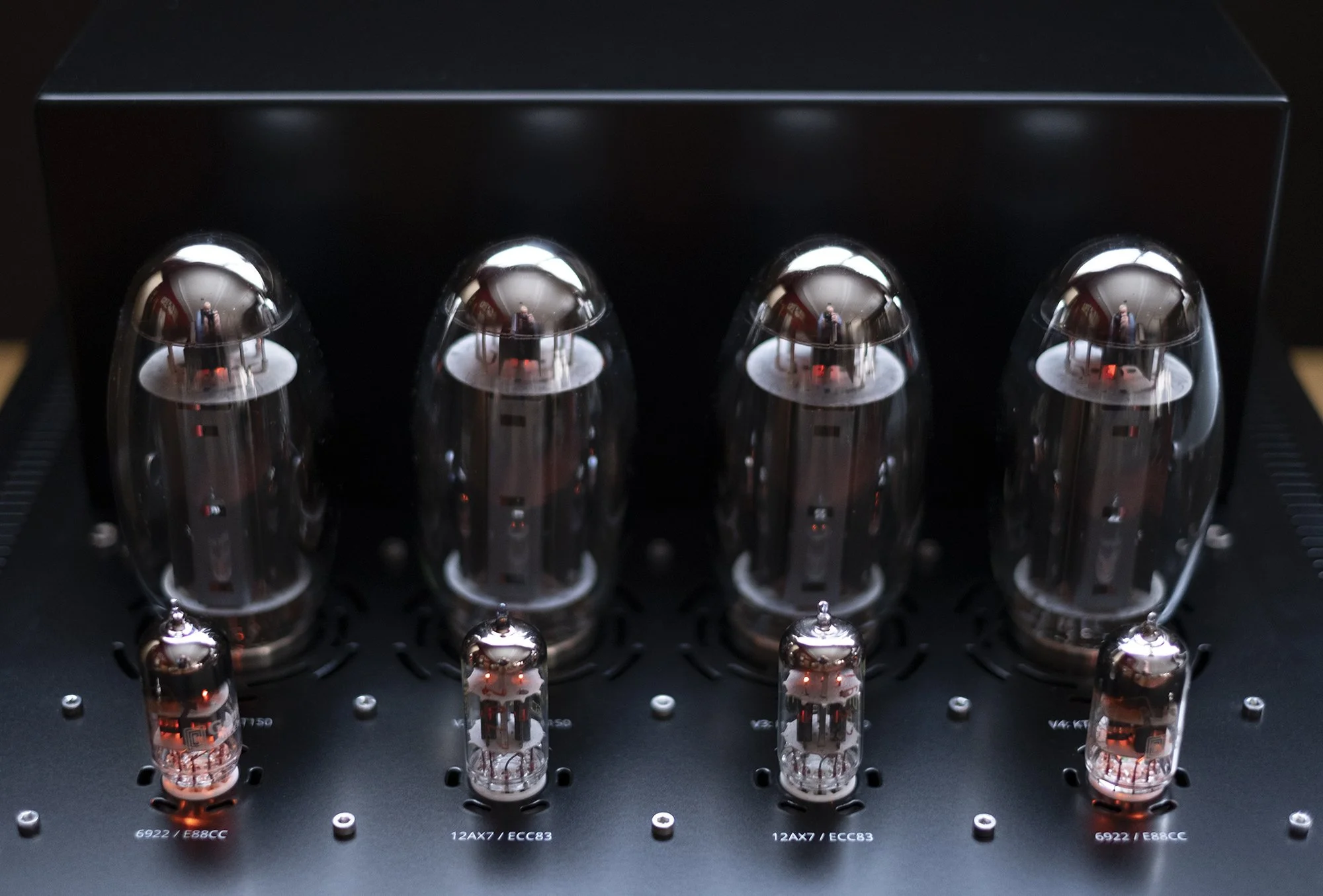
The Audio Hungary Qualiton X200 Integrated Amplifier uses vacuum tubes in all of its amplification stages — 2x 6922s in the input stage, 2x 12AX7s in the driver stage, and 4x KT120s (or KT150s) in the output stage. Output power using the stock KT120s is rated at 100 Watts per channel, i.e. a lot of power for tubes. Of course this kind of output power means we’re also looking at a push / pull circuit, the hard core punk of tube topologies. Audio Hungary winds their own transformers and based on size and weight, I’d call them beefy.

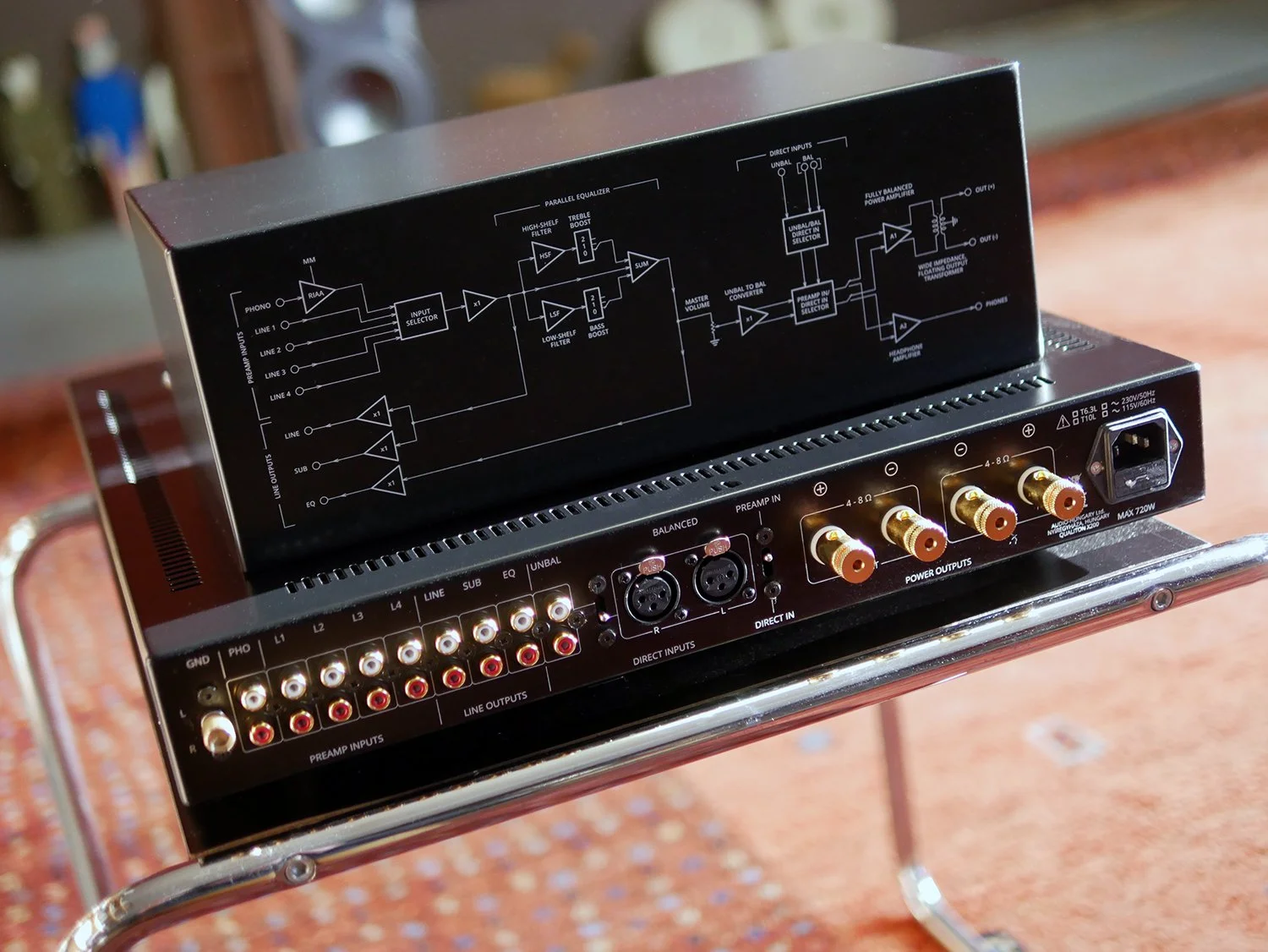
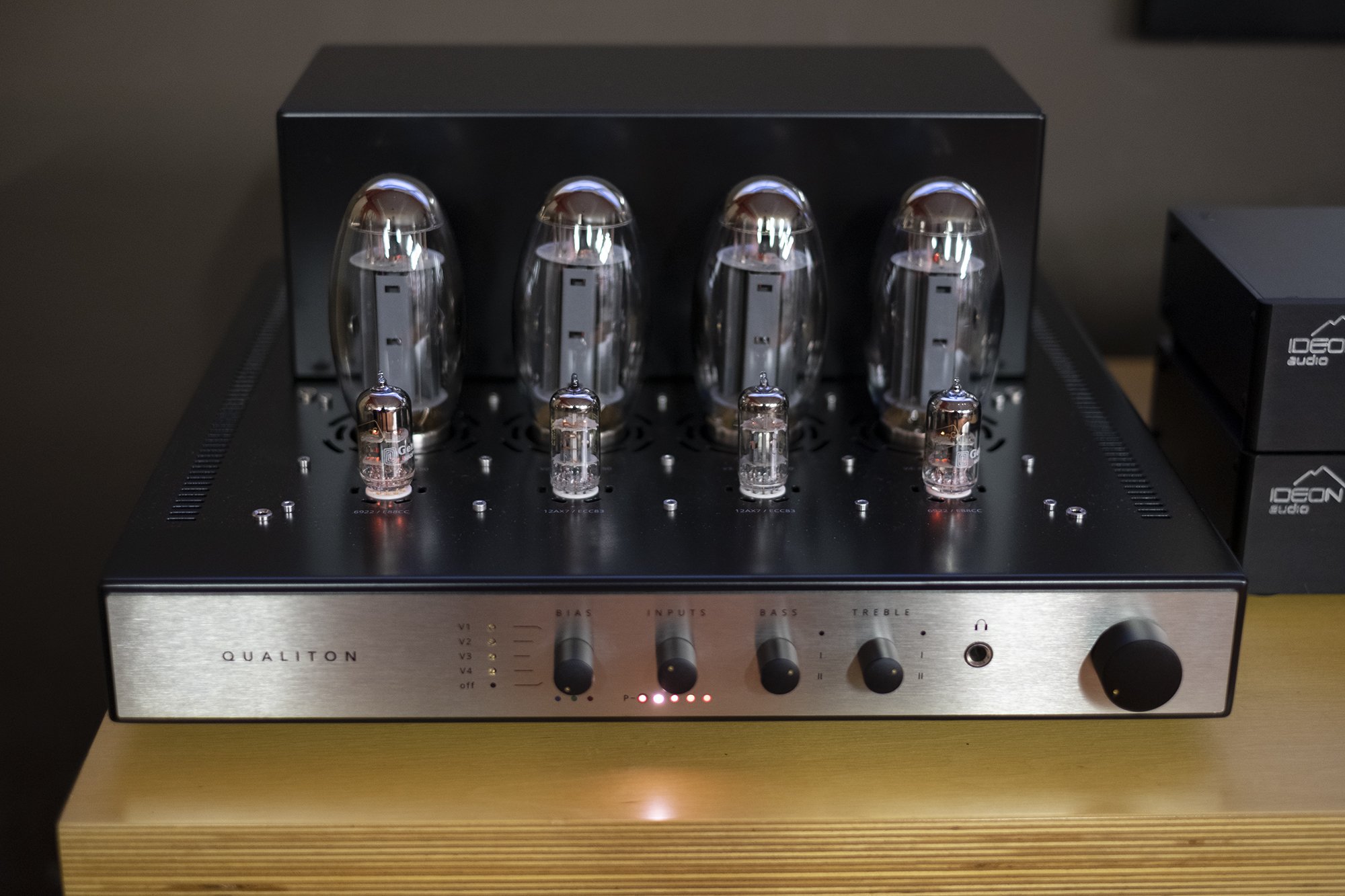
The X200 has a few relatively uncommon tricks up its sleeve. These include a (welcome) MM (Moving Magnet) Phono Input, Line, Sub, and EQ outputs, RCA and XLR Direct Inputs for use with an external preamp (or DAC/Streamer with volume control), Bass (+5.6 dB / +7.6 dB) and Treble (+6 dB / +8 dB) boost controls (yes, tone controls), and a headphone amp. These are joined by four single-ended line level RCA inputs. The associated product manual is nicely done and I recommend a gander if you want more info on the ins and outs.

The X200 weighs about 50 lbs and its built like a well built tube amp. Nothing particularly fancy, but sturdy and nicely put together. Audio Hungary includes a tube cage which I chose not to use because I like looking at the tubes while they dance, especially at night. My only complaint, and it’s a minor quibble, is with the brightness of the input LEDs — they are, to my eyes, way too bright, calling undo attention to an insignificant detail, while drawing attention away from the subtler beauty of those glowing tubes. The included remote weighs more than some switching amps, offers remote control of volume and mute, and has a strip of leather running down its backside to protect your furniture from its heft. Nice!

I lasted about a week using the stock tubes in the X200 — new production Tung-Sol KT120s and Electro Harmonix 6922s and 12AX7s — but a box from Mark Sossa of Well Please AV, the US Audio Hungary distributor, beckoned because it contained a quad of new Tung-Sol KT150s and some sweet NOS 6922s and 12AX7s. I rolled in these replacement tubes, adjusted the bias of the KT150s using the front panel controls which takes all of a minute or two, and quickly decided these replacements were in fact upgrades and they would remain in the amp for the duration of my listening time. What did they do to the X200’s output sound? Basically they offered improved bass response, both bolder and better controlled, a richer timbral palette, and improved micro detail or what I like to call nuance. Clearly better.

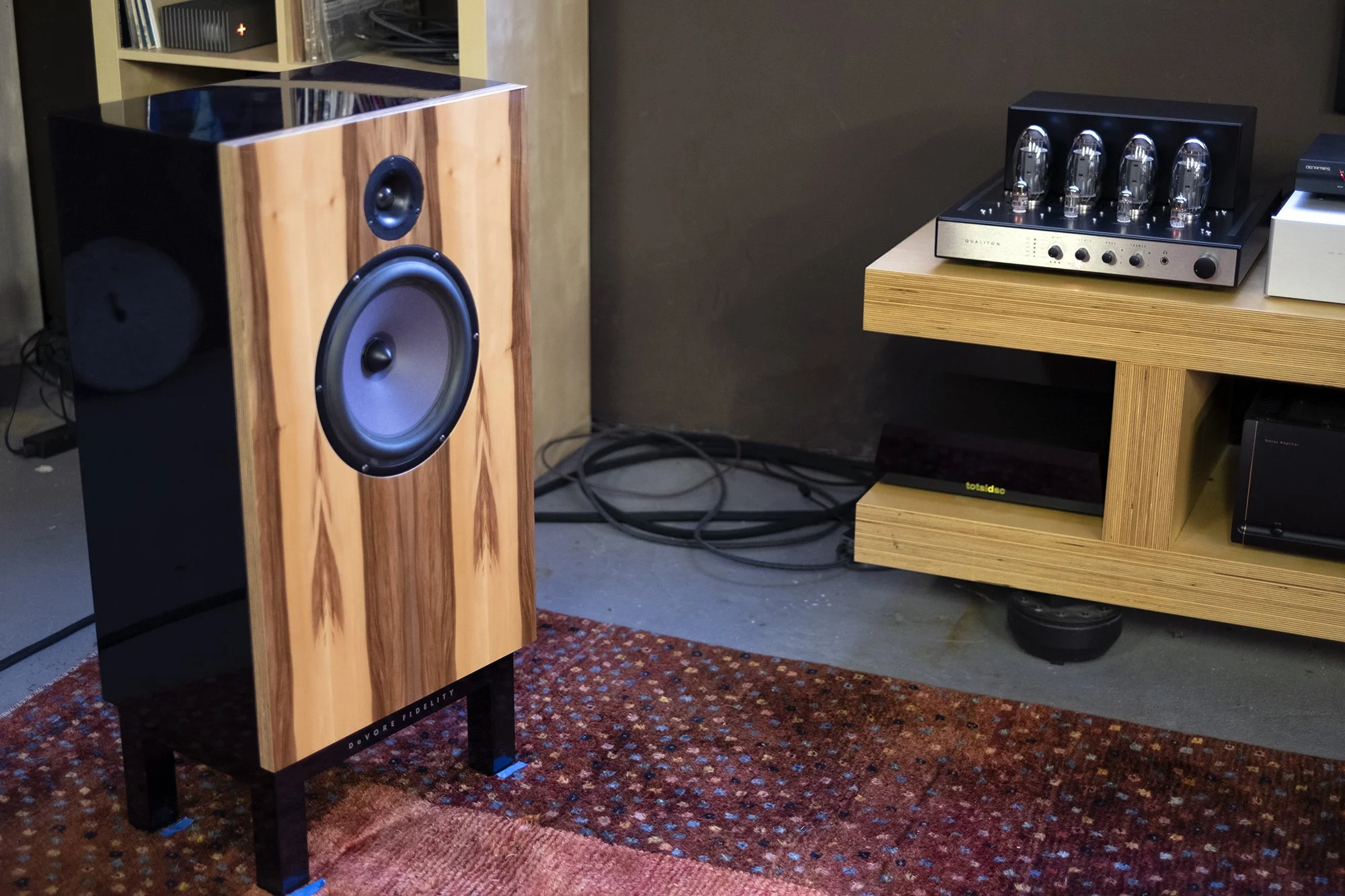
When reviewing integrated amplifiers, I like to use a few different pairs of speakers, ideally as different as possible to get a better gauge on how the integrated amplifier adapts to different loads and different voices. The current crop of speakers in Barn offered a very nice array from the relatively simple and easy to drive single-driver Fern & Roby Raven III, to the also easy to drive two-way DeVore O/96, and the bigger brawnier EgglestonWorks Oso (review). The X200 had no problem controlling these speakers, so power was more than sufficient in each case. I fed the X200’s phono input with the output from a Technics 1500C Turntable fitted with the stock Orotofon Red Cartridge which is in for a review that will appear on darko.audio. On the digital front, the resident totaldac d1-tube DAC/Streamer and review samples Ideon Audio Ayazi MK2 DAC & 3R Master Time Black Star took turns sending the converted bits to the X200’s line level input.

The Qualiton X200 sounds big and powerful, even huge when the recording demands it, like the sumptuously quirky “Rain” from Smerz’s sumptuously quirky album Believer. The sound image was nicely delineated, with a very real sense of space and scale, things I attribute to resolution. Bass was also big and powerful, even huge when the recordings calls for it, but things never get too wooly even when things get “wet, filthy, and disgusting” on “Spit” from Show Me The Body’s Corpus I.

There’s plenty of sparkle and delight in the X200’s ouput, and music’s heart and soul, i.e. tone, is rich but not overly saturated. If all of these descriptions makes you think, Sounds like a beam tetrode kinda sound, I wouldn’t argue the point (for a change). I used to own (and love) the Shindo Cortese F2a, which is also a beam tetrode, and it had a similar muscular lit up sound. Memory suggests the Shindo amp offered more immediacy, that sense of the music being made right there in front of you, a kind of magic, that the Qualiton contains albeit to a lessor degree.

I spent of most of my time listening through the DeVore O/96 because I know them well and love everything they do, and the Qualiton proved to be a great dancing partner. While the X200 did not deliver the same brutish bold beauty on tap from the Line Magnetic LM-845iA Integrated Amplifier (review), which uses pair of 845 triodes for about 18 Watts of output power, it did sound a bit tighter overall with more control from top to bottom. I do not hear these differences as being better or worse, rather flavors of reproduction that are equally valid. If we want to get all kinds of crazy with comparisons, the recently reviewed Constellation Inspiration Integrated 1.0 delivered more resolution, more delicacy, and more immediacy with a more convincing sense of space, scale, and timing. That’s what $16.5k can get you.

The X200’s built-in phono stage made my records sound just lovely coming from the Technics SL-1500C turntable. I’m not sure I’ve ever heard a terrible phono stage but I suppose they must exist. Listening to a few of my favorite records — Jessica Pratt’s self-titled debut, Sonny Rollins Freedom Suite, and the Budapest String Quartet’s take on Beethoven’s Quartet No. 14 in C-Sharp Minor, Op. 131 on Columbia Masterworks (MS 6385) from the late quartets, which is some of my favorite music period. From simple folkie guitar and vocals, to the supergroup trio of Rollins, Oscar Pettiford, and Max Roach, to achingly lovely strings the X200 reproduced the sounds and emotions of these fine LPs in an engagingly powerful manner. Always in control, with a nice amount of tone saturation and air. Splendid, really.

I spent the better part of a few weeks letting Roon assist my musical wanderings and I never got the sense that there was something missing from the experience when taken as a whole. As I mentioned, different integrated amps will get you a shift in focus in the case of the LM 845iA or even more of most everything with the much more expensive Constellation Integrated 1.0, but the Qualiton X200 offered a nicely balanced and rich presentation on every speaker I paired it with. Its output power makes it compatible with more speakers than the Line Magnetic, so you don’t need to limit its pairings to high(er) efficiency designs. The X200 can also kick some drums, keeping time with the frenetic energy of Milford Graves on Sam Amidon’s “April” from Following Mountains.

I took the AudioQuest NightOwl headphones for a test drive with the X200, kicking off with this same track from Sam Amidon and Milford Graves because I love this quirky late recording of Milford. I moved to Einstürzende Neubauten’s second LP from 1983, The Drawing of O.T. (a recent vinyl purchase) and it was readily apparent the X200’s phono stage shares many of the speaker outputs sonic traits – great punchy control of even the boys from Berlin’s most hair-raising blasts. I was also happy to find that inserting the 1/4” jack from the ‘Owls muted the speaker output, a feature I see as being sensible. On that note, I did not use the X200’s tone controls for more than a minute just to test them out because I don’t see the need for them with ‘phones or speakers. I suppose you could make a use-case argument in their favor, I just don’t have one.

Taking stock of the Qualiton X200, this integrated from Audio Hungary consistently delivered real punchy power and control coupled with a big rich sound with the three speakers I paired it with. Add in output power that will dance with most reasonably designed speakers, a better-than-fine-sounding phono stage, a fine sounding headphone amp, the option to grow your system by adding a different preamp, although I do wonder why you’d choose to do so, and we’re looking at a very appealing package.

The Qualiton X200’s plus column adds up to an integrated amplifier I can recommend without reservation, offering tube sound that defies most cliché’s you’ve heard about tube sound. Let’s dance!

Photo courtesy of The-ear.net

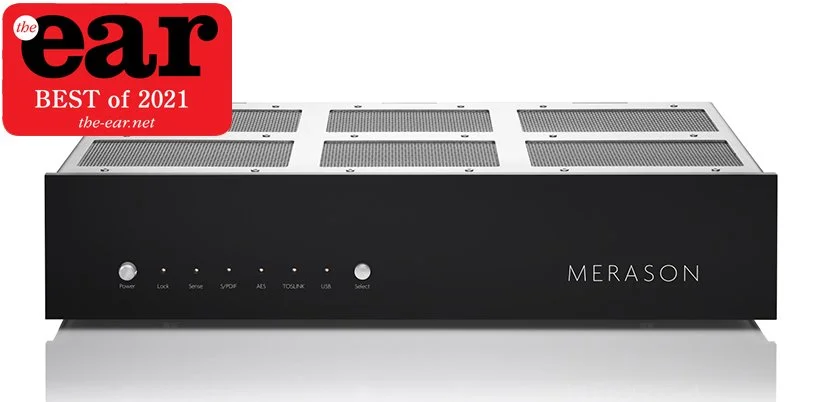
Best of 2021 - Merason DAC1

January 21, 2022
“This unprepossessing Swiss converter is a bit of a wolf in sheep’s attire, it looks pretty simple but the electronics contained within its artfully constructed chassis produce results that are rare at almost any price. I likened it to DNM amplifiers because it has an immediacy and transparency that makes for tremendous musical engagement when you get the source sorted. It’s take no prisoners attitude opens up recordings and invites you in to their worlds, if those worlds are intense and lively that’s what you hear but equally a polished recording will produce a sophisticated sound. Low level resolution is superb and this produces intoxicating results that make it very hard to press stop and turn in. One for the music junkies who don’t have to get up too early.”
— Jason Kennedy

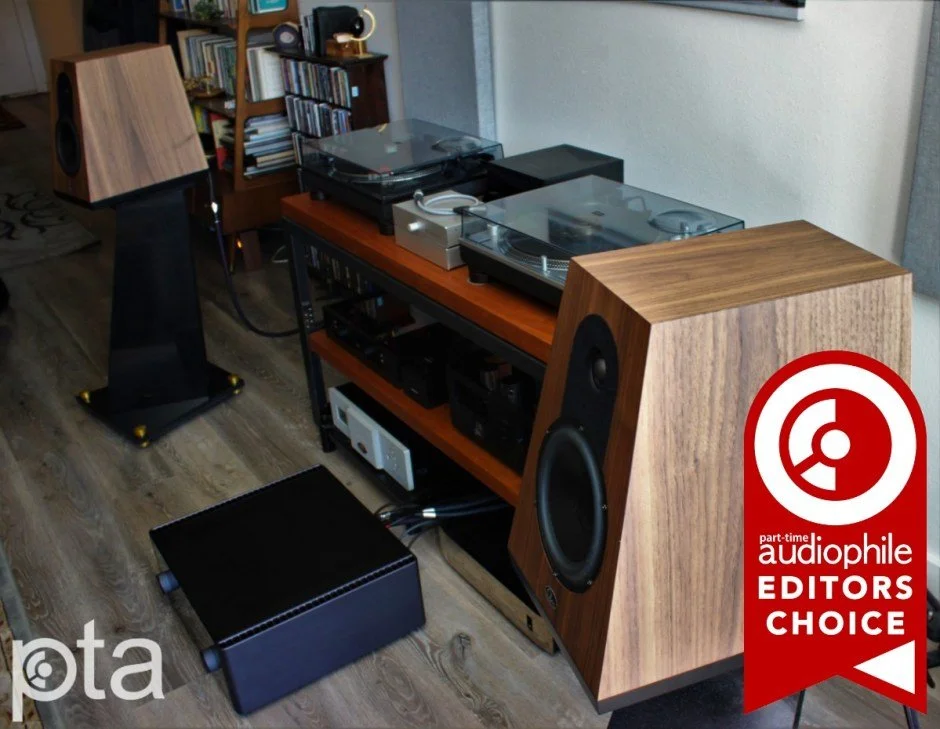
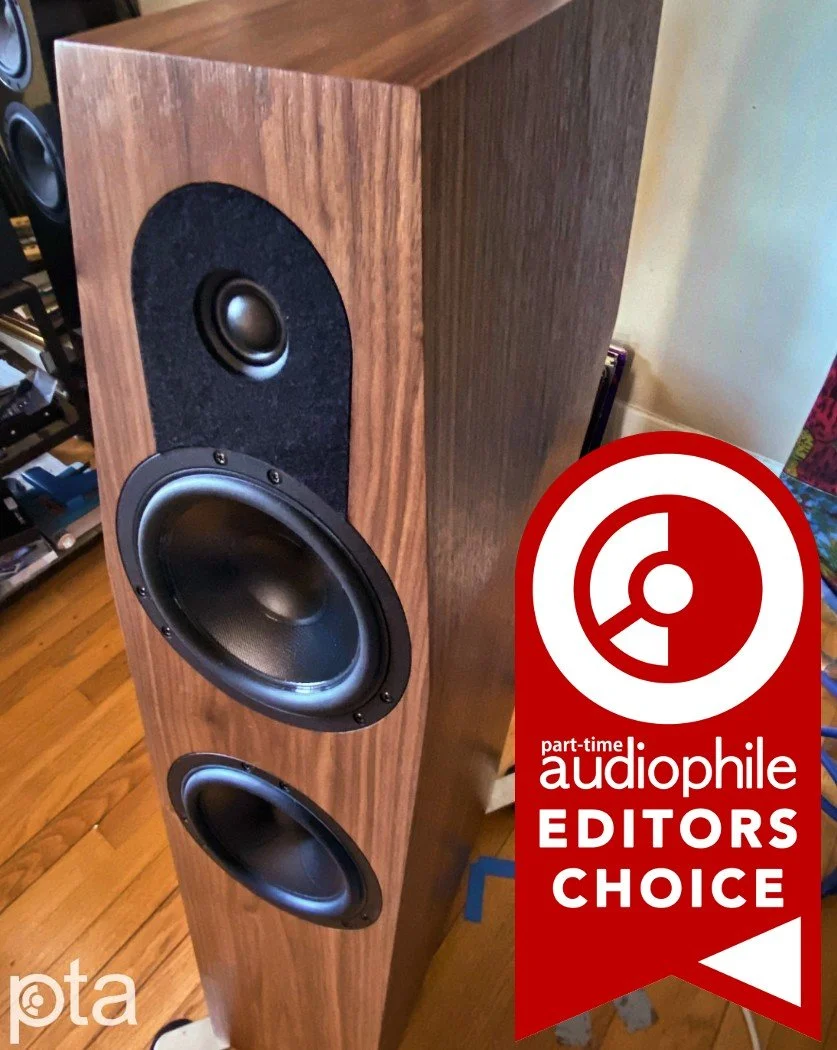
PTA - Editors Choice Awards 2021

December 13, 2021

Qln Prestige One ($6,800 pr USD)

This two-way stand-mounted bookshelf speaker from this extraordinary Swedish company competes with many of the finest monitors we’ve heard, and it comes at a price that makes us wonder why haven’t we purchased a pair for ourselves yet. Outstanding, balanced low frequencies in all but the largest rooms. “If you’ve heard the larger Prestige Threes playing at an audio show and you’ve fallen under their spell, you’ll be thrilled to know that much of that magic is present in the Prestige One.”

Qln Prestige Five ($17,500 pr USD)

Qln’s Prestige Five, along with the smaller Prestige Three, were so compelling that our reviewer Dave McNair wound up buying both pairs for himself. It’s no surprise that the PTA team is completely enamored with this Swedish speaker manufacturer, and the Five is the most ambitious design we’ve heard from them–so much bass comes out of these still-petite enclosures that you’ll shake your head in disbelief. “Great imaging qualities and dynamic speed with an added something that gets us closer to the music,” we concluded.

Merason Frerot with POW1 LPSU ($1,350 USD)

Small, simple and relatively inexpensive for the performance it offers, this DAC is perfect for audiophiles who don’t require a lot of bells and whistles but do want superb sound quality. We found the Swiss-built Merason Frerot to be perfect for streaming Qobuz, and for mating with an equally high-value streamer like the Innuos Zen Mini Mk. 3. Optional Pow1 LPSU ($900), improves sound quality across the board. This is an Editors Choice Awards winner, because one of the editors is giving the Frerot a permanent home.

Merason Frerot review - New Record Day

December 3, 2021

Democracy Room

Capital Audio Fest 2021 Recap

December 1, 2021

https://twitteringmachines.com/caf-2021-well-pleased-av-and-command-performance/

“But back to more important matters — I love, love, “Exile” from Taylor Swift’s Folklore album that features Bon Iver’s Justin Vernon who begins the vocals. And you’d be hard-pressed to guess Taylor Swift even after she joins Justin. This system played “Exile” with a deep and full voice, while beautifully highlighting the world of differences between these two distinct voices. I was moved. Really, moved.”

https://www.stereophile.com/content/command-performance-and-well-pleased-av-jsikora-koetsu-doshi-innuos-gryphon-qln

“This system sounded fantastic: clear and dynamic with exceptional scale, imaging, and a sleek musicality that left me satisfied. The rig reproduced Tour de France exceptionally well, revealing ambient and spatial cues that allowed the music to have space and breathe, while its low-end, particularly bass drum, had more tone and texture than I’ve heard from this well-loved (by me) album. The Truffaz disc came across in a wide, deep stage, with a trumpet that floated across the speakers. The QLN Prestige Five speakers made me hungry for more.”

https://parttimeaudiophile.com/2021/11/14/command-performance-av-qln-the-gryphon-j-sikora-doshi-innuos-gigawatt-swisscables-well-pleased-av-caf-2021/

“As far audio show exhibits go, it’s Mark Sossa of Well Pleased AV who is well known for his center-to-corner speaker placement. And I must admit, it worked wonders here at CAF 2021. The new Prestige Five is a bass monster. Capable of driving just about any room you can domestically imagine. With that, the exhibit space at Rockville Hilton did seem rather small considering what we know of the P5’s ability to play large.

Was the room overloaded? Nope.

Plugging the bass ports on the back of the P5’s is an option Dave and I have explored, but with Sossa’s speaker placement he was able to tame the bass output and furthermore deliver one of the deepest sound-stages of the show. Period.

As many showgoers would agree, this was one of this years favourite rooms.”

http://www.enjoythemusic.com/Capital_Audiofest_2021/clott/

“Another room worth a mention was the QLN, Innuos, and Gryphon. Sounding its best on Sunday (which is typical at these shows), the combo was well set up and offered a staggering stage, surprising low end punch and an even and natural tonal palette that drew me back again and again. This room didn't WOW you (which I find loses it's allure quickly), but endeared itself to you for a long term relationship. Nothing in this room shined above any other; it was a well put together room that reminded us that system matching and good setup will always satisfy in the long run.”

QLN Prestige 1 - Audiohead

September 21, 2021
“I first listened to the older QLNs and recalled everything I liked about them – a spacious and airy top end, relative tonal neutrality, a deep and layered midrange, and bigger bass than you’d expect for a monitor this size. This is still an excellent speaker with a neutral character.

Plugging in the new Prestige One however was a different world entirely. Bass immediately was cleaner and less boomy in the room, while also giving the impression of reaching lower. Across the midrange and top end, the sound seemed better damped and less splashy, the auditory image was more focused and precise. Details came through with a greater sense of transparency and immediacy and the tonal character of sounds was more apparent.

Alongside the greater sense of control was an increased perception of dynamics, both in punch and in micro dynamic contrast. Small gradations were more evident, but the larger macrodynamic swings also placed me into the music more. With the older QLN I was able to discern many facets of the recording with ease, but with the new Prestige One I could feel the energy of musical performances in a way that was more deeply informative.

While both speakers were plenty coherent, the newer QLN also seemed cut from a more coherent sonic cloth, with the texture of bass and treble on the older model sounding splashy and loose in the lows, giving a slight U-shape to the frequency response. By contrast the new one sounded like it was tuned to a gentle B&K style downward tilting curve, that was much flatter and that had much more controlled cabinet vibrations and directivity. Room interactions in the same spot seemed less severe with the new speaker, and generally musical enjoyment and immersion were enhanced. While either speaker could be a great studio or critical listening tool, the Prestige Ones gave me greater musical satisfaction.”
— Brian Hunter

Full review here

Qualiton x200

September 15, 2021

We are happy to announce that the popular x200 Integrated Amplifier from Qualiton is now available in all black! Product link here

Please contact us if you have any further questions.

QLN Prestige 1

September 15, 2021
005.jpg
001.jpg
012.jpg
015.jpg

Merason Frerot/Pow1 - HiFi Pig

August 14, 2021
“I thoroughly enjoyed my time with this DAC. Its sound is matched by its build quality and stylish good looks. Precision and detail are delivered in spades but never at the expense of emotional involvement. Performance is enhanced by the dedicated POW1 power supply but it is more than acceptable with the standard supplied PSU. Buying the Frérot in its standard power configuration and saving up for the POW1 at a later date would bring a nice little upgrade and performance boost to look forward to.

As there was really nothing about this product that I didn’t like, it gets five hearts from me. If you are in the market for a stand-alone DAC at this price point, the Merason Frérot definitely should be on your audition shortlist.”
— John Scott
5HEARTS-AWARD-LOGO_CB_400px.jpg

You can find the full review here

QLN Prestige 3 - HiFi+

August 14, 2021
← Newer Posts Older Posts →

Latest & Greatest

Featured
Apr 6, 2026
New Merason DAC2!
Apr 6, 2026
Apr 6, 2026
Mar 5, 2026
NORSE X1 & X5 review!
Mar 5, 2026
Mar 5, 2026
Jan 7, 2026
XACT S1 EVO Review
Jan 7, 2026
Jan 7, 2026
Dec 10, 2025
Capital Audio Fest - 2025 Recap
Dec 10, 2025
Dec 10, 2025
Nov 11, 2025
New QLN Prestige Three Gen 2!
Nov 11, 2025
Nov 11, 2025
Aug 8, 2025
XACT Music Servers/Streamers & Network Switch
Aug 8, 2025
Aug 8, 2025
Jun 19, 2025
New Merason Mountain Line - Available Q4 2025
Jun 19, 2025
Jun 19, 2025
May 12, 2025
AXPONA 2025 recap
May 12, 2025
May 12, 2025
Jan 28, 2025
New Qualiton website!
Jan 28, 2025
Jan 28, 2025
Oct 1, 2024
Qualiton 300B Integrated Amplifier
Oct 1, 2024
Oct 1, 2024

Powered by Squarespace