


Merason Frerot/Pow1 - HiFi Pig
“I thoroughly enjoyed my time with this DAC. Its sound is matched by its build quality and stylish good looks. Precision and detail are delivered in spades but never at the expense of emotional involvement. Performance is enhanced by the dedicated POW1 power supply but it is more than acceptable with the standard supplied PSU. Buying the Frérot in its standard power configuration and saving up for the POW1 at a later date would bring a nice little upgrade and performance boost to look forward to.
As there was really nothing about this product that I didn’t like, it gets five hearts from me. If you are in the market for a stand-alone DAC at this price point, the Merason Frérot definitely should be on your audition shortlist.”

You can find the full review here
QLN Prestige 3 - HiFi+

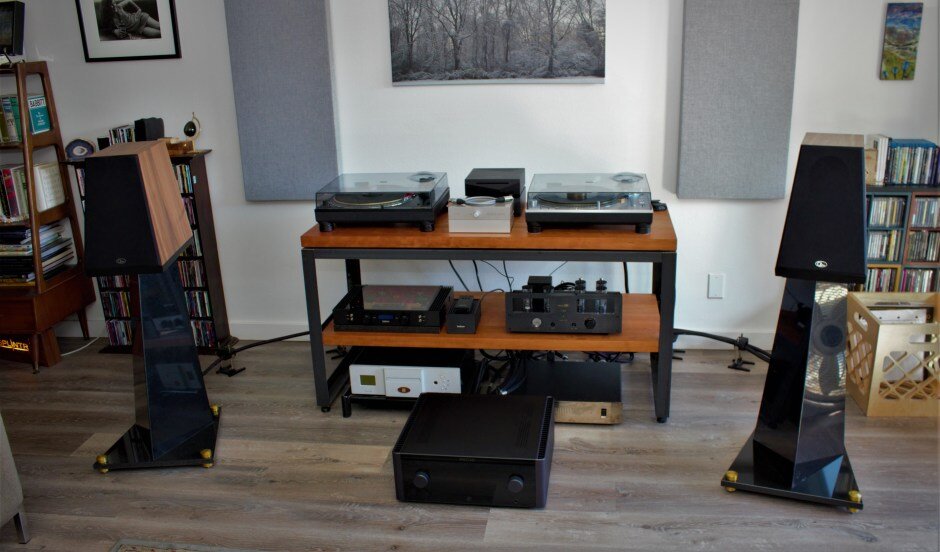


QLN Prestige 1 - Part Time Audiophile
At last, the new Qln Prestige One monitors have arrived.
The last time I heard a pair of Qln speakers was probably at an audio show close to a couple of years ago, undoubtedly matched with a Vinnie Rossi L2i-SE integrated amplifier. I leaned over to Mark Sossa of Well Pleased Audio Vida, who is also the Sales Manager of Qln, and I asked him, “So…what’s the secret? They sprinkling some sort of fairy dust in these?”
“Nope,” Mark replied with a chuckle. “Just the best parts and engineering.”
If you’re a regular reader of Part-Time Audiophile, you probably already know all about Qln loudspeakers from Sweden, and how these beautiful and surprisingly petite designs can fill a decent-sized room with big, big sound and lovely, fulsome bass. You’re probably strapping yourself in for another love-fest, another premium two-way bookshelf design that has wowed us—or, to be more specific, me, the guy who falls in love with a different monitor every few weeks.
I’ve explained that there’s a good reason for this, and it has nothing do with anything pragmatic or even suspicious. In my early days of reviewing, my editors and publishers would send stuff to me. Here, review this pair of RCA interconnects, about 1200 words. When that’s the methodology for your review schedule, stuff marching in and out of the listening room, you’re not going to give too many raves unless you get lucky. It’s a mixed bag, working on that assembly line.
I don’t do it that way any more, nor do any of the writers here. We pursue the products that we tend to find interesting. Ones we’ve already scouted. That methodology tends to filter out the merely competent or adequate. When a box arrives on our front porches, we get excited because we’re looking forward to spending time with whatever it is.
And so it is with the Qln Prestige One. Every time I heard the magnificent little QLN Prestige Three towers hooked up to a Vinnie Rossi L2-iSE integrated at a hi-fi show, I had my mind absolutely blown. Every time I’ve heard these, I’ve been very clear with Mark Sossa.
I want to review these. PLEASE.
The Long Journey of the Qln Prestige One
As we all know, Dave McNair wound up reviewing the Qln Prestige Three—it had something to do with him immediately wanting to buy a pair as his personal reference the second he heard them. Mark Sossa told me at the time that a larger Qln was on the horizon, the Prestige Five, and I would get a chance to review those instead. Okay, Dave, review those Threes. Then, before I knew it, Dave had the Prestige Fives in his system and I was like WTAF?
I heard from both Mark and Dave almost immediately. Dave had been enjoying the Fives almost in secret because he didn’t want me to get angry. What happened? Dave was able to hear the Prestige Fives at a dealer, one of the first pairs in the US, and he immediately traded up. So I couldn’t be mad at Dave. He fell in love. The heart wants what the heart wants.
Mark Sossa, on the other hand, called me to tell me that the new Qln Prestige One two-way bookshelf speakers were coming soon, and that he knew I would totally be into that. I was, of course, amenable to this plan. Then the news became just a little better—Qln was releasing a new version of their Signature monitor, which was an even more ambitious design. I’d get that after I finished with the Qln Prestige Ones.
I was happy again and Dave was let off with a warning–even after he was able to spend time with the Qln Prestige Ones first. “You’re gonna love these,” he told me. “Please don’t buy these ones too before I get a chance to review them,” I replied.
The Qln Prestige One loudspeakers did arrive. I connected them to the Rotel MICHI X5 integrated amplifier, and I cued up Hilary Hahn’s Paris. My first reaction, of course, was that the wait was worth it, and every glorious thing I loved about Qln in the past was now here, in my listening room, at my disposal. Yes, I’ve found another extraordinary bookshelf monitor to love and cherish.
What a disaster! I’ve fallen in love again, and I can’t get up! My career will be ruined!
Inside the Qln Prestige One
When I first set up the Qln Prestige One, I was a little confused as to what I had plucked from the box. I posted a photo on social media and someone in Germany immediately congratulated me for getting a pair of the Signatures in for review. Wait, these are the Signatures? I thought these were the Prestige Ones—yep, it even says so on the back.
I checked out the Qln website and the photo of the Qln Prestige One was of the older version, with a cabinet that was all right angles. The photo of the Signature, however, looked just like the pair of Prestige Ones I had in front of me. Basically, the Prestige Ones look like the older Signatures, and we don’t know what the new Signatures look like, but we will soon. Hope that clears things up for you—it did for me.
As Mark Sossa explained, no fairy dust was used in the making of the Qln Prestige One monitors, just excellent parts and, of course engineering. In this case, we’re talking about Mats Anderson, Qln designer. He’s one of those speaker designers who stresses the need to voice speakers so they sound more natural, and he does this mostly through resonance control and time coherence. “Many things are hidden in the measurements that are very important to how we hear things,” he told me.
Qln’s history is intertwined with this model. The first Qln 1 speaker goes back to 1979, when it was considered a bit of a Swedish LS3/5a, but with a time-aligned design in a truncated pyramid enclosure. Over the years it became more sophisticated, and this new Qln Prestige One was, indeed, inspired by the design of the last generation of the Signature.
This Qln Prestige One is a study in paying close attention to every small detail, particularly in the crossover design, as Mats explains:
“We use the same constant impedance crossover technology but we have put a lot of time to optimize performance and cost. We have increased dynamics and even SPL by using lower loss coils to the woofer. All coils are air core and all capacitors are of polypropylene type.
“All coils are baked, so the wires are glued together to reduce internal vibration. The constant impedance crossover technology have even impedance responses that improve easy load for amplifier specially tube amps and give better phase coherence for the driver. Crossover is hard wired for best contact between components and we try to get as few contact points as possible. Every component is glued with soft glue to reduce vibrations and increased damping.”
Internal copper wiring was designed by Qln, interestingly enough, and all cable parts are baked. Polypropylene is used extensively throughout for insulation and vibration control. Here’s an example of the level of care used in this design—the polypropylene must be without color, as the color used has a “negative effect” on the performance.
Mats Anderson described the current drivers for this new Qln Prestige One thusly:
“The bass/midrange and treble drivers have been specifically selected and custom developed by industry renowned Danish driver manufacturer ScanSpeak and offer the latest in 21st century advanced driver technology. The unique coated Kevlar bass/midrange driver with its built-in copper ring in the magnet system offers symmetric drive and higher dynamics in the midrange concurrently suppressing intermodulation distortion and resulting in industry leading high-end voice handling and astonishing micro/macro dynamics from a compact 2-way speaker design.
“Likewise the unique Illuminator tweeter offers superb vocal rendition and excellent imaging at all listening positions. Its large roll surround and textile dome diaphragm provides a flat frequency response above 30 KHz with outstanding off-axis dispersion. The unique AirCirc magnet system and its rear chamber reduce reflections and resonances.”
Qln Prestige One Sound
I think I can describe the Qln sound easily, because it is so distinctive. Most of us sit while we listen, and we tend to “watch” the soundstage in front of us. We can see the music, like it’s being presented on a screen behind the wall between the speakers, and if we’re lucky it’s in 3-D.
The first time I walked into a Vinnie Rossi/Qln room that screen was gone, replaced by a top-notch VR set-up attached to my noggin. I felt like I had walked outside until I came to the edge of a beautiful meadow, and I was just standing there a looking at everything happening in front of me, and I could smell the pine trees and feel the breeze on my face. It’s almost like active listening vs. passive listening. Stuff is happening right in front of you, and you can feel all of the movement.
That sounds a little fancy-schmancy, so I’ll tell you my simple impression of the Qln Prestige One sound—it was warm, it was open, it was holographic, and it sounded incredibly natural in every way.
With the Qln Prestige Threes, at hi-fi shows at least, you’ll immediately notice how deep the bass is, and how unlikely it is that such a svelte little tower can reach that low. The Prestige One is equally impressive in that respect, perhaps not in an absolute manner, but in a way that’s still uncanny to the coordination of the ear and the eye. We are talking about slightly less on the bottom, in a very general sort of way, but in my room I felt that the Qlns coupled so well to my room that I couldn’t help but think that I had the perfect-sized speaker in the perfect-sized room.
Listening
The Qln Prestige One monitors were an important participant in the Yulunga Tests I administered for the Luminous Audio Arion Mk. 2 phono stage and the Sonus faber Lumina II monitors. I won’t go into much more depth here, other than to explain that the Yulunga Test is what I call that first deep soft bass drum strike on “Yulunga,” the opening track of Dead Can Dance’s Into the Labyrinth.
In short, the Qln Prestige One monitors delivered that epic drum sound with an almost perfect balance of texture and depth. That drum beat energized my listening room in a relaxed, open way that was particularly notable for its clarity. I have a feeling this will be the benchmark of the Yulunga Test that other two-way bookshelves—or any speakers, really—will have to meet.
The most illuminating listening session of all came toward the end of the review period, while I was comparing such extraordinary phono preamplifiers as the Brinkmann Edison Mk. II and the Luminous Audio Technology Arion Mk. II. I pulled out one of my secret, occasionally forgotten reference LPs, Shelly Manne’s Sounds Unheard Of. I say forgotten because I tend to forget about it, and just how awesome it sounds.
This is the Analogue Productions remaster from years ago, part of the more affordable Revival Series line that seemed to be packaged with a bit less prestige than Chad Kassem’s mind-blowing 2-LP 45rpm sets that I enjoy so much. Nevertheless, this recording is a clinic on imaging, with Manne playing dozens and dozens of exotic percussion instruments located all over the stage, and guitarist Jack Marshall providing the melodies.
This LP always sounds great, and on a wide variety of hi-fi systems, but I’ll always remember how it sounded on the Qln Prestige One monitors because it was the first time I thought about the recording itself, and whether Shelley Manne is really running around the stage playing all these instruments or is this all mixing board wizardry. Of course it’s the latter, although I would love to hear Manne running around the stage in bare feet trying to keep the beat. The point is, I never even thought about it before, but I did with the Qln’s because I was hearing such a balanced whole. Every sound in this amazing album felt just a little closer to me than ever before.
Conclusion
The Qln Prestige One monitors were one of the most endearing and talented two-way monitors I’ve heard. If you’ve heard the larger Prestige Threes playing at an audio show and you’ve fallen under their spell, you’ll be thrilled to know that much of that magic is present in the Prestige One—so much, in fact, that I might choose the smaller speaker and save a bit of money and not feel like I’m missing out on anything other than a few stingy Hz at the bottom.
As much as I enjoyed their company over the last couple of months, I found myself persuaded even more when I considered the MSRP—just $6800/pair. I’m not sure I’d compare them to other speakers I’ve reviewed in their price range, since I feel like they’re perfect fine hanging out with some of those five-figure monitors I’ve recommended in the last few years. But if I was in a dealer’s showroom and I was listening to these speakers, I’d put them into serious consideration. After I was told the price, the checkbook would pop out almost automatically.
Once again, I’m faced with the idea of a great monitor becoming even greater. After I reviewed the Stenheim Alumine 2 loudspeakers, I was informed of an SE version that improved the overall performance. After I reviewed the Vimberg Amea, I was left to wonder how much the $10,000 diamond tweeter version would enhance the performance of a speaker that may be the finest two-way monitor I’ve heard. So this time, I’m going to keep bugging Mark Sossa until those Qln Signature monitors are finally released. I want to know how this can get any better, with or without fairy dust.
Meanwhile, the Qln Prestige Ones not only get a Reviewer’s Choice Award, but I’m sure we’ll be discussing this amazing monitor again at the end of the year.


Merason Frerot/Pow1 review - Part Time Audiophile
“When I switched to my “high-end audio exhibit room” playlist from the Innuos server, composed of some of my favorite hi-rez CDs from FIM, Analogue Productions, Mo-Fi and more, I felt satisfied that the Merason Frerot was serving as a viable source in my system—not for the convenience but for the sound quality.
At this point I was ready to say that the Merason Frerot, at $1350 USD, was easily the best DAC experience I’ve had at home. Solid digital sound, plenty of color and texture to the music, some extraordinary imaging and soundstaging fireworks as I mentioned, and an ease of use that simply hasn’t been matched. I plugged this in without even consulting the owners’ manual, I knew where the wires needed to be plugged, and boom...
The Pow1 LPSU made a huge improvement to the sound of the already thrilling Merason Frerot. The music simply expanded in every direction, bigger, more transparent, more finger-poking realistic. That incredible digital sound at those high-end shows, the one that eluded me at home? This was it, finally.”
Full review can be found here

Merason DAC1 Review - HiFi News
Top dog in a range of just two outboard DACs from Swiss brand Merason, the DAC1 is a modern-day example of 'less is more' audiophile thinking. We lift the lid and investigate
In common with a lot of HFN readers, I have a bit of a 'thing' about overly complex digital devices. I'm not referring to input flexibility – many of us will have systems in which different flavours of digital connection are accommodated, from USB links from a computer to good old S/PDIF from a CD player or the like. No, what I really find obstructive is devices bristling with digital-domain options, from filters to dither to PLL bandwidth and the like, all of which often look like an exercise in 'because we can' – a facilities arms-race – rather than being of any real-world assistance to the user.
I've found myself railing against such over-provision, suggesting that buyers will be tempted to spend too much time fiddling, to the detriment of, well, you know, actually listening to the music. By contrast, there's absolutely no such problem with the Merason DAC1 we have here. This £4195 converter, available in a choice of black or white fascia finishes (with chromium nickel steel available at a slightly startling £2400 premium), is designed as a simple, straight-down-the-line unit. You plug in a digital source, connect the output to your amplifier or preamp via unbalanced RCAs or balanced XLRs, and you're done.

Beat The Clock
That's not to say that care hasn't been taken in the build of the unit. Located in Worb, a short distance east of Bern, manufacturer Niedal Audio Lab makes great play of the Swissness of its products, from the precision of the build to the accuracy of the crystal clock, and while the Merason DAC1 doesn't exactly boast bank-vault heft at just 8kg (the optional stainless steel front slab upping that by 3kg), it feels solidly put together and beautifully finished, as one might expect at the price.
The simplicity is a conscious decision, the company taking a stand against the complexity and what it sees as pandering to fashion found elsewhere in this market sector. Eschewing the ultra-high sampling rate capability of many rivals, and the likes of DSD and MQA, the DAC1 is designed purely for PCM-based files, from 44.1kHz/16-bit up to 192kHz/24-bit. It says that the idea 'was not to build a unit to enable the adoption of multiple, new formats using new-to-market technologies'. It continues, 'rather, the goal is to take proven concepts and components, that are assembled with care and attention', adding that the DAC1 is designed as 'one that allows the music to shine brighter than over-inflated specification sheets'.
Admittedly that stance may dissuade as many potential buyers as it encourages – I'm not sure I'd now buy a DAC unable to play my collection of DSD files in native form (rather than crunching them down through a PCM-sized 'hole') – but it does allow the company to keep the construction of the DAC1 simple and direct, optimising the circuitry for its singular task rather than having to make concessions to flexibility.
Silver Service
Editor PM examines the digital workings in more depth but in essence the DAC1 uses a pair of Burr-Brown/TI PCM1794A converters in differential mode. Downstream of this is a proprietary stage that converts the DACs' current output to a voltage that feeds a Class A buffer and low-pass filtering. Choice passive components include silver mica capacitors.

Meanwhile, the signal path is fully balanced from the output of the DACs to the output stage of the unit, and uses symmetrical L/R signal paths, with foil capacitors to protect against DC at the output. The designers also say that 'great attention has been paid to the layout of the motherboard so that an extraordinarily high signal-to-noise ratio could be achieved', the specification claiming this as greater than 120dB.
As you might expect from its brief, the DAC1 is easy to set up and use: one button on the front panel powers it on and off, while the other selects between the optical, coaxial, AES/EBU and USB inputs. The latter may, at some point, mutate into an I2S input, but I'm not sure about the wisdom of this. Yes, there may be a growing number of digital devices employing I2S, but surely for most users a simple USB-B 2.0 port is of more use?
Indicators for the various inputs are provided on the front panel, along with a 'lock' lamp and one to show a USB link is connected, but that's about your lot.
While the limited range of files the DAC1 can handle may matter to some – anyone frequenting the NativeDSD store for instance – for many it will be no limitation, and in some ways the very simplicity of this unit will be a plus-point in a still-evolving world of digital music. One can buy an all-in-one network-connected DAC, needing only to be hooked into the home Internet feed and then controlled by an app on smartphone or tablet. However, unless you buy a device with plenty of upgradability built-in, there's always that worry that the arrival of the Next Big Thing in streaming will leave you high and dry.
Smooth Talker
Opt for a dedicated DAC, connecting to it via either a (relatively) inexpensive streaming bridge such as Pro-Ject's Stream Box S2 Ultra [HFN Oct '18], a laptop running suitable software or even one of the many variations on the Raspberry Pi/Asus Tinkerboard/Intel NUC theme, and you are effectively future-proofed. And that's (almost) how I chose to test the DAC1. Admittedly I did feed it from the digital output of a couple of conventional network music players, but mainly it was used fed from one of my Mac computers, on the end of the little Pro-Ject box or via the USB output of the Intel mini-computer I use to run my Roon Core.
What was immediately apparent was that this DAC has a sound that's both best described as 'characterful' and agnostic when it comes to the way digits are delivered to it. Whether fed via S/PDIF connections or USB using a variety of forms of playback software, the DAC1 remained entirely consistent, presenting music in a way not always as hyper-detailed as some DACs can manage, but warm, rich and smooth without submerging what's being played in excessive lushness.

Real Delicacy
The DAC1 could be considered as the 'antidote to digital'. That said, I wouldn't describe it as sounding 'analogue', as that gets into far too many sweeping generalisations regarding the 'sound' of analogue and digital. Instead, I think 'organic' just about covers it, this DAC dispelling any thoughts of the mechanisms behind what's being heard, and instead throwing all the listener's concentration on the music. And even better, it pulls off the same trick with almost any style of music one chooses to play.
Ella Fitzgerald – The Complete Piano Duets compilation [Verve 00602508525803] is a glorious chronological survey of the singer's voice from early sessions with Ellis Larkins to her 1970s recordings with Oscar Peterson, and Merason's DAC1 affords the opportunity to revel in her glorious intonation, diction and phrasing, delivered with both force and delicacy. It's an enchanting sound, with weight in Fitzgerald's lower registers juxtaposed against a featherlight sweetness in the upper, and the effect is entirely captivating.
Hold Your Horses
Come bang up to date with the jazz and blues-infused Lake Street Dive album, Obviously [Nonesuch 075597919585; 48kHz/24-bit], and the DAC1 handles with ease another remarkable voice. In this instance it allowed the vocals of Rachael Price to soar above the beautifully judged playing of the rest of the band on the opening 'Hypotheticals', with its driving beat and tight, clean bassline, while the torchy 'Anymore' retained a wonderful glow about it.
Don't for a moment think that these compelling qualities are only reserved for deliciously recorded tracks, 'audiophile' or otherwise. All that warmth and generosity is still in evidence almost regardless of source or genre. So the DAC1 handles just as well the looser sound of Patti Smith's 2005 Royal Festival Hall take on her Horses album [from Sony/BMG 88697352452], delivering with conviction the rawness and spontaneity of the live performance. And with the murky 'wall of sound' production of Alice Cooper's Detroit Stories set [Ear Music 0215653EMU], the big, powerful bass is a delight, as is the drawl and slur of the lead vocal, showing that this DAC can rock with the best of them.
Some might want for more snarl and bite, even if that was at the cost of a brash or brittle sound, but the Merason DAC1 instead keeps its music big, grown-up and really rather magnificent. Switch to the powerful percussion of drummer Dave Smith's Live At The Vortex 11.11.17 EP [Bandcamp download] and there's no doubting the punch or definition the DAC1 can deliver with this improvised set from the London Jazz Festival.
Similarly, this combination of weight and resolution is just as apparent with large scale orchestral music, such as the beautifully light-of-touch Budapest Festival Orchestra/Iván Fischer recording of Dvorák's Suite In A major [from Channel Classics CCSSA30010] in which the full orchestral weight is deployed deftly and with precision. Indeed, whatever I played, within the 192kHz remit of the DAC1's universe, it never sounded less than passionately committed.
Hi-Fi News Verdict
The richness of the sound won't be to every taste, but it's never cloying or overplayed: instead, Merason's DAC1 backs up its smoothness with power and unforced detail to consistently appealing musical effect. True, the limited format handling may rule the DAC1 out for some – it takes a stand against digital expansionism! – but its singularity of purpose pays off in a sound as appealing as it is easy to enjoy.

Full review can be found here


Qualiton x200 Integrated Amplifier - Mono and Stereo Review
“The Audio Hungary Qualiton X200 integrated amplifier has a powerful, self-contained audio ecosystem with a headphone amplifier, balanced operation, direct input, studio-level EQ, etc. It is simple, easy to use and a joy to listen to.
It was designed to be a true all-rounder, great sounding, great performing integrated amplifier and it delivers on its promise. The X200 acts as a modern audio hub with multiple connectivity options and takes all the features a step further, but not getting in the way of enjoying the music at any time.
I am often asked to recommend a particularly well-designed, great-sounding, and reasonably priced tube integrated amplifier. As you’ve obviously been able to decipher so far, the Audio Hungary Qualiton X200 gets my vote and a big thumb up.”
Full review can be found here

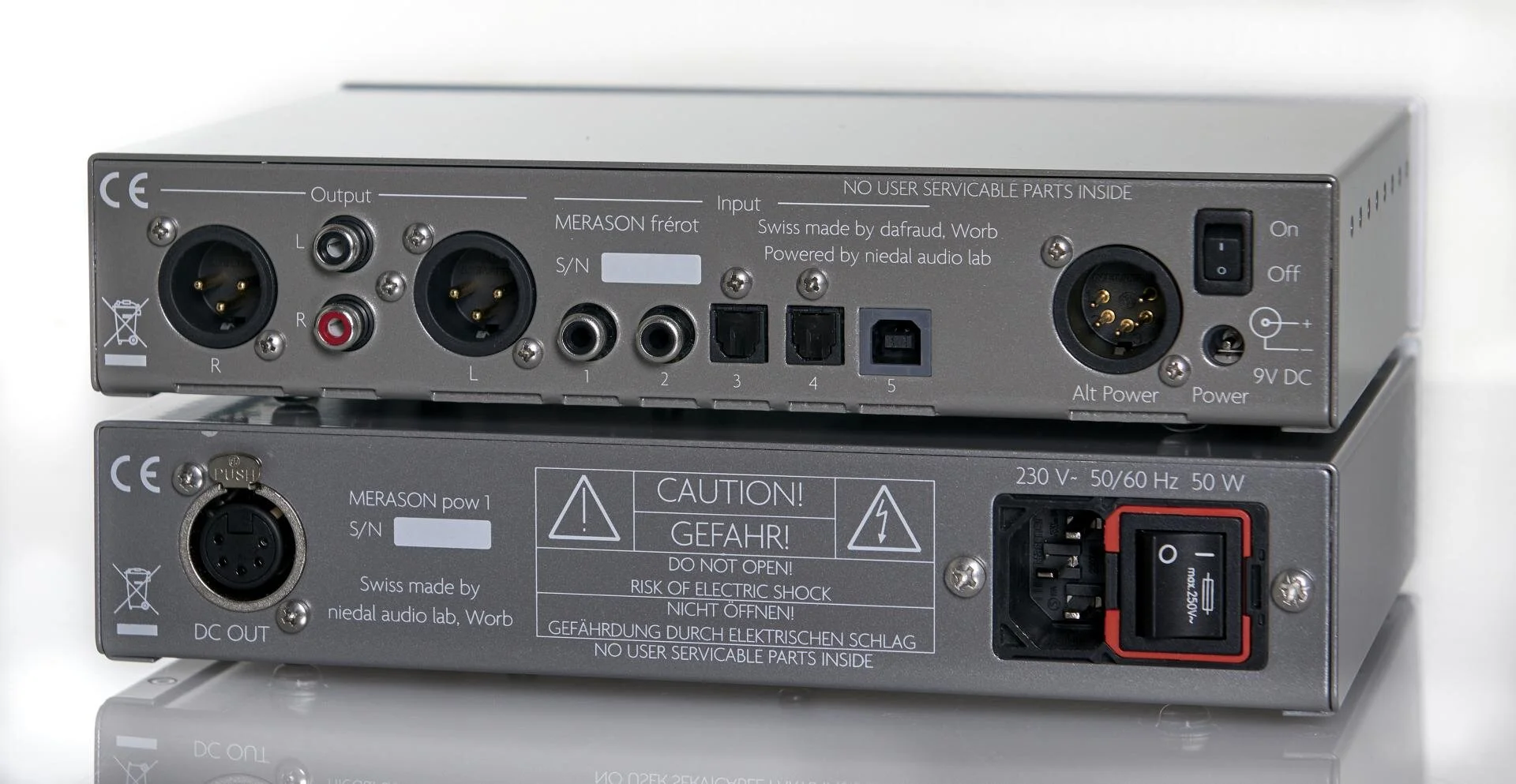
Merason Pow1 Linear Power Supply
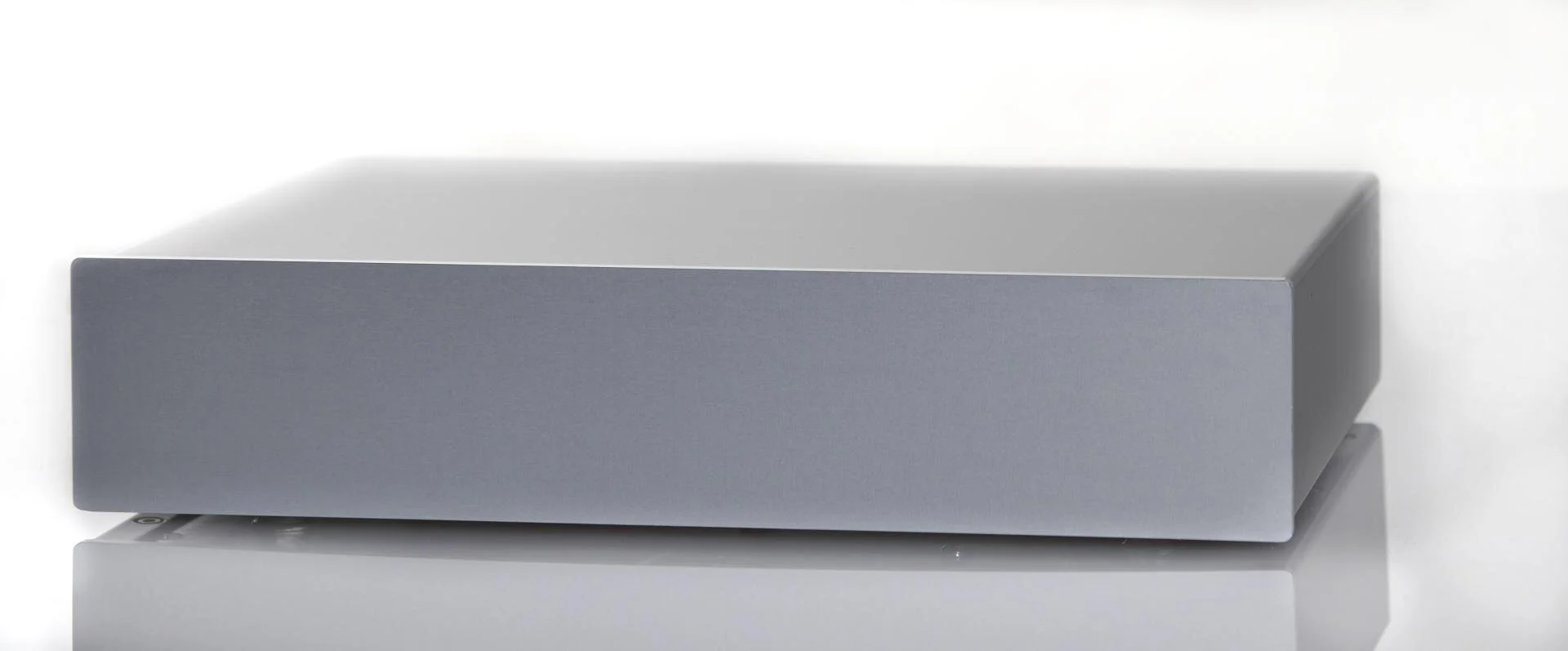
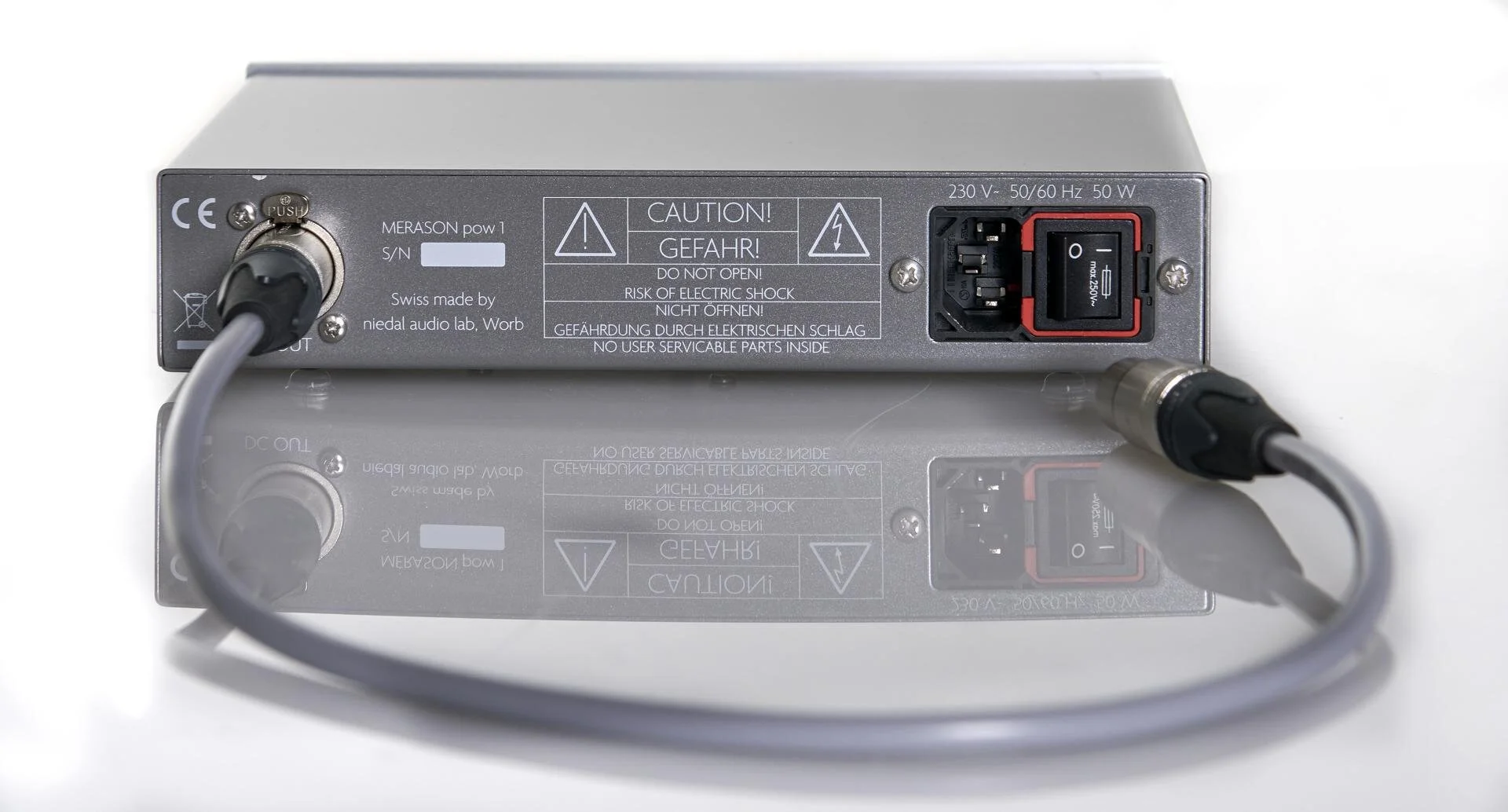
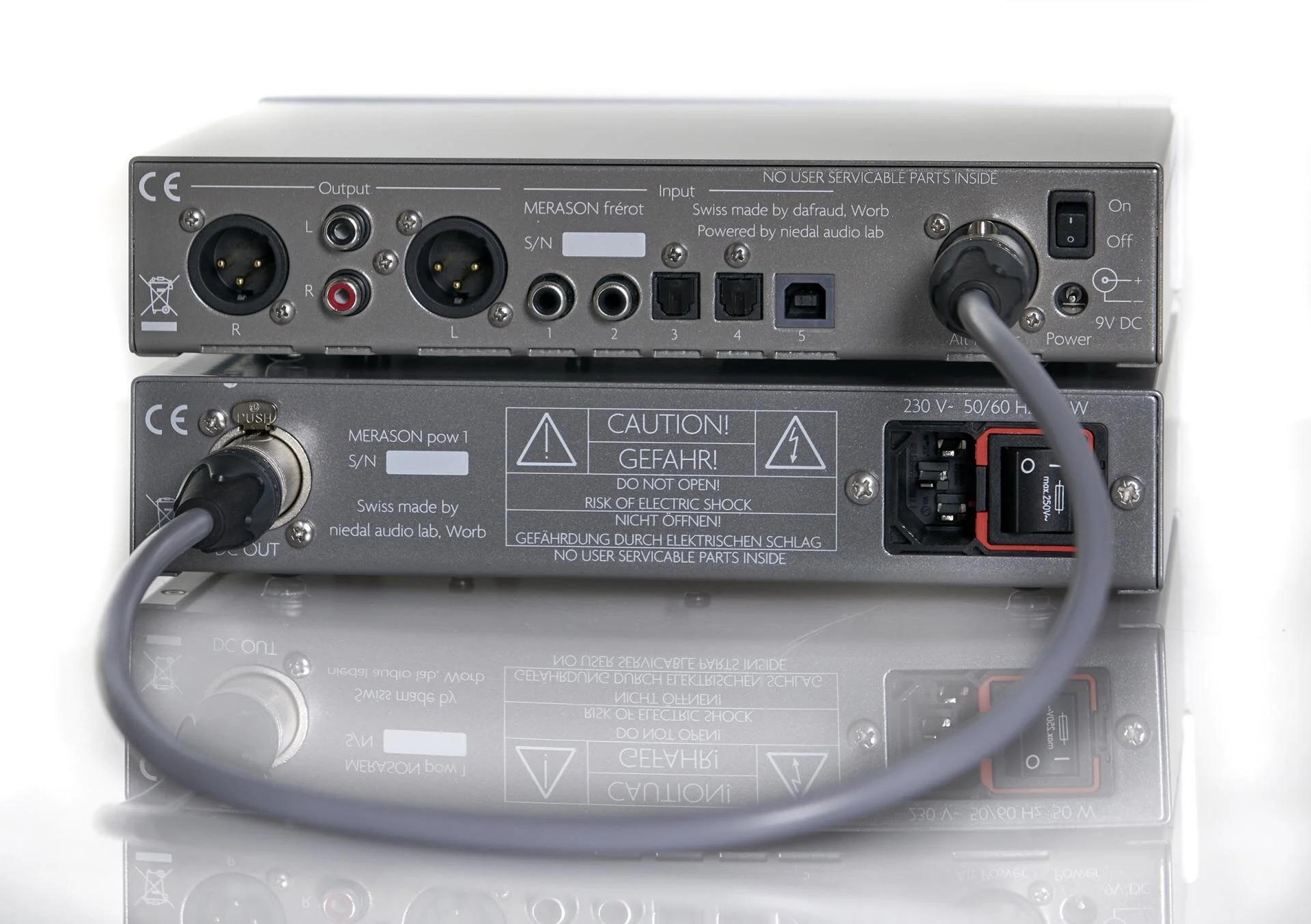
We are very happy to announce the anticipated release of the Merason pow1 Linear Power Supply for the Frerot DAC. The pow1 generates -12V and +12V, both regulated in 2 ways, the second regulation being particularly low-noise and discrete, as well as +8.3V. Other features are the rectifier diodes built into the pow1 for the two 12V. These are special types which, in contrast to usual rectifier diodes, do not produce any spikes and thus no interference in the supply. The reference voltage for the regulation of the two 12V is generated by a precise integrated circuit instead of using the usual Zener diodes. This gives the advantage of a supply that is exactly matched to the needs of the frérot: The output stage of the frérot is powered directly by the pow1. In addition, the pow1 is robust and elaborately constructed with a toroidal transformer manufactured according to Merason’s specifications, has a metal housing with a shielding cover and is swiss made.
The Pow 1 will be available starting in May at a price of $900.

Daniel Frauchiger - Merason Founder
Merason Interview - avguide.ch
Daniel Frauchiger has years of experience in the fields of acoustics, entertainment electronics, home automation, project management and IT. His backpack is optimally filled for a successful business activity and a large portion of passion for the high-end audio thing gives him the necessary drive in the daily challenge as an independent manager.
The company dafraud GmbH, founded in 2013, sells “audiophile products for quality-conscious music lovers”, according to the website merason.ch . «Dafraud» is an artificial name: It is a combination of the first and last name Daniel Frauchiger, the founder and owner. Sales and production are separated insofar as production takes place in the separately operating company Niedal Audio Lab. Niedal Audio Lab, how could it be otherwise, also belongs to Daniel Frauchiger.
Merason is the dafraud house brand. The DAC1 was the first product that emerged from the company's founder's intense audio hobby and has been on the market since 2015. Last year, the Frérot, the second Merason product, saw the audio world! By the way, Frérot means little brother or brother's heart.

Photo courtesy of avguide.ch
Daniel - how did you get into making digital-to-analog converters (DAC)?
I was an analog, vinyl and tape fan from the start. Not out of conviction, but because it sounded better. I have learned to live with the disadvantages of vinyl: with the crackling, the maintenance, etc. In 2010 I began to be interested in the topic of digital and got a professional device from a Bern dealer. However, I was dissatisfied with the sound quality offered and took it back to the dealer. Then I got another, more expensive American product, with which I could hear music reasonably satisfied.
Compared to vinyl, however, the digital devices still lacked charm. Nevertheless, I had the impression that I could make something out of it that met my requirements. I also found the then high prices for the DA converters in the order of CHF 10,000 exorbitant. I had already invested a lot of time and money in my analog setup. Nevertheless, I was aware of the advantages of digital technology and began to research the Internet - and found a large “digital converter community”. There were kits, schemes, recommendations and also a lot of nonsense. In any case, I then ordered three kits.
Two of them were okay, but the third kit from Hong Kong really impressed me. You can make something good-sounding out of this, I thought to myself and contacted the supplier. After a few months of negotiation, the supplier agreed to set up a full-fledged DAC with me. I was able to incorporate my recommendations regarding the circuit layout and the components used into the production. The DAC was ready after two years and then saw the light of day as the Merason DAC1.
How do you become a manufacturer in the audio sector?
On the advice of the career advisor, I first studied electrical engineering, which I didn't like and switched to economics with a specialization in computer science, which has since proven to be valuable. I then worked in the private sector in a management consultancy and constructed loudspeakers in my free time and then later the DAC.
In 2013 I founded dafraud GmbH to sell the DAC1 and looked for my way into self-employment. Four years later I received a start-up loan and coaching from the Bern Economic Development Agency to set up my production company, Niedal Audio Lab. My goal was and is to supply other audio manufacturers as an OEM producer.
The DAC module of the Frérot emerged from the “OEM product” from Niedal Audio Lab, actually a show product for the DAC module from Niedal Audio Lab. Our strategy is to use the Frérot DAC to make the brand known and to win over other audio companies as customers. This is the shortest path for us to become profitable. In addition, it is a pleasure to produce a good and inexpensive device for many music lovers!

Photo Courtesy of avguide.ch
DAC1 and Frérot
The Merason DAC1 is a recognized good DAC and has received many good reviews. How much of the DAC1 is in the Frérot?
You can't say that easily. The DAC1 is located above the Frérot in all respects. Larger differences can be found in the power supply, the components and the housing.
Are there any similarities between the DAC1 and the Frérot?
Yes, very well. We use the same DAC chip, the TDA1794A. In addition, the signal path is consistently symmetrical. This was obvious because the converter chip has a symmetrical output. For this purpose, the analog output section of both DACs is discreet, although there are also good integrated circuits on the market. It was important for me to pay attention to very low-noise resistances. It shouldn't be the extremely expensive ones, but those that are ideally suited for use in a DAC. The resistors are of the same quality in both models.

Photo Courtesy of avguide.ch
Where does the good sound come from in a DAC?
There are many factors. Similar to an amplifier, the classic elements such as power supply unit, circuit design and layout as well as the general component quality - plus of course the DAC used, are responsible for this. There are actually no secrets, it is the sum of all elements that make a good DAC.
Is a low digital noise floor also an issue?
Yes, but we have a 24-bit resolution and this determines the quantization noise of the DAC. We take the signal as it comes and pass it on unchanged to the converter chip. We don't upsampling. We had bad experiences with upsampling. Extrapolating everything to a sampling rate brings various disadvantages from our point of view. The TDA1794A in the DAC1 and in the Frérot is a hybrid between R2R and oversampling. This chip has been on the market for around ten years now, but it meets all of our requirements for a DA chip.
Many manufacturers use older DAC chips. What makes the older chips so interesting compared to the new DAC chips?
In a modern DA chip, contrary to the older converters, several converters are usually connected in parallel, which increases the dynamic range. We do something similar in our DAC1. He has installed two TDA 1794A. With this we can also increase the dynamic range by 5 dB. More modern DAC chips have up to 16 converters running in parallel. In this way, the dynamic range is massively increased again. The question is, what else is this supposed to achieve? We are convinced of the Burr-Brown converter, but other DAC chip manufacturers such as Saber and AKM also have interesting products. The Saber DACs usually compete fantastic.
The Saber chips are said to have a high resolution, but a somewhat artificial, technical sound. The converters with older DAC chips tend to sound softer, more analog, but also less detailed. Would you support this statement?
So our DAC1 is certified by all critics and testers a high resolution. I am happy to provide avguide.ch with a DAC1 for testing.
TDA1541: This old DAC chip has a huge fan base. Certain manufacturers are hoarding this cult chip - and prices are skyrocketing!
The TDA1541 is an R2R DAC and not a Delta-Sigma DAC. The TDA 1541 manufactured by Philips has its charm, although it still runs with 14 bits. I compare that to the eternal discussion of “tube versus transistor amplifiers”. Tube fans also certify that transistor amplifiers have a certain hardness, while transistor fans attribute a certain degree of uncleanliness or discoloration to the tubes. R2R is actually the more natural construction solution, but it certainly also has its challenges. The Delta Sigma DACs are more economical for this. The Delta-Sigma-DAC is not quite as precise, but the R2R doesn't have that high resolution either. I actually find the R2R more sympathetic! By the way, there are also modern R2R manufacturers: AKM should also have a new R2R in the pipeline.
How important is power supply to DAC sound quality?
A plug-in power supply is included with the Frérot. With this power supply we feed the 9V voltage of the digital part and then increase it internally to 12V for the discrete analog part. A higher quality, linear power supply is in the construction phase. We will offer this at a later date. This means that the supply of the digital and analog parts will be separated. The feedback from Frérot owners who have already experimented with prototypes of the linear power supply is encouraging.

Photo Courtesy of avguide.ch
We missed the volume control on the Frérot DAC!
Volume control in our DACs has been an issue for a long time, but it is still a major challenge. So far we have not found a sound that is satisfactory in terms of sound and that can be reasonably produced. For a digital volume control you have to up-sample in order not to have any loss of quality. And I do not want that. Analog volume control variants can of course be made with a potentiometer, but the perfect solution would actually be a transformer control. However, this is extremely complex and expensive in terms of material technology.
Development and production
Is the Frérot DAC entirely manufactured in Switzerland?
Yes, we only produce in Worb in the canton of Bern and even assemble the prints ourselves. This step, which was challenging at the beginning - operationally and financially - has paid off and I have not regretted it.

Photo Courtesy of avguide.ch
As a rule, manufacturers take the opposite approach. Design in the west, production in the east.
The current model works in theory, but has completely different challenges. Distance and cultural differences are just some of the problems. In addition, these OEM manufacturers want large quantities. Production should be monitored on site to ensure quality. Only large companies are really successful in mastering these challenges.
But we also explicitly rely on the Swiss Made factor. Development and production in Switzerland - that is, "Made in Switzerland" - is also valued abroad.
The current crisis has generally generated good sales for Swiss audio and video retailers.
I share this view. We feel this strongly and are now producing practically non-stop! So we have no reason to complain!
Are there any plans for other Merason product categories?
I can't comment on that at the moment, but I still have a few ideas. In two to three years we could come up with something new. We're probably not going into the streaming area, because the development effort is too great. At most we would cooperate with one manufacturer.

Innuos Phoenix NET
Learn more about this remarkable product here
Qualiton a20i - New Record Day

Photo courtesy of Michael Lavorgna
Clones 25iRX - Twittering Machines Review
“Some review components announce themselves upon arrival and the Clones 25iRX did so with resounding clarity. That bears repeating because this initial impression remained the focal point for the duration of the review period. Regardless of the speaker employed, music through 25iRX Integrated Amplifier-powered system was crystal clear, offering a seemingly unobstructed view into the musical proceedings. This quality, coupled with a nice firm grip throughout music’s lows, highs, and in betweens, made for some purely pleasurable listening.”
You can read the full review here

The new Qualiton X200!
We are excited to announce that the latest member of our Qualiton Classic Series, the Qualiton X200 Integrated Stereo Power Amplifier is finally here and ready to production.
The Qualiton X200 is designed to serve analog enthusiasts who need a combination of a high-performance vacuum tube power amplifier and a versatile preamplifier, along with sophisticated technical details, built into a single chassis. In this way, perfect matching is achieved - both sonically and technically - between the main signal processing sections.
The most important aspect of the design process was to meet the widest possible range of user needs in a compact footprint. All internal circuits were designed from scratch, avoiding the usual clichés throughout, to create a complete all-rounder. The X200 can be used as a separate preamplifier, as an integrated power amplifier, as a stand-alone power amplifier with direct inputs, or as a headphone amplifier, but other configurations are possible.
The low noise analog front-end built around a wideband and transparent circuit and features a phono preamp with enhanced precision too. Line level and subwoofer outputs are absolute necessary in this category, these ports are included on the back. We've added a real specialty too: a built-in, studio grade Parallel Equalizer. This kind of tools is primarily used as a master channel effect in recording studios, to bring fresh air into the mix, as a finishing touch. We've found that this effect can also be a huge help at home as well, as it can breath new life into certain, not so vivid records.
The balanced power amp is based on KT120 (optionally KT150) beam tetrodes and our latest, fully symmetrical output transformer design. Due to the symmetrical circuitry, we were able to further reduce the output noise of the output stage. In addition, our new BIAS section on the front panel makes it really easy to check and fine-tune the bias levels of the output tubes.
That's all for now, please don't forget to share your opinion with us. Stay tuned, we'll be back with more details in the next few weeks.
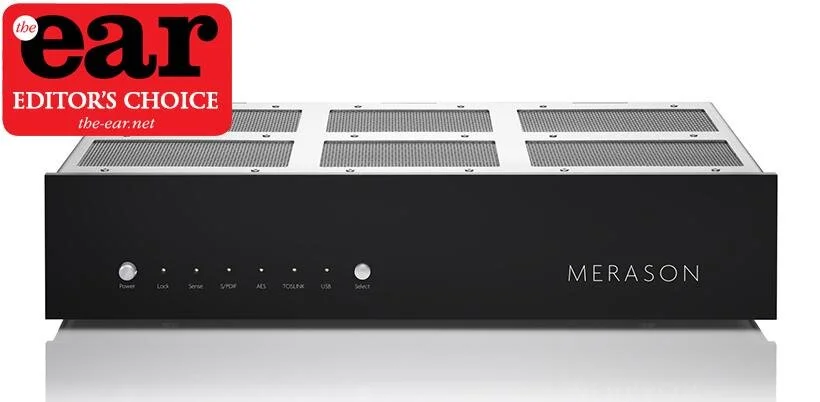
Photo courtesy of Jason Kennedy
Merason DAC1 - The EAR review
Go to the High End show in Munich (when the opportunity arises) and you will come across a surprising amount of Swiss audio brands many of which are either not distributed in the UK or only in a small, single dealer way. Typically they cost a small fortune, have very slick casework and often substantial amounts of it yet the styling is usually toned down in the Germanic style, if you spotted the Merason DAC1 you wouldn’t equate it with Swiss origin because high mass is clearly not a goal in its construction. It looks like something from France or the UK in its use of an acrylic front panel and relative thin, chrome nickel steel casework with no fancy OLED display. In other words the DAC1 looks like what it turns out to be, a purist dedicated D/A converter where the money has been spent on the inside where it counts.
There are none of the features such as volume control, sample rate display or wi-fi functionality found on many DACs, and in many respects it could have been created for the CD era. But look a little bit closer and ask a few questions of designer Daniel Frauchiger and you will discover that it’s a rather interesting DAC.

Photo courtesy of Jason Kennedy
The DAC1 has the usual array of inputs including coax, optical, AES/EBU and USB with the latter marked ‘Aux’ on the front panel, and outputs on balanced and single ended connectors. The latter is explained by the fact that Daniel plans to offer the DAC1 with an I2S input in place of the USB, so the name covers both options. The RCA connectors are high quality WBT Nextgen types which is a luxury even at this price point. The front panel is pretty straightforward with lights to indicate source selected, USB signal detected and its ability to process the incoming signal.
This is because of the most purist spec on the machine which is its dedication to PCM up to a maximum of 192kHz, it won’t dally with higher sampling rates or DSD which is a radical proposition in this field. It’s a particularly hairshirt approach that I have only encountered in one other converter, CAD 1543 MkII which runs ancient Philips multibit chips. The Merason is a little more up to date in its choice of a BurrBrown 1794A chipset (one per channel), but that is hardly state of the art so what gives? It turns out that the 1794A uses a hybrid or multibit and delta-sigma technologies so has something in common with the TDA1543 but was chosen for the usual reason, the engineer thinks it sounds good.
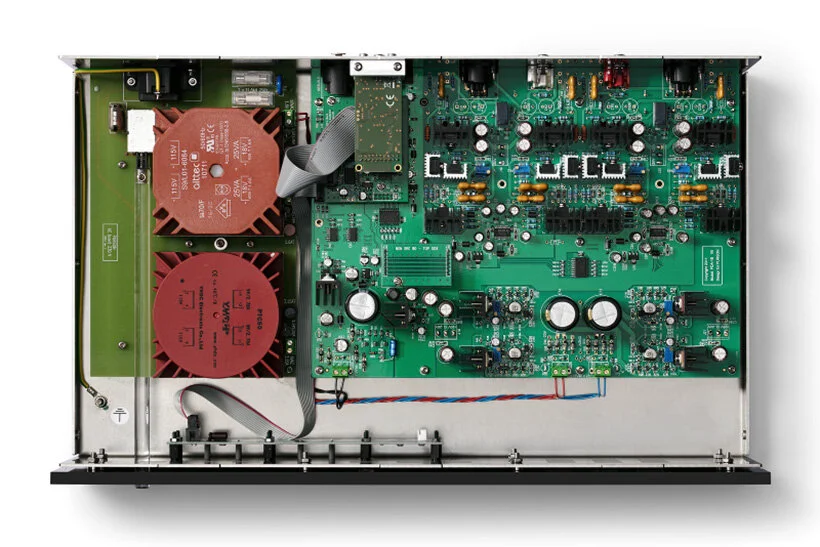
Photo courtesy of Jason Kennedy
Sound quality
The Merason DAC1 has a decidedly different sonic character to many digital to analogue converters, it’s more in line with DNM amplifiers of the nineties or Rega turntables today, products that share its unflinching attitude to transparency. There is a degree of tuning in any audio component be it a turntable, a speaker or a DAC, there are always component choices to be made that are about what the designer likes and what works in his or her system. Most go for a balance that has a degree of forgiving smoothness, one that will work with a variety of sources and systems and sound appealing with a range of music types. Merason takes a more black and white view and has voiced the DAC1 to be as revealing as possible and hang the consequences, whatever your source is producing that’s what you’ll hear. It’s an admirable approach and one that adheres to the highest principles of high fidelity, but also one that is going to meet with resistance from those who have gone large on digital sources that aren’t such good match.
I started out using the DAC1 with an Innuos Zenith SE server and Stack Audio Link II streaming bridge (and Link Linear PSU), its USB output connected to the ‘Aux’ input on the Merason. The result was thrilling speed and immediacy, a little on the bright side perhaps but very engaging indeed, it worked a treat with good recordings like Gil Scott-Heron’s I’m New Here which has a solo version of Home is Where the Hatred Is that has an electric presence with this degree of resolution. The power of the song is projected to tremendous effect, the lack of embellishment in the performance giving it extra pathos thanks to the clarity of voice and piano and the depth of feeling that Scott-Heron brings to it. Drummer Jeremy Cunningham’s The Weather Up There is a recent release with an equally sad subject but it’s played really well and the recording doesn’t get in the way, here the vitality of the piece is obvious as is the tautness of the percussive drive. The DAC1 reveals the natural reverb on the drums and places the other instruments and sounds in the soundstage in totally cohesive fashion.
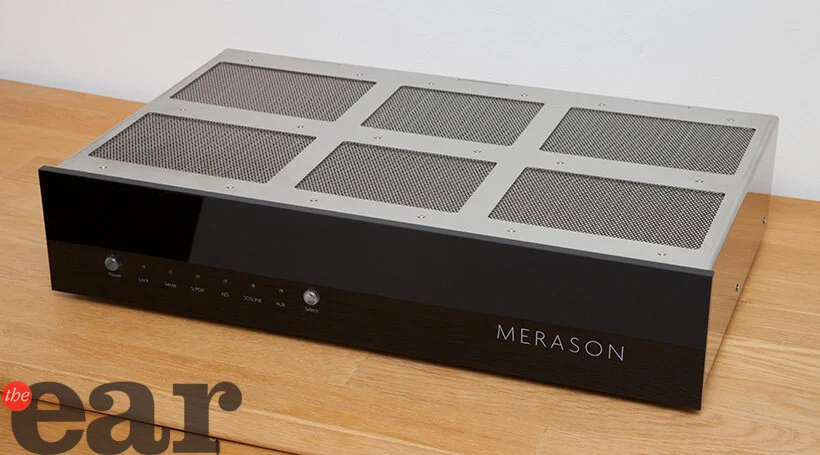
Photo courtesy of Jason Kennedy
Older recordings are also be great of course, I put on the Grateful Dead’s Cumberland Blues (Europe ’72) and was met with a very lively, up tempo rendition that was on the thin side but made sure that it was hard to sit still. Given that the Link II is not the most plush streamer in town I switched to the new Auralic Aries G2.1 that is due for review next month. This helped to bring out the sublime in everything played, revealing a weightless delicacy in the Merason that allows it to deliver fundamentals and harmonics with a speed that’s rare even among high end DACs. It remained very neutral and very revealing with no sense of time smear, trailing edges being really well defined and leaving no trace once the harmonic or reverberation had passed. This gives Keith Jarrett’s piano a tremendous delicacy when it’s called for and visceral realism when things get more lively. The tonal balance remained on the light side however and while this works beautifully with better recordings it can feel a bit uncomfortable with lesser ones, especially if played at volume, so I stuck to a few more of the better ones and revelled in the brilliance of Steely Dan’s Home at Last and the power of Nick Cave’s Jesus Alone.
Pondering the matter I recalled that with the similarly revealing Kii Three active speakers a Melco server proved the best match, on that occasion I had the top model but many years back I bought an N1A which is used largely for back-up, so I hooked that up to the Ansuz X-TC network switch (a genuinely remarkable device) and gave it a spin. This proved to be the perfect partner for the Aries G2.1 and Merason DAC1, its calmer and perceptibly darker balance working a treat with the all seeing converter. Now I had depth of image, high resolution, superb timing and a tonal balance that could be turned all the way up without any forwardness creeping in. I played a variety of pieces and found low level detail on all of them that had been hidden with the earlier set up, it meant that different recordings were as diverse in character as you would expect given the variations of age, recording medium, mixing desk, producers and musicians that exist. It proved that there is just as much need to balance components with digital as there is with analogue sources, the server, streamer and DAC being equivalent to the turntable, arm, cartridge and phono stage of a vinyl replay system in broad terms. Get the right ones together and you have a system that really sings, and as ever the first part, the source, is the most important part of the chain.
Under these circumstances the intoxicating immediacy of the Merason can be quite addictive, it does what few digital components do, strips away the polish and lets you hear the real meat of the music. Talk Talk’s Myrrhman has a mesmerising intensity that’s created with immense restraint and poise, you can’t hear the days and nights of studio time it took to make but you do feel a nervous energy that few converters bring home. The muscularity and depth of the bass is pretty gorgeous too. Steve Pearce is the guru in Bowers & Wilkins research dept, he used to bring some pretty intense music over to demonstrate their bigger products in the days when engineers were allowed to meet the press. One such track is Gun by Scout Niblett, a track with so much palpable tension in it that it’s positively visceral when played on a converter that’s as revealing as this one. I will have to dig out a few more of Steve’s test tracks.
The Merason DAC1’s antithesis to DSD is the only reason I can see why anyone who’s seeking genuine high fidelity would not want to have it in their system, but it’s worth remembering that most streamers can convert DSD to PCM and that very few great records were originally captured in DSD. If you are looking to cut through the veneer and hear as much of what was put down in the studio as a converter anywhere near this price will allow should, brace yourself for a genuinely intense musical experience.
SPECIFICATIONS:
Type: PCM only digital to analogue converter
Distortion THD+N: <0.012%
Signal to noise: 120dB
Digital Inputs: USB 2.0, coax on RCA, optical on Toslink, AES on XLR
Wireless inputs: none
Analogue outputs: single ended RCA, balanced XLR
Supported sample rates: PCM 44.1kHz, 48kHz, 88.2kHz, 96kHz, 176.4kHz, 192kHz
Output Voltage: 3V RMS balanced, 1.5V RMS single ended
DAC chip: 2x BurrBrown 1794A
Accessories: none
Dimensions HxWxD: 100 x 450 x 290mm
Weight: 8kg (11kg with stainless steel front)
Warranty: 2 years

Photo courtesy of Fidelity International
Innuos Statement - Fidelity International Review
“Ultimately, the most important question is who Innuos plans to target with its server. Just looking at the raw data, facts, and figures, I would have said a few weeks ago that the Statement is presumably an excellent ripping server boasting impressive craftsmanship and a smooth and supple design — precisely the right device for supplying a high-end chain with data at the right level and for covering all (and I really mean all) aspects of media management. In that assumption, I would have essentially been correct. And yet I now feel as though that definition is anachronistic and on the verge of insulting.
Don’t get me wrong: The Statement can meet all the aforementioned demands perfectly and it’s even an exceptional, meticulously bit-precise CD ripper. Its focus is not, however, just on handling “media from yesteryear,” but in fact lies even more squarely on the future: Its two reclockers, the playback buffer memory of a rather fabulous 4 gigabytes, and the exceptionally pure signal currents that never get in each other’s way are primarily designed to ensure optimum-quality web data source playback. The target audience is, of course, primarily Qobuz and Tidal users — and we’ve never heard these services sound so polished or sophisticated.
And the hefty heavyweight lives up to its name in other ways, too: Innuos designed the superb operating system as an open interface, which means the manufacturer can respond quickly and flexibly to future changes and upgrade the design as well as remove any outdated or unwanted dead weight. This leads me to feel confident (which is very rarely the case with such systems) that the computer will still serve as an outstanding and reliable partner for all facets of digital playback, even many years down the line. And now I’m afraid you’ll have to excuse me … I want to get back to listening!”

Photo courtesy of Fidelity International
You can find the full review here
Interview with Vinnie Rossi - Sound Stage Network
In my 35th year on this pale blue dot, I’ve come to realize how little intrepidity courses through my veins. I have so little appetite for risk and uncertainty that my day job is effectively spent identifying and minimizing these variables. There’s value to this kind of mindset: stability, consistency, security. But this mindset is anathema to visionaries and creators. Unlike me, these individuals don’t see the here and now and wish only to protect and fortify it. Their gaze extends beyond the horizon and what is, to some potential reality of what could be. Vinnie Rossi is just such a person.
During a recent conversation, Vinnie told me that he grew up fascinated with technology. From age five onward, he loved taking apart electronics and trying to understand them. Unsurprisingly, Vinnie studied electrical engineering in college, and by the early 2000s found himself working at Lucent and Bell Labs, where he helped design test equipment for high-speed optics hardware. After work, he lurked around DIY audio forums, buying gear, opening it up, and experimenting with possible improvements. Far from just amateur tinkering, Vinnie was buying up full technical manuals for SACD players from Sony, Marantz, and Denon and modding these units. He was also fascinated by early class-D amps, particularly Tripath’s “Class-T” modules. “They sounded almost like single-ended triodes,” he said. “I decided, ‘I’m going to put one of these in my own box.’” “What about tubes?” I asked. “I was always into tubes,” he replied. “I did SET, my own Frankenstein-like projects. I was drawn to the sound, I enjoyed it.” And so, in 2004, with $10,000 saved, he bailed on his cushy corporate engineering gig and started Red Wine Audio at age 24.

“I charged $500 for a little integrated with a lead-acid battery in a bare-bones enclosure,” Rossi said. “I survived the first year and was sending out products for review [without much of a plan].” He made sure to emphasize one of the foundational elements of his business: “Take care of the customers at all costs.” After surviving the crucial first year, he began to chart his own course with an “à la carte, sushi-style menu.” Buyers could spec their Red Wine Audio integrated amp with this capacitor or that, one input or many, starting at $500 up to $1500. Dual-mono with a dedicated battery in each channel? No problem. “I started realizing I could do all this customization,” he said. His product stack evolved, with tubed input stages entering the fray, in addition to improved, longer life batteries of the lithium-iron-phosphate variety. He laughed as he recalled audiophiles confusing his company, a play on both his name and the Italian form of “red wine”—vini rossi—with Mark Levinson’s second act, Red Rose Audio. And so, ten years on from shipping his first product, Signor Rossi’s company became Vinnie Rossi.
The headline product was the LIO, a return to Rossi’s spec-your-own box from his early days. In this instance, $2995 bought you an aluminum chassis, ultracapacitor power supply, solid-aluminum remote, and some RCA outputs. From there customers could spec—at additional charge—a phono stage, solid-state linestage, tubed linestage, DAC, MOSFET-based amplifier, or headphone amp. The idea, a good one, was that the LIO could be a DAC, phono stage, headphone amp, integrated amp, or most any combination in between. The LIO was in production for five years and was a successful product for Vinnie Rossi, but it ultimately had some drawbacks. “Without making the box bigger, power was limited,” Rossi said. Generating 25Wpc into 8 ohms, and 45Wpc into a 4-ohm load, it’s hard to argue that the LIO was a powerhouse. “And the number of options were overwhelming for some potential buyers.”
Which brings us to Vinnie Rossi’s—the company and the man, I suppose—current product lineup: the L2 Signature preamplifier ($16,995), the L2 Signature monoblocks ($15,995 per pair), and L2 integrated amplifier ($13,995). The monoblock amplifiers aren’t particularly powerful, offering only 75Wpc into 8 ohms, but they counter by being fabulously wide-bandwidth (2Hz-250kHz ±0.5dB) and ultra-clean in terms of THD+N. Don’t be fooled into thinking Rossi is a measurements-first kind of audiophile, however. “First and foremost, it’s the sound,” he said. “If you’re into specs, pass on me.” Like so much in life, looks can be deceiving. Rossi isn’t so naive as to ship a product that measures like a dream but sounds suboptimal. We should all remember that musical truth lies somewhere between the orthodox camps of objectivism and subjectivism, and will remain there until the field of psychoacoustics is far better understood.

And that stance is refreshing from a boutique, high-end manufacturer. Rossi doesn’t give a toss about what anyone else in the industry is doing. His hi-fi interests and philosophy have driven him from being a side-hustle tinkerer to taking the enormous personal and financial risk of striking out on his own. Now, 16 years and three children later, he’s making the type of gear that, bluntly, no one else is making. “I try to do things my own way,” he said. “You’re not going to find these types of products anywhere else. I’m still doing things the big companies won’t touch because they aren’t suitable for mass manufacturing.” And that shows in his directly heated triode (DHT) L2 Signature preamplifier, which, at the flick of a switch, turns into a solid-state preamp using a class-A JFET stage.
The same goes for the optional DAC and Phono modules that can be added to the L2 Signature preamplifier and L2 integrated amplifier for $3495 each. Rossi uses off-the-shelf AKM chips in his DACs, but the input stage and reclocking circuits are his own architecture. The default filter is non-oversampling, which sounds better to him, and he offers only a single, minimum phase alternative. Preemptively addressing my next question, he said, “I don’t like the linear phase filters with their pre-ringing. It’s not natural.” Looking to do something unique with his optional phono board, he worked closely with Brian Lowe from Belleson. “We wanted no op-amps, four independent low-noise gain stages with adjustable gain, and a DC-coupled design with no caps in the signal path,” he said. Vinnie Rossi’s newest product is the L2i Signature Edition integrated amplifier, which effectively marries his standalone monoblocks and preamplifier into one chassis for $18,995. (The standard L2 integrated amplifier uses a simpler 6SN7 linestage, by contrast.) The DAC and phono stage modules may be optioned here, too.
Electronics aside, what’s most remarkable about Rossi is his perspective:
My goal has not been [making the company] bigger. I’m always thinking about how much better I can make the next product. It can’t just be the next version that’s better in only one way, the “Mark II.” Everything has to be better. Everything has to have multiple improvements. If the price goes up, it has to be better in multiple respects. With Red Wine [Audio] it was, “Why can’t I just make a plain black box?” I can’t do that anymore. I’m not satisfied enough. I have plenty of years ahead to improve and change that experience for the customer.

It’s not just about the audio circuits themselves, either. In early 2020 he moved his skunkworks into a larger facility that’s ISO 9001 certified. He talks at length about quality control, inventory management, lead times, logistics, handling, incoming, and shipping. He’s thoughtful about these topics, mindful that his continued growth and success hinge on managing a great many variables. It’s why he’s currently in the middle of writing an operational procedure for the assembly of his products, down to the torque specs on a screw-by-screw basis. This is not a man with an ADHD-like need for control for its own sake. Rather, he has a clear destination in his mind’s eye, and he knows that he must think through and understand every piece of his growing puzzle in order to get there. And as with any entrepreneurial creative, I suspect Rossi’s destination is not fixed. There will always be something to improve.
Perhaps most important to the New Englander, however, is his commitment to his customers. I’m not aware of another low-volume manufacturer that offers a ten-year warranty for its products. In the ultra-high-end, consumers often get less support for their sizeable cash outlay than if they’d spent a fraction as much with a larger, more sophisticated firm. “I have to be able to service these products,” he said. “I try to turn gear around quickly, ideally within a week. I answer customer questions. Everything is made here in Massachusetts, and I have full in-house control over everything. I’m actually the final QA tester for each and every unit that goes out, and I don’t think that’s going to change. If I lose control of that, my reputation suffers.” I like to think I have a pretty good nose for bullshit. And it was abundantly clear to me that it’s not in Rossi’s makeup to be anything other than direct and authentic. It showed when he said, “I run this like a hobby. I run my own gear day-in, day-out, always looking for the next improvement. But I try to have enough time to keep up with my family. It’s more important than growing my business.” Cheers to that.
Link here

Photo courtesy of Part-time Audiophile
PTA Buyer's Guide 2021
We are very happy to announce that we had 6 products featured in this year’s Part-Time Audiophile Buyer’s Guide!
Innuos ZENith MKIII - $4,250
“A new and improved power supply, which includes Mundorf caps, gives the Zenith music server a leap in performance that places it closer to the company’s top offerings and way over the offerings of most every other audio server on the market. The sound is incredibly neutral, and many of the new features make the Mk. III incredibly easy to use. CD ripper is built-in.”
Qualiton APX 200 - $5,000
“Vacuum tubes how I love thee, let me count the ways,” we exclaimed after using this Hungarian amp. We found that it was an “imaging Godzilla” but what we loved the most was its value–you get 100wpc from tubes, with the short signal paths, high parts quality and plenty of useful features.”
Merason DAC1 - $5,400
“We felt that while there are many excellent $5000 DACs out there, the Merason is one of the best DACs we’ve heard at any price–so much so that we would still be impressed with it if it was much more expensive. Sonically, it can go toe-to-toe with plenty of the big boy DACs. “What you get is a product that seems to be built for the audiophile that is primarily interested in performance and doesn’t require a lot of fancy features or gold-plated-with-a-screen visuals.”
QLN Prestige 3 - $10,000 (Editor’s Choice Winner)
“We’ve been drooling over the Swedish-built Qln Prestige Threes, especially with Vinnie Rossi amplification, for a few years now. Once we tested these floorstanding speakers, we didn’t want to give them back. So we bought them. The Qlns throw up a huge sound, warm and yet crystalline, and you’ll stare in disbelief when you hear these very petite towers in action. We felt they did so many things exceptionally well, that we suggested that many different types of listeners will find them to be “all they need.” An Editor’s Choice winner.”
Vinnie Rossi L2i - $13,995 (Editor’s Choice Winner)
“This isn’t the L2i-SE that’s becoming legendary for its extraordinary sound at hi-fi shows when mated with Qln loudspeakers, but the only real difference in the more affordable L2i is in the line stage–everything else, including the exquisite optional phono and DAC modules ($3450 each) and the use of the amazing Belleson regulators, are the same. Listen to the hype–the entire Vinnie Rossi L2 amplification line is superb at three-dimensionality and imaging, and its shadow looms large in the world of the best integrated amplifiers. An Editors Choice award winner.”
Innuos Statement - $13,750 (Editor’s Choice Winner)
“This two-box server plays all file formats and offers stupendous sound quality as long as connect with USB, which is the only option. Every system we “dropped it into, no matter how good, sounded better with the Statement at the front of the chain. Given what we currently know, the Innuos Statement is the best server there is.” An Editor’s Choice winner.”
For more information see here
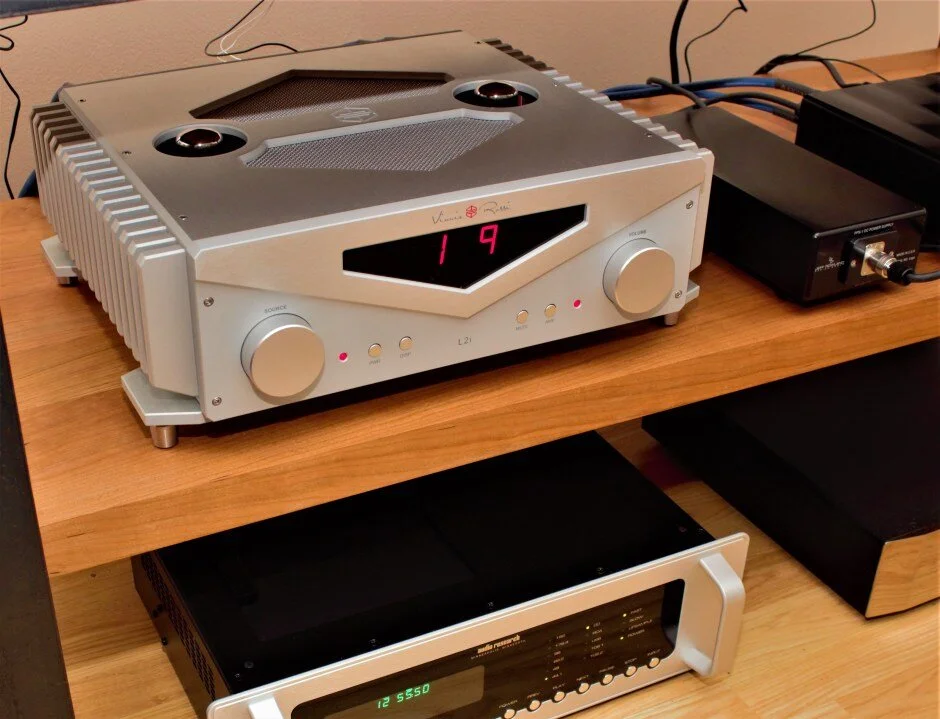


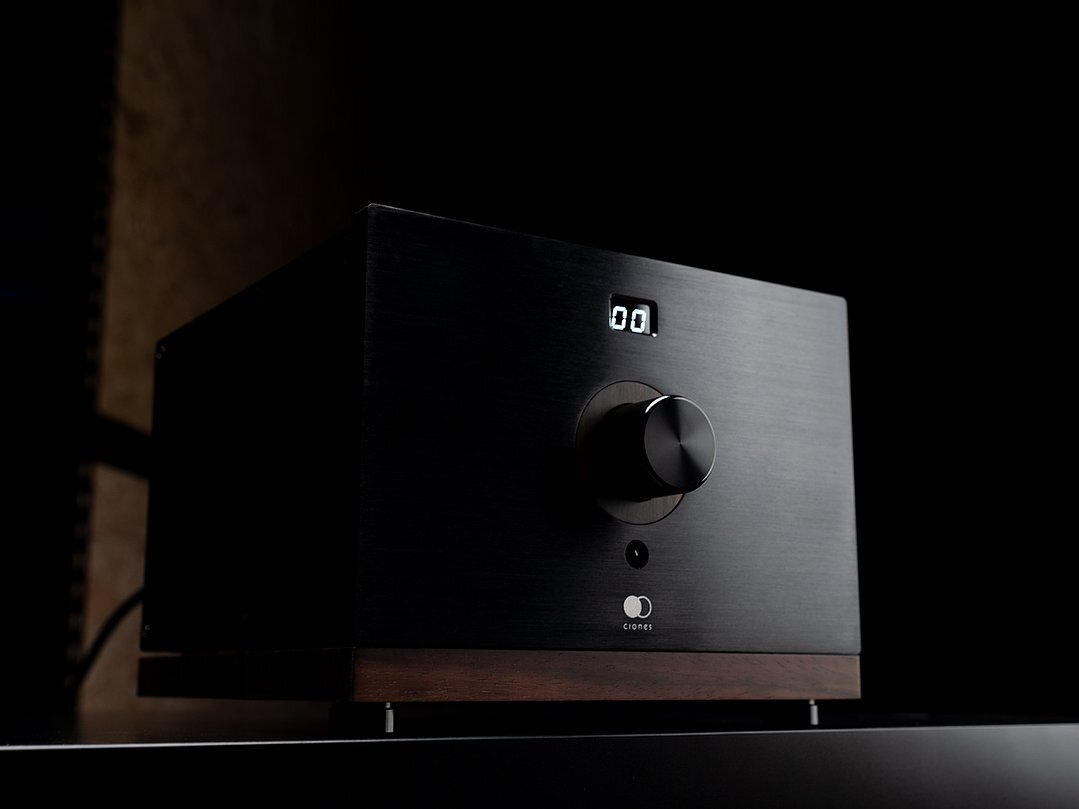
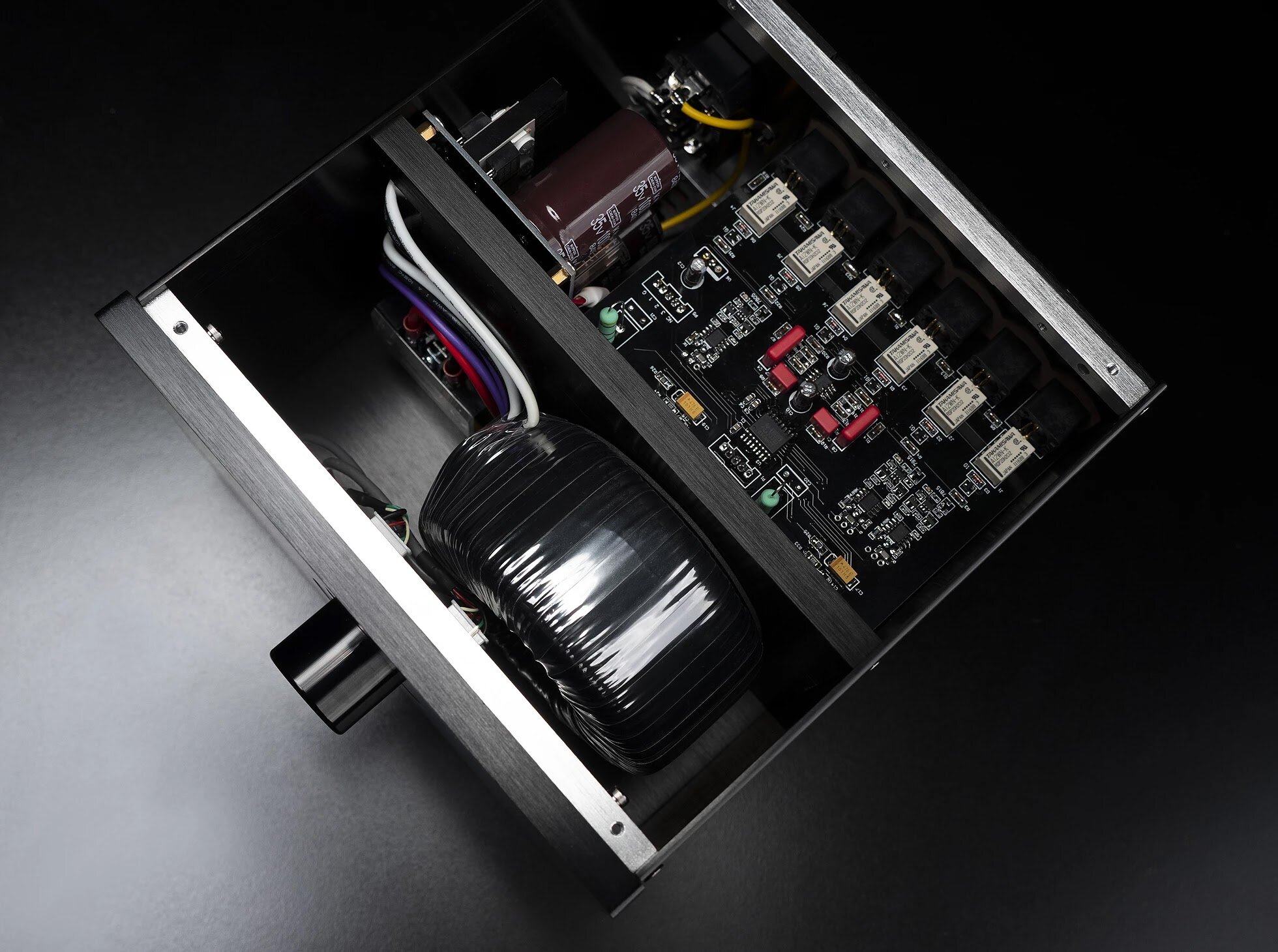
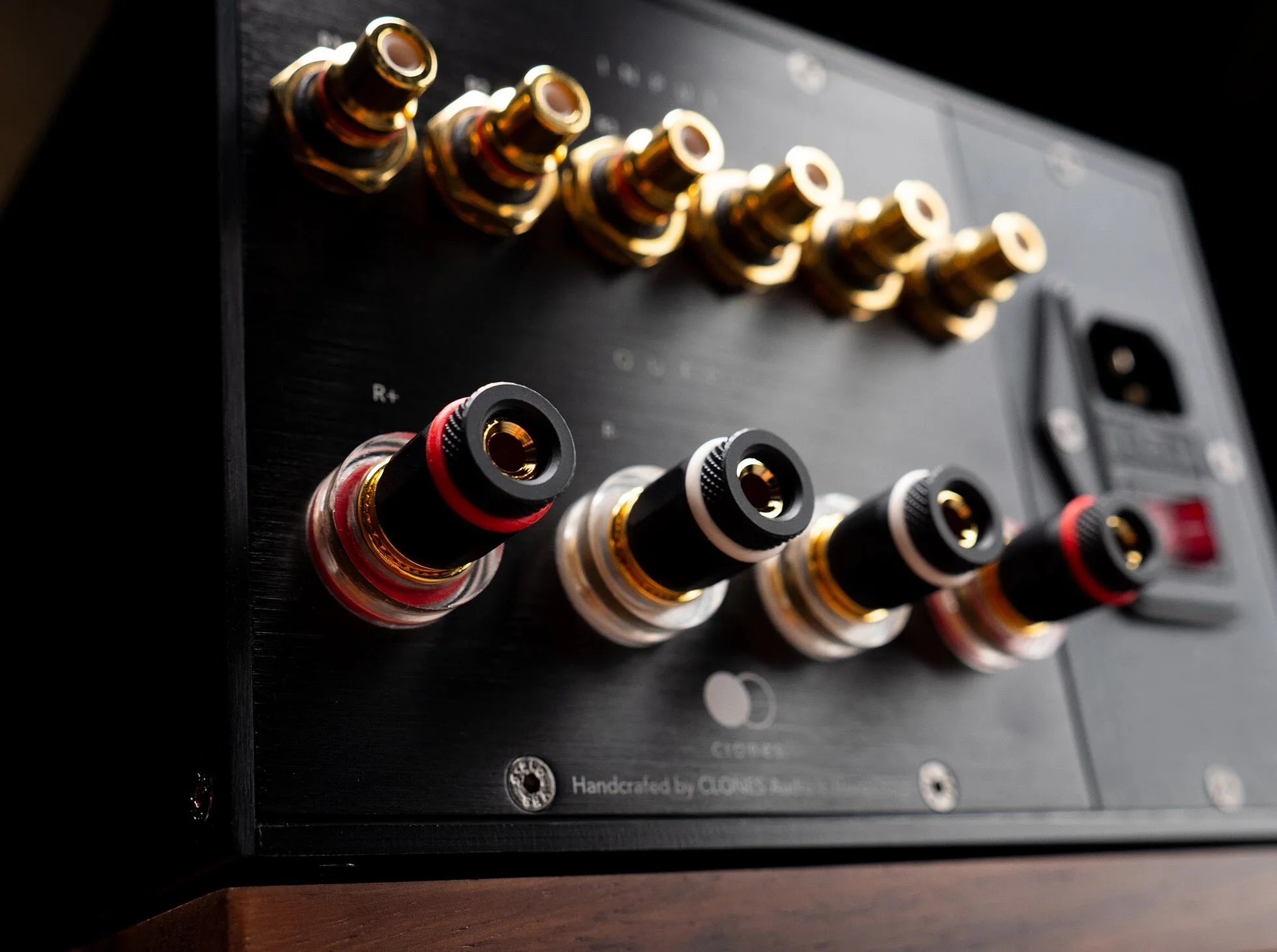
Clones Audio is Back!
After a lengthy hiatus Clones Audio is back to producing (affordable) musically satisfying amplifiers for us to enjoy.
The new 25iRX Integrated ($1979) launches a new era of CLONES’ award winning gain clone design with vastly improved tuning to the amplification stages and a more refined overall design/aesthetic to compete with today’s best offerings at the sub 2k price point.
Contact us for more information and participating dealers.

Photo courtesy of Style Sound.
QLN Prestige 5 - The Absolute Sound
One of the luxuries of reviewers is that we get exposed to a lot of new gear, and can occasionally share a new and notable product with our readers. I was first exposed to the Qln Prestige Three loudspeaker at the Capital Audio Fest 2019 where it was sharing a room with the Innuos Statement music server and the Vinnie Rossie L2i SE integrated amplifier (both of which I have reviewed quite favorably). It was one of the show’s better rooms and caught a lot of attention for three reasons. Number one was that it was beautifully simple in its implementation—server, integrated amp with built in DAC, and speakers. Number two was that Qln chose to display its Prestige Three model, which suited the room both size-wise and in regards to frequency extension, so the system synergized with the room as opposed to fighting it. Number three was that an enormous effort was put into setup, which resulted in a room where the speakers simply weren’t there, nor were the walls, ceiling, windows or anything else; the stage was engulfing and the sound enrapturing. Mark Sossa, Qln’s Sales Director, and I subsequently arranged a brief taste of Qln’s newly released, larger 2½-way, three-driver Prestige Five for this blog. Now that it has come and gone (sigh), I’d like to share my experience.
A brief peek into the history of Qln revealed that it was founded in 1977 and produced affordable, quality product, mostly in Europe. In 2003 it was sold. In 2013 it was re-purchased by one of the original owners, Mats Andersen,. I had the opportunity to ask Mr. Andersen to comment on the repurchase and his design principles.
Mats told me that he bought the brand back with the single-minded intention of building speakers that he “likes to listen to and that others would like and want to have for themselves…I do not make speakers from a marketing point of view; I have that freedom now. It is my company, my money (100%), and I have the freedom to do what I want. In my opinion, this freedom is what ultimately leads to making better speakers.”
His time away from Qln was spent refining his design and materials skills. “When I was away from the company (for 10 years), I learned a lot about driver design/technology and how different materials influence the sound. When I bought Qln back, my goal was to take our former philosophy (see below) and apply my improved knowledge/skill to make far more refined and well executed loudspeakers, while still offering the same value we were known for.” He exemplified his philosophy by stating, “I listen to music every day, so if I cannot have a speaker in my home and enjoy it every day for a year, it’s not a Qln.” Mats went on to explain: “There are three core principals guiding Qln’s design philosophy. Time alignment between drivers—slanted front baffle, truncated pyramid cabinet shape, minimum baffle area, Qboard sandwich damping technology that minimizes cabinet noise/sound.” Time-aligned, narrow baffles, low-resonance cabinets, low noise… sounded good to me without even listening to the speaker.
Qln’s current lineup includes a soon-to-be-released replacement for the Prestige One bookshelf ($5.5k’ish), the Prestige Three I heard at CAF2019 ($10k/$12k based on finish), the Prestige Five discussed here ($16k/$18.5k), and a high-efficiency 2-way floorstander for low-power tube amps ($5k). Piano burl walnut and maple are the upgraded finishes, while matte walnut and white satin are standard. Objectively, the Prestige Five cabinet is built and finished to very high tolerances: The projecting support feet are stable; the drivers and port are meticulously implemented; and the WBT Nextgen speaker binding posts firmly grip spade connectors. Subjectively, the Prestige 5s are not overly large, beautifully designed, attractively tapered and slanted back. They would surely land on the high end of the wife approval factor scale.
Mats also focused on the design of the Prestige Five. “The P5 utilizes a very sophisticated, custom-designed 184mm Kevlar mid/bass and drivers featuring an underhung magnet system for woofer and mid/woofer. This means that the voice coil is always in the magnetic gap, which ensures increased symmetry for the magnet’s force so that voice-coil inductance is unchanged by movement. Copper rings inside the magnetic gap are also used to decrease voice-coil inductance, provide better symmetry, and more current. “We also use a hard-wired crossover so that every crossover component is connected to the others without a secondary connection like a PCB.” The crossover is the epitome of simple and elegant design, hardwired with non-inductive capacitors bypassed with copper-film capacitors for the tweeter and flat-foil inductors for the mid/woofer. “This results in perfect timing within the crossover and low noise through the entire system.” Time alignment is a byproduct of both cabinet design and crossover implementation; the slanted cabinet only gets you part of the way there.
“The speaker is a 2½-way three-driver system,” Mats explained. “The woofer shares the same area as the mid/woofer up to 190Hz. The mid/woofer crossover point to the tweeter is 3800Hz. The crossover points then for the 2½-way system are 190Hz and 3800Hz respectively.” The speaker reaches down to 26Hz at -3dB and is an easy to drive 89dB-sensitive, 4-ohm load. The tweeter is a 25mm wide-surround, air-circ-magnet soft-dome design. The woofer is also 184mm, like the mid/woofer, but is a hard cone material with a special pattern in the cone piston to reduce distortion and increase phase coherency. Cabling is an in-house 12-core pure solid copper with polypropylene core and isolation. The cabinet is 39.37” tall,12.4” wide, 25.6” deep and weighs 90 pounds. Because of its tapered top and back-slanted enclosure, the Prestige Five looks smaller and narrower than it is.
Sonically, I would describe the Prestige Five as romantic and engaging, with a sweet well-rounded midrange, impressive bass, and airy highs that highlight extension and musicality over detail and accuracy. This is not to say that the Fives lack detail, but that they don’t highlight it as a primary objective. The emphasis is on their overall gestalt as opposed to highlighting any part of their presentation. Think Harbeth here. These speakers are about the music, not the critical listener looking to dissect equipment performance. The Fives also offer energetic pace and rhythm when called upon to provide them, and boy can they rock! Not only did they make me want to get up and dance, but they seemed to want to dance with me.
The bass extension and presentation of the P5 was quite something; taut, clean, impactful, and extended. No, the Prestiges don’t have the insane dynamic speed of a sealed system, but Mats’ use of a ported design is one of the best I’ve heard at this price point. There were times where I felt there was a hidden 8” driver inside the cabinet. The seamless integration with the mid/bass gives the speakers a sense of ease and natural projection that is alluring. I said romantic before, and I meant it. But I understand what Mats was saying about living with them for a year. They offer nothing offensive and can be listened to relentlessly with zero fatigue—just a great speaker. Be warned.
As a result of their low extension, careful setup is important. They P5s require room to breathe and extra effort to get the most out of them. But what you get with the Qln, if you invest the time, is a complete disappearing act. The stage goes big—I’m talking really tall, really deep, and really wide. The perception of instruments is from all around the speaker but never from the speaker. You can get lost in the reality of the stage they develop; and it adds tremendously to their overall performance. I’ve heard better stages for more, but for this price… yikes! I’m certainly not saying the P5s are in a class by themselves here, but tops in class for sure.
I have avoided commenting on a particular recording as they didn’t really have a genre they loved more than any other. However, if forced to say it… man, they loved Billie Eilish! Her voice was so rich and textured—truly delicious! But pretty much any recording with a voice, guitar, string, horn, or drum seemed to settle in and feel right at home on the Prestige Fives. I’d imagine they would also do double-duty for home theater with aplomb.
Accuracy and detail aficionados need not apply, but for those looking for an attractive speaker with a well-rounded, engaging presentation and incredible bass from a speaker of their size, the P5s are speakers you can listen to all day and the next. In a wide-open field of $15-$20k competition, some may think we don’t need yet another player. But the Prestige Five came to the U.S. ready to rumble, ready to shine, ready to play, and ready to prove itself. Find a Qln dealer and give them a listen.
Review link here

Merason Frerot - Audiobeatnik
The MERASON Frérot DAC is the baby brother of the DAC-1, which has been well received in the audio market. Well, Pleased Audio Vida is now the U.S. importer for the Swiss-made MERASON DACs. Mark Sosa, the owner of Well Pleased, called me a few months ago and asked if I would be interested in reviewing the MERASON Frérot DAC since he knew that I had used and loved the similarly priced BorderPatrol DAC for years.
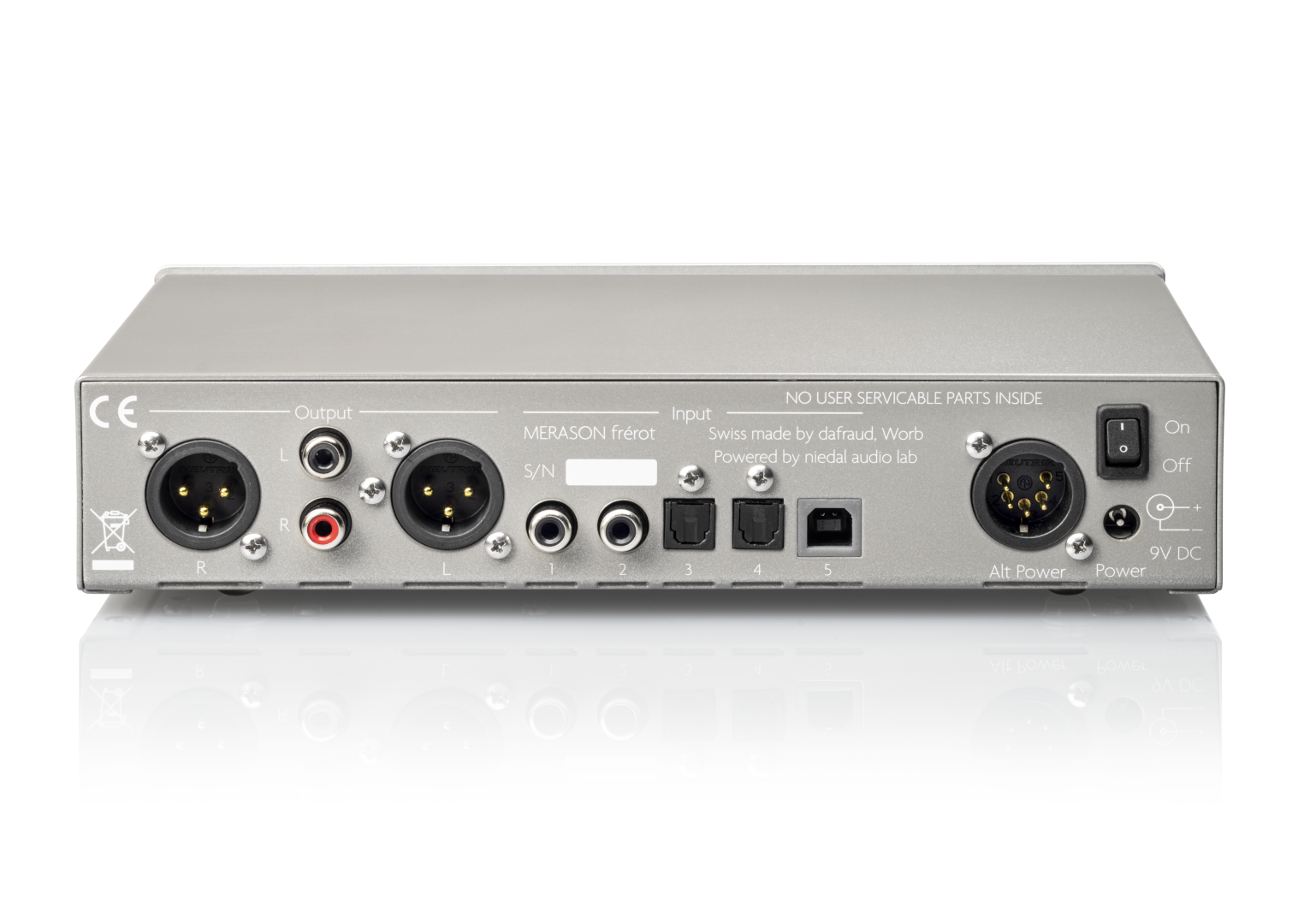
When the Frérot arrived, and I unpacked it, I was surprised that it is slightly smaller (7″ x 9″ x 2″) than the BorderPatrol DAC. As you would expect from a Swiss-made DAC, the build quality and finish are superb. The housing is powder-coated, the lower part is made of 3 mm thick aluminum, and the cover is made of galvanized steel.
Like the DAC-1, the Frérot uses BurrBrown 1794A chips. While two of these chips work in a mono mode in the DAC-1, a single 1794A is responsible for both channels in the Frérot. The signal processing is also carried out symmetrically in the Frérot. It uses discreet Class-A analog devices. The input selector knob on the front panel uses an Elma coding switch. The Frérot processes only PCM data up to 24 bit/192 kHz. It does not process any DSD files.
Smooth and Silky
Set up was easy! I simply disconnected my DAC and connected the Frérot in my reference system. Then, I let the little DAC play 24×7 for a few days.
The designers said their goal was to create a very analog-sounding DAC at a very reasonable price. With the Frérot, they have succeeded at this goal. As many of you may have read from my posts, I have been on a journey transitioning from vinyl to digital. On that journey, I discovered that digital can sound very analog-like. We should, however, remember that there are great differences in the sound of analog sources.
The Frérot DAC has an incredibly smooth and silky sound, which I find surprising from PCM files. It is also, as you would expect from the Swiss, a very precise and detailed sound. This is a great combination with the smooth and silky sound.
Since Mark invited me to compare the Frérot DAC to the BorderPatrol DAC, I think this might be a very interesting way to share the Frérot’s strengths with you. In many ways, the differences in these two DACs are like the differences in my two favorite moving-coil cartridges, the Benz-Micro Ebony TRS and the Miyabi Standard. I love the sound of both of these cartridges, but each of them does different things very well. I always found myself thinking that whichever one I was listening to at the moment was the best.
Going Head to Head
The Frérot DAC shares many of the qualities that I loved about the Benz cartridge, and the BorderPatrol shares many of the great qualities of the Miyabi. However, I’m not saying that either of these two DACs sound quite as good as either of these cartridges would sound with a good turntable. Who would expect them to, since either of these cartridges cost four times as much as the DAC, and then you still need a turntable and a tonearm?
Like the Benz, voices played using the Frérot sound natural, articulate, and beautiful. Individual instruments sound true to the sound of real instruments and they have good timbre and harmonics. Bass instruments played through the Ferot have a tight, fast, and very deep sound.
On the other hand, the Miyabi and the BorderPatrol have a more visceral sound with more drive and more colorful tones. The sound is not as smooth and detailed, however, and it is not nearly as precise. As I said in my previous paragraph, to get all of this sound in one unit, you will have to spend many times as much money.
How Does the Frérot Sound?
Of course, as audiophiles, most of us want to know more about how it sounds. Let me start by saying that the soundstage of the Frérot DAC was huge. It was exceptionally deep and instruments and vocals were precisely placed within it. The soundstage could also be described as holographic. If soundstaging is important to you, this little DAC gives you much more than would expect at this price range.
The quality of the bass is fast and tight and extended very deep when played through my DeVore gibbon Super Nines. The leading edge on bass instruments was very easy to hear and had good slam. The upper bass and lower midrange frequencies were precise, but they were not quite as organic as I would like.
Vocals, stringed-instruments, and pianos came through with great clarity. I could hear every note and breath. Horns and reed instruments sounded life-like, but they lacked some of the bite they should have had. I think many audiophiles will actually appreciate this. The top-end was well extended and passed my test by not drawing attention to itself. I never felt that it was lacking or aggressive. This is a nice accomplishment for a DAC at this price!
Definitely a Contender
The MERASON Frérot DAC gives music lovers a choice at a price point that may be very affordable for most audiophiles. It is definitely a contender worthy of your consideration if you are looking for a budget-priced option!
Retail Price: $1,250 US
Full review link here