• Brands
  • News
  • Dealers
  • About/Contact
Menu

Well Pleased Audio Vida

  • Brands
  • News
  • Dealers
  • About/Contact
Merason_Frerot_front_Netzteil.png

Merason Frerot - Audiobeatnik

November 2, 2020

The MERASON Frérot DAC is the baby brother of the DAC-1, which has been well received in the audio market. Well, Pleased Audio Vida is now the U.S. importer for the Swiss-made MERASON DACs. Mark Sosa, the owner of Well Pleased, called me a few months ago and asked if I would be interested in reviewing the MERASON Frérot DAC since he knew that I had used and loved the similarly priced BorderPatrol DAC for years.

When the Frérot arrived, and I unpacked it, I was surprised that it is slightly smaller (7″ x 9″ x 2″) than the BorderPatrol DAC. As you would expect from a Swiss-made DAC, the build quality and finish are superb. The housing is powder-coated, the lower part is made of 3 mm thick aluminum, and the cover is made of galvanized steel.

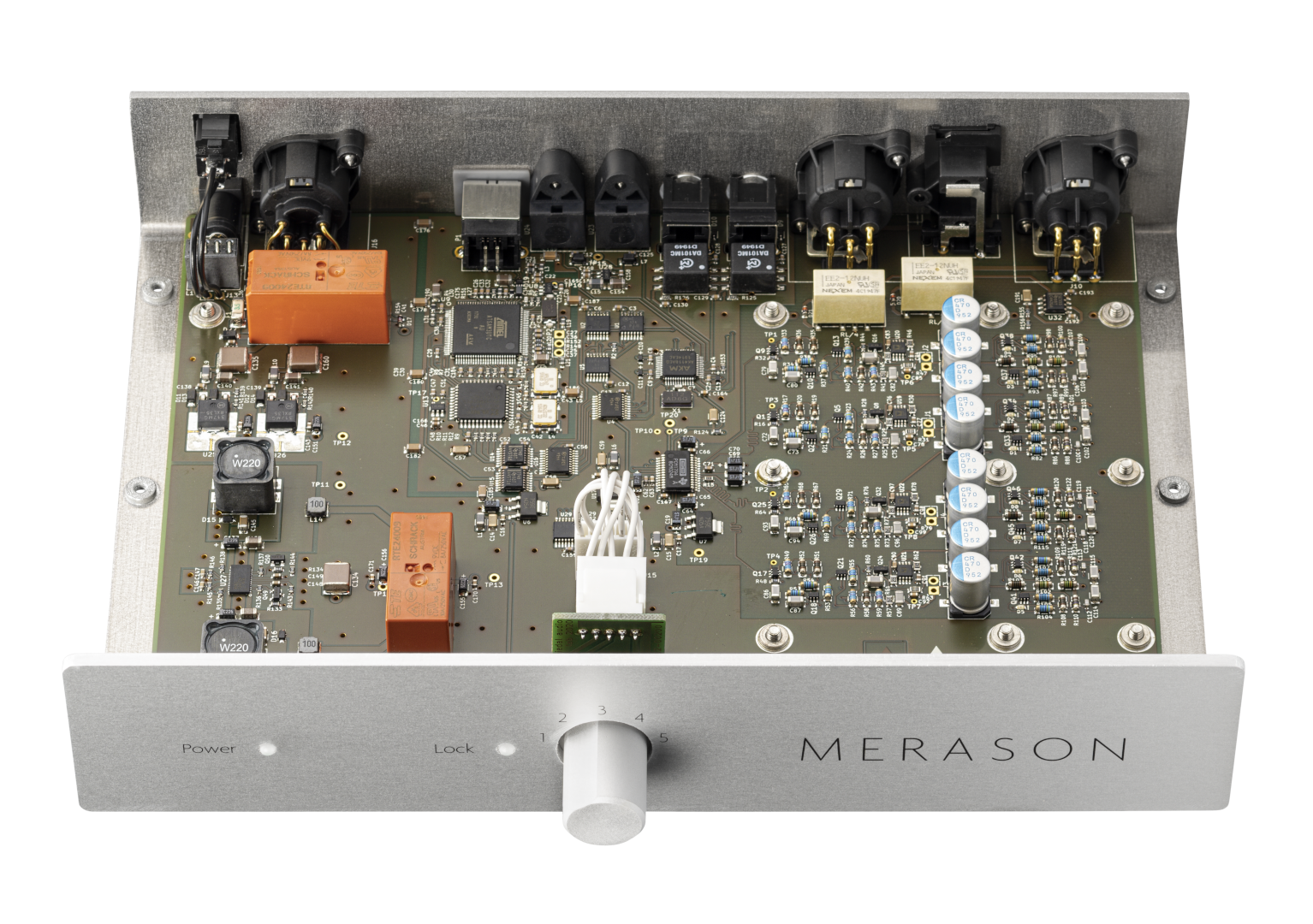
Like the DAC-1, the Frérot uses BurrBrown 1794A chips. While two of these chips work in a mono mode in the DAC-1, a single 1794A is responsible for both channels in the Frérot. The signal processing is also carried out symmetrically in the Frérot. It uses discreet Class-A analog devices. The input selector knob on the front panel uses an Elma coding switch. The Frérot processes only PCM data up to 24 bit/192 kHz. It does not process any DSD files.

Smooth and Silky

Set up was easy! I simply disconnected my DAC and connected the Frérot in my reference system. Then, I let the little DAC play 24×7 for a few days.

The designers said their goal was to create a very analog-sounding DAC at a very reasonable price. With the Frérot, they have succeeded at this goal. As many of you may have read from my posts, I have been on a journey transitioning from vinyl to digital. On that journey, I discovered that digital can sound very analog-like. We should, however, remember that there are great differences in the sound of analog sources.

The Frérot DAC has an incredibly smooth and silky sound, which I find surprising from PCM files. It is also, as you would expect from the Swiss, a very precise and detailed sound. This is a great combination with the smooth and silky sound.

Since Mark invited me to compare the Frérot DAC to the BorderPatrol DAC, I think this might be a very interesting way to share the Frérot’s strengths with you. In many ways, the differences in these two DACs are like the differences in my two favorite moving-coil cartridges, the Benz-Micro Ebony TRS and the Miyabi Standard. I love the sound of both of these cartridges, but each of them does different things very well. I always found myself thinking that whichever one I was listening to at the moment was the best.
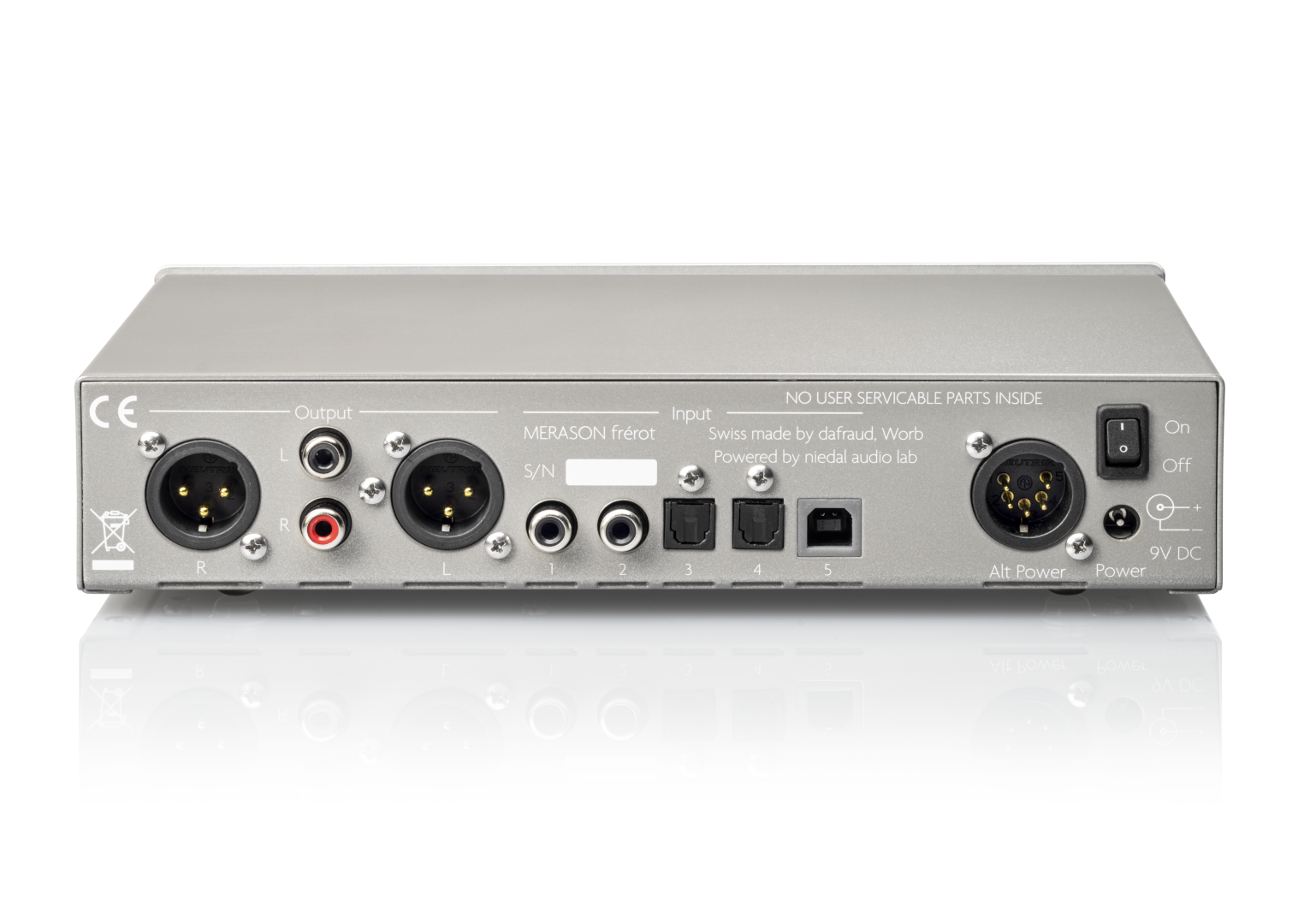
Merason_Frerot_back.png

Going Head to Head

The Frérot DAC shares many of the qualities that I loved about the Benz cartridge, and the BorderPatrol shares many of the great qualities of the Miyabi. However, I’m not saying that either of these two DACs sound quite as good as either of these cartridges would sound with a good turntable. Who would expect them to, since either of these cartridges cost four times as much as the DAC, and then you still need a turntable and a tonearm?

Like the Benz, voices played using the Frérot sound natural, articulate, and beautiful. Individual instruments sound true to the sound of real instruments and they have good timbre and harmonics. Bass instruments played through the Ferot have a tight, fast, and very deep sound.

On the other hand, the Miyabi and the BorderPatrol have a more visceral sound with more drive and more colorful tones. The sound is not as smooth and detailed, however, and it is not nearly as precise. As I said in my previous paragraph, to get all of this sound in one unit, you will have to spend many times as much money.

How Does the Frérot Sound?

Of course, as audiophiles, most of us want to know more about how it sounds. Let me start by saying that the soundstage of the Frérot DAC was huge. It was exceptionally deep and instruments and vocals were precisely placed within it. The soundstage could also be described as holographic. If soundstaging is important to you, this little DAC gives you much more than would expect at this price range.

The quality of the bass is fast and tight and extended very deep when played through my DeVore gibbon Super Nines. The leading edge on bass instruments was very easy to hear and had good slam. The upper bass and lower midrange frequencies were precise, but they were not quite as organic as I would like.

Vocals, stringed-instruments, and pianos came through with great clarity. I could hear every note and breath. Horns and reed instruments sounded life-like, but they lacked some of the bite they should have had. I think many audiophiles will actually appreciate this. The top-end was well extended and passed my test by not drawing attention to itself. I never felt that it was lacking or aggressive. This is a nice accomplishment for a DAC at this price!

Definitely a Contender

The MERASON Frérot DAC gives music lovers a choice at a price point that may be very affordable for most audiophiles. It is definitely a contender worthy of your consideration if you are looking for a budget-priced option!

Retail Price: $1,250 US

Full review link here

Photo courtesy of HiFi-IFAs

Photo courtesy of HiFi-IFAs

MERASON Frerot - HiFi IFAs

October 27, 2020

“The MERASON Frérot D / A converter is actually a little brother in terms of appearance. Daniel Frauchiger could not have chosen the name of his latest work more appropriately. With a volume of 22.5cm x 5cm x 18cm (W x H x D), it has half the HiFi guard size in width, a quarter of the area in the front and an eighth in volume. So it can also be found in smaller niches in the living, working or leisure room. The housing is powder-coated, the base plate is made of 3 mm thick aluminum and the cover is made of galvanized sheet steel. The heat from the analog Class-A output section is also dissipated via the base plate. During operation, the device heats up by approx. 15 degrees Celsius compared to the ambient temperature.

And that, by the way, delights the friends of local manufacturers: The handy device is assembled at the place where it was developed - in the idyllic village of Bangerten near the Emmental.

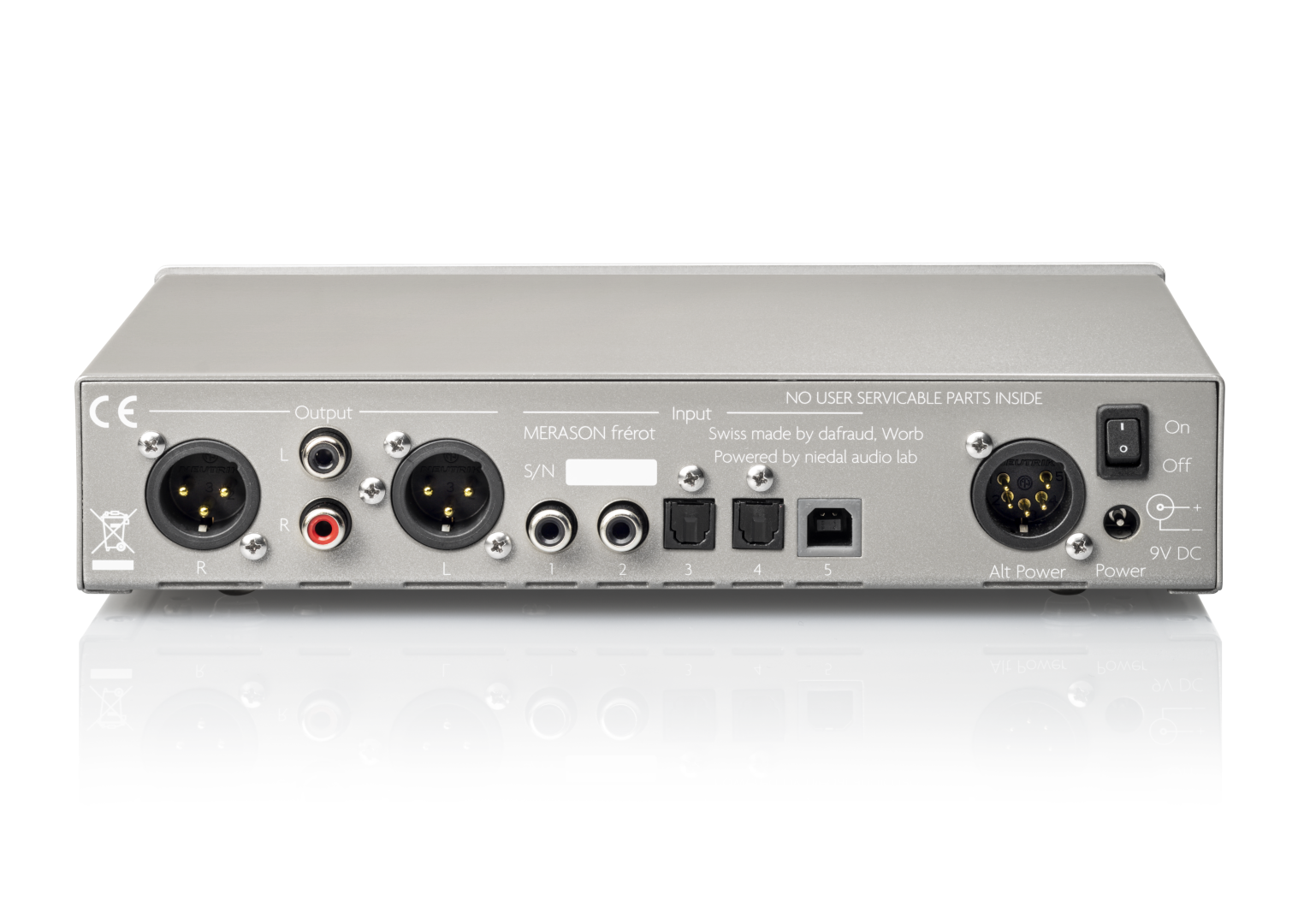
The connection for the cable of the enclosed 9-volt power supply unit is located on the back of the Frérot. Right next to it the power toggle switch. From the 9 volts, two times 5 volts are generated internally for the digital logic and the digital converter section and +/- 12 volts for the analog section. The +/- 12 volts are generated using switching technology. The five-pin XLR socket labeled 'Alt Power' on the rear panel announces a future expansion stage: an external power supply unit. It should be available in a few months. Designed as a linear power supply, it can supply the analog stage directly with 12-volt voltage. Daniel Frauchiger promises a sound improvement through the more elaborate structure, which cannot be achieved by simply upgrading the 9-volt power supply.

The well-considered structure of the device circuit board forms the solid basis for good sound. The board consists of six layers: two for the power supply, two for interference immunity and two for signal routing. The direct current component in the output signal is regulated using a novel process so that the output capacitors in the signal path can be omitted. This is to avoid audible artifacts.

The Frérot receives digital signals via a USB, two RCA sockets for S / PDIF signals and two optical Toslink connections. Can be selected via a federal Elma rotary coding switch on the front. As with its big brother DAC-1, the digital signals go to a tried and tested BurrBrown 1794A converter. The DAC-1 works with two of these chips in mono mode. The little brother is content with a single 1794A in stereo mode. The MERASON Frérot only processes PCM data up to 24 bit / 192 kHz.

The signal continues on the board of the D / A converter to the discrete analog class A output amplifier. The signal processing in the Frérot is symmetrical throughout. The output of the analog output signal for further processing occurs symmetrically via XLR sockets and asymmetrically via RCA sockets. The output voltage is 2 volts (4 volts rms). This means that the Frérot plays 2dB louder than sources with 1.5V voltage, which the listener notices when switching directly.

The Frérot gives the music swing and structure that is a joy…the orchestra attains a deliberately noticeable dominance over the solo instrument, which the MERASON Frérot reproduces in beautiful space and timbres. For me, the end point is the traditional “Poul sine Höns”. Cheeky the recorder in dialogue with the plucked instrument, sometimes played low, sometimes high. The Danish flautist Michala Petri and the Swiss D / A converter Frérot happily let me go into the evening. You have cheered me up with your musicality and naturalness.”

Find the full review here

MERASON-frerot-rechts-1024x593 (1).jpg
Zenith MKIII.jpg

Innuos ZENith MKIII - Audiophilia (Star Component Award)

October 16, 2020
“What I was hearing was a pure, unencumbered digital signal. This mighty task can be heard to its greatest degree in servers and DACs by legendary Brits, dCS. And, for about fifty grand. The Mk3 and Mytek DAC could not match the dense musical experiences the dCS products (with Rockport Atria II Loudspeakers—review forthcoming—and Audio Research amplification) have given me, but in the realm of diminishing returns, the 10K pair gave me quite sublime musical experiences. As such, jitter and noise are curtailed to a minute degree. Servers really are both the here and now and the future for the very best in digital audio playback helped in no small part by the ingenious use of ultra quiet power supplies. The Mk3 scores big on this; even better than my reference CORE. Detail and musicality were marginally better on the Innuos, a real plum as the CORE has quite remarkable qualities.

Qobuz and Tidal were deights, with Qobuz’ HiRes files and Tidal’s MQA support. Both sounded fantastic streaming on the Innuos.

Dynamics and immediacy from Dorati/Minneapolis/Mercury FLAC Beethoven Eroica was as impressive as I’ve heard. This recording always shocks me, not for the Fines’ recording and production, but for the superb performance by a 1960s provincial US orchestra (for more provincial surprises, read Jim Norris’ Steinberg/Pittsburgh Beethoven cycle review on DG).

Staying with classical, although not my favorite Mahler symphony, Klemperer’s EMI with the Philharmonia of the Fourth on Qobuz via 96kHz 24bit was stunning in its beauty and information retrieval. There’s a super tricky ensemble moment mvt 1, the rit leading into bar 4, especially for the clarinets. Invariably, it’s either muddy or too quiet. The 96 FLAC file made clear every note; it was almost as if you could see the clarinets looking up and trying to follow Klemperer’s very wobbly beat, but looking at the Leader (concertmaster) instead; the first violins will follow him rather than the conductor. In any case, I’ve never heard it as clean or clearer and in the most beautiful sound. Due, no doubt, to the bottomless noise floor and jet black backgrounds.”
— Anthony Kershaw
AudiophiliaStarComponentAward.png

Full review link here

Photo courtesy of Ember Audio + Design

Photo courtesy of Ember Audio + Design

Merason DAC1 - Part Time Audiophile Review (Dave McNair)

October 5, 2020

“After consulting my tarot cards to help determine when proper burn-in was achieved, I made sure all the cables in my system were directionally correct. That was followed by fine-tuning the system with various isolation pucks and power filter devices. Feeling like everything was now in order and it was a good ear day, I sat down to do some serious DAC listening. But first coffee. Always first with the oat milk latte.

Damn, there I go pulling your leg again. I didn’t do any of that. Except for the coffee.

Throughout several listening sessions in my home system, a clear picture emerged. I also took the Merason DAC-1 to my studio for a death match with a Prism Dream DA-1 to provide further intel, which I will reveal in a bit. Initially, I did a lot of comparing to other DACs. Later I simply listened to the DAC-1 on a wide variety of music. For me, the Merason DAC-1 was the clear winner.

Listening to music through the DAC-1 gave me a feeling similar to what I experienced when the most excellent Tidal Audio Prisma preamplifier was in my system. A feeling akin to putting on my favorite Brooks trainers for a leisurely walk through the park when the weather is perfect. The feeling when driving your car after getting it back from the shop after a full tune-up, or starting a craftsman project knowing you have ALL the tools necessary. There is zero to be concerned about so I can simply enjoy the victory of simply being with this activity.

For my ears – especially when listening to music in a digital format – this feeling is gold.

So what is it about the Merason DAC-1 that gives me the feels? The DAC-1 like other HiFi components that float my boat sits firmly in the Event Horizon zone of being extremely clean with non-detectable levels of coloration yet just a pinch of mojo. This mojo I refer to is in the form of a slight softness to the texture of the upper midrange. Let’s say the energy between 2 and 5k, that same area where our ears are most sensitive and in my case most easily fatigued by any excess of or distortion residing therein.

Music played through the Merason DAC-1 doesn’t sound subdued or dynamically mellow. But compared to some other DACs I have on hand, it’s the slightest bit relaxed. This incredibly small amount of smoothness is what I need when listening to a digital source, to be able to unconsciously forgive and absolve the music for being born in digital form. “Calm down, everything is gonna be ok little PCM file. It’s not your fault. We can hang out now since I got this attractive Swiss box for you to use. Those big arrogant discs with grooves won’t ever bother you again, I’ve made sure of that. Those bitchez can’t even.”

As nice as that relaxed nature is, my ear wants plenty of detail, gobs of layering, nuanced dynamic contrasts, slammin’ bass, and to have the DAC make me a sandwich at the end of a listening session. Is that too much to ask?

Compared to my other DACs the Merason DAC-1 had as much and in some cases more detail while retaining it’s wonderfully seductive relaxed listenability. Hey, wait a second. Didn’t I say the same thing about the infinitely charming BorderPatrol SE-1 DAC? Yes, I did.

The difference here is that the Merason has a similar easy-on-the-ear factor that I love about the BorderPatrol DAC, but the Merason is just that much cleaner. It has more detail, a wider and deeper soundstage, and a deeper and punchier low end. The low end is large AND tight. Complexity with no messiness. It’s also noticeably less thick in the midrange than the BorderPatrol. The BorderPatrol has just a bit more of a nose in the mids. I kinda like that but after comparing it to the Merason’s midrange portrait, it was a bit distracting. But there’s a huge difference in price here.

A/Bing against my Berkeley Audio Design Alpha II, Prism Sound Dream DA-2, Forssell MADA-2, and the DAC built into the PS Audio Stellar Gain Cell preamp, I found that other differences emerged.

I’m not going to go down the list and pick apart everything that I heard, however I will declare the Prism DA-2 to be the only one that felt more accurate than the Merason DAC-1. In head to head, level-matched tests I set up in my mastering studio, the Prism had an uncanny resemblance to the sound of the Merason, except without the slight smoothing effect in the upper mids. The Prism was more present in this part of the spectrum, yet without any unwanted edge.

The test also pointed out that the output level of the Merason using the balanced outs is only three volts, which is a bit low for pro audio nominal output level. This translates to 6db lower than the Prism, which I have at -18 dbfs for the DAC/ADC roundtrip through the analog playground. Just to clarify, the 3-volt analog output of the Merason balanced outs (which on a lot of gear is usually in the range of 6db hotter than the RCA outs) is on the low side but still has PLENTY of juice for any home hi-fi setup, just less than optimum in a studio situation.

During focused listening while switching DACs, I could always pick out the Merason DAC-1 with its pleasingly fleshed-out midrange and plenty of smooth-sounding detail in the upper frequencies, all without the fairy dust on top or an extra helping of image width that some of the other DACs exhibited. This was most noticeable when comparing the DAC-1 to the Berkeley Alpha II. The Alpha II is a long time favorite of mine for its sound and features. Many folks love the sense of detail and spaciousness to the soundstage, but for me, the Merason DAC-1 communicates more of a holistic vibe as opposed to shining a bright light on every little textural element of a mix like I hear with the Alpha II. I routinely felt a sort of relaxed attention when listening with the DAC-1, a certain feeling of rightness that let me focus on the music.”

You can find the full review here

Photo courtesy of David W. Robinson

Photo courtesy of David W. Robinson

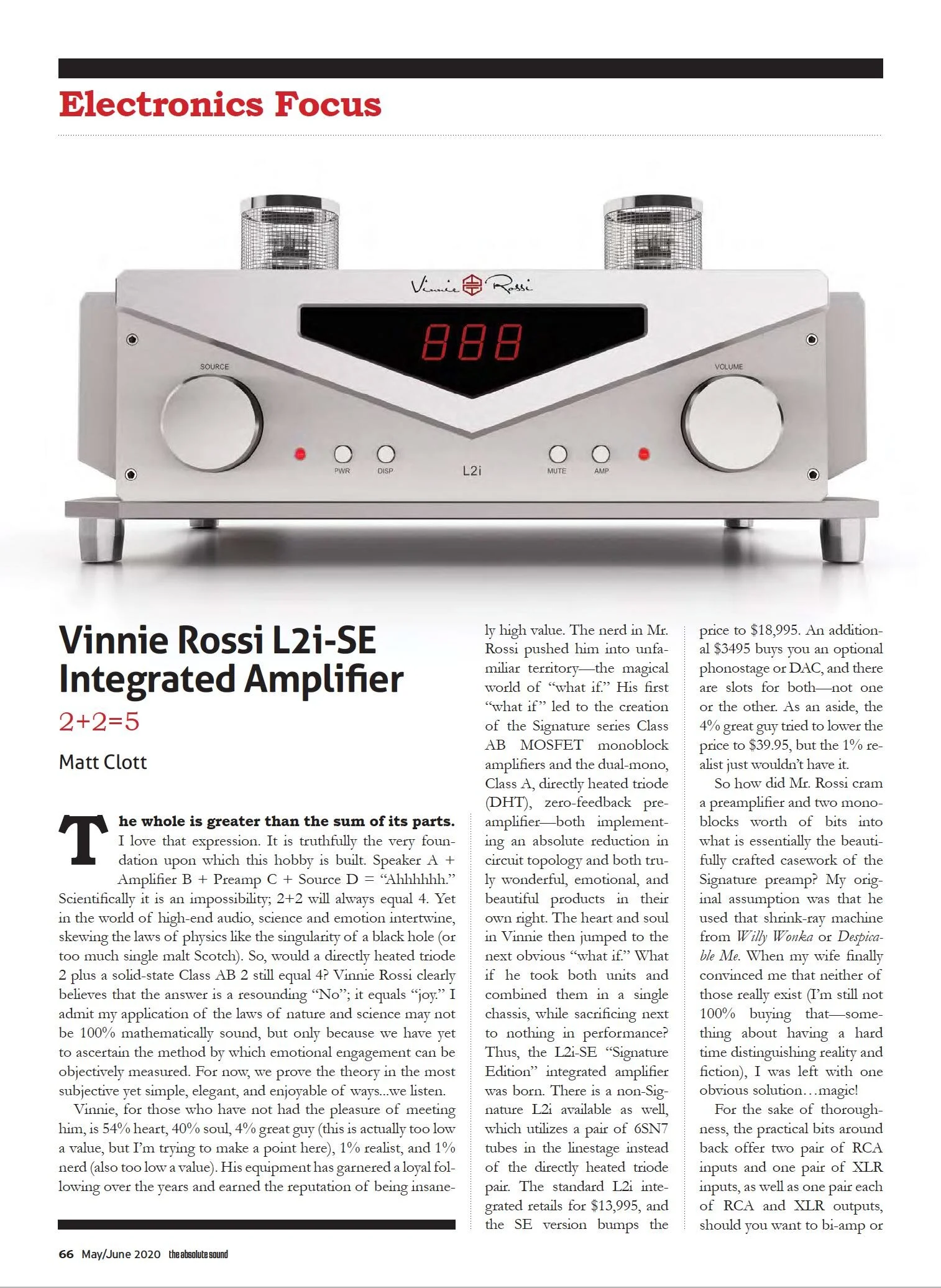
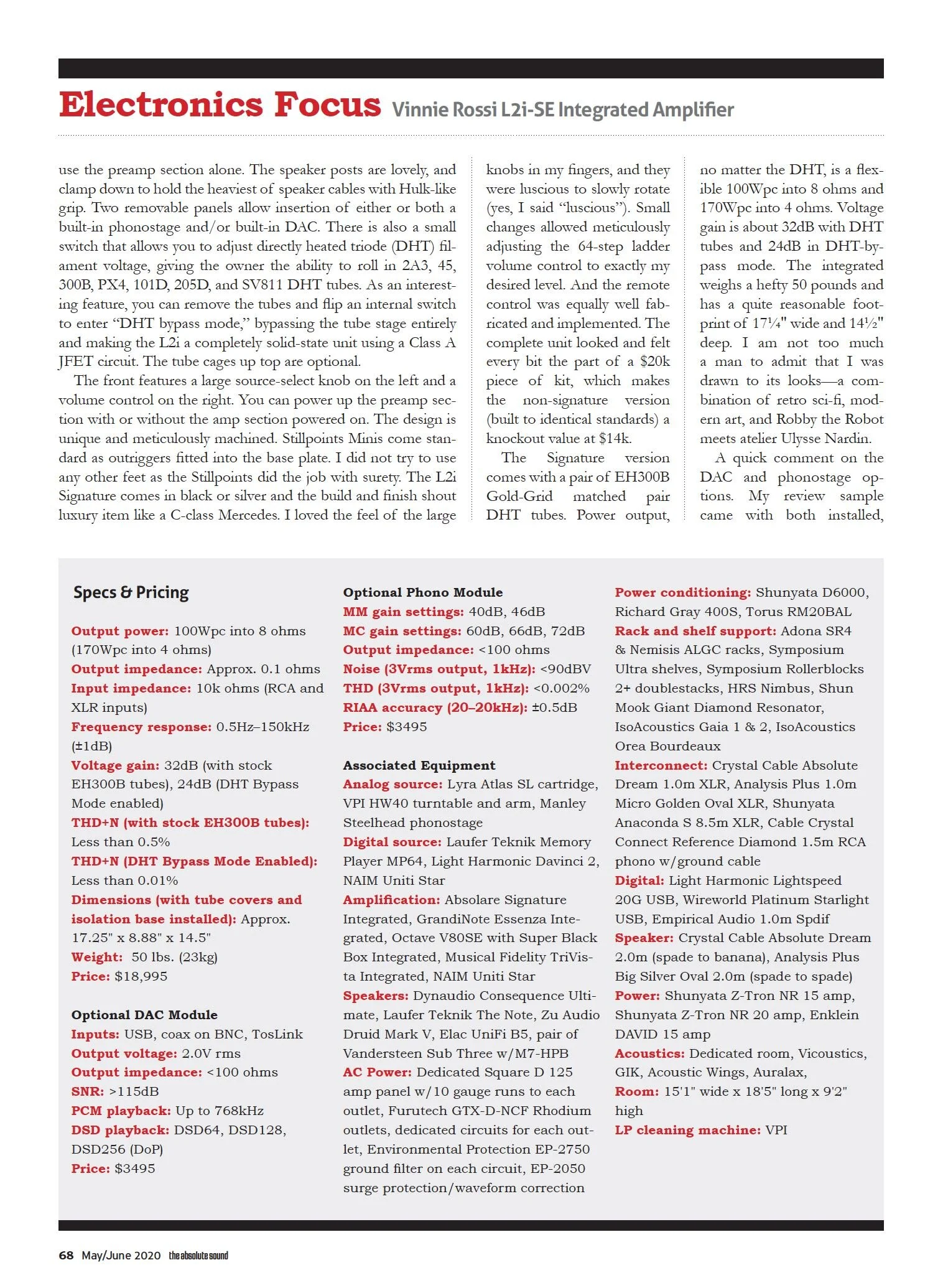
Vinnie Rossi L2i-SE review - Positive Feedback

October 1, 2020
“Meanwhile, I can say this with full confidence: The Vinnie Rossi L2i SE is a world-class, top-o’-the-heap integrated in my book. Lovely to look at; utterly seductive to hear. It will definitely be getting a Brutus Award from me at the end of 2020…no doubt about that at all.

And so, here’s a Ye Olde Editor’s “Very highest recommendation…enthusiastically!” for the L2i SE.

Pay attention. This is a very special product, amigos!”
— David W. Robinson

You can find the full review here

The-Occasional-Podcast-Logo-600by300.jpg

Interview w/Mats Anderson (QLN) on Loudspeaker Design

September 19, 2020
Two-Way Speaker Design: Everything You Ever Wanted To Know - Plus - The Best Of 2020 So Far!

Swisscables

September 11, 2020
Merason_Frerot_package_02.png

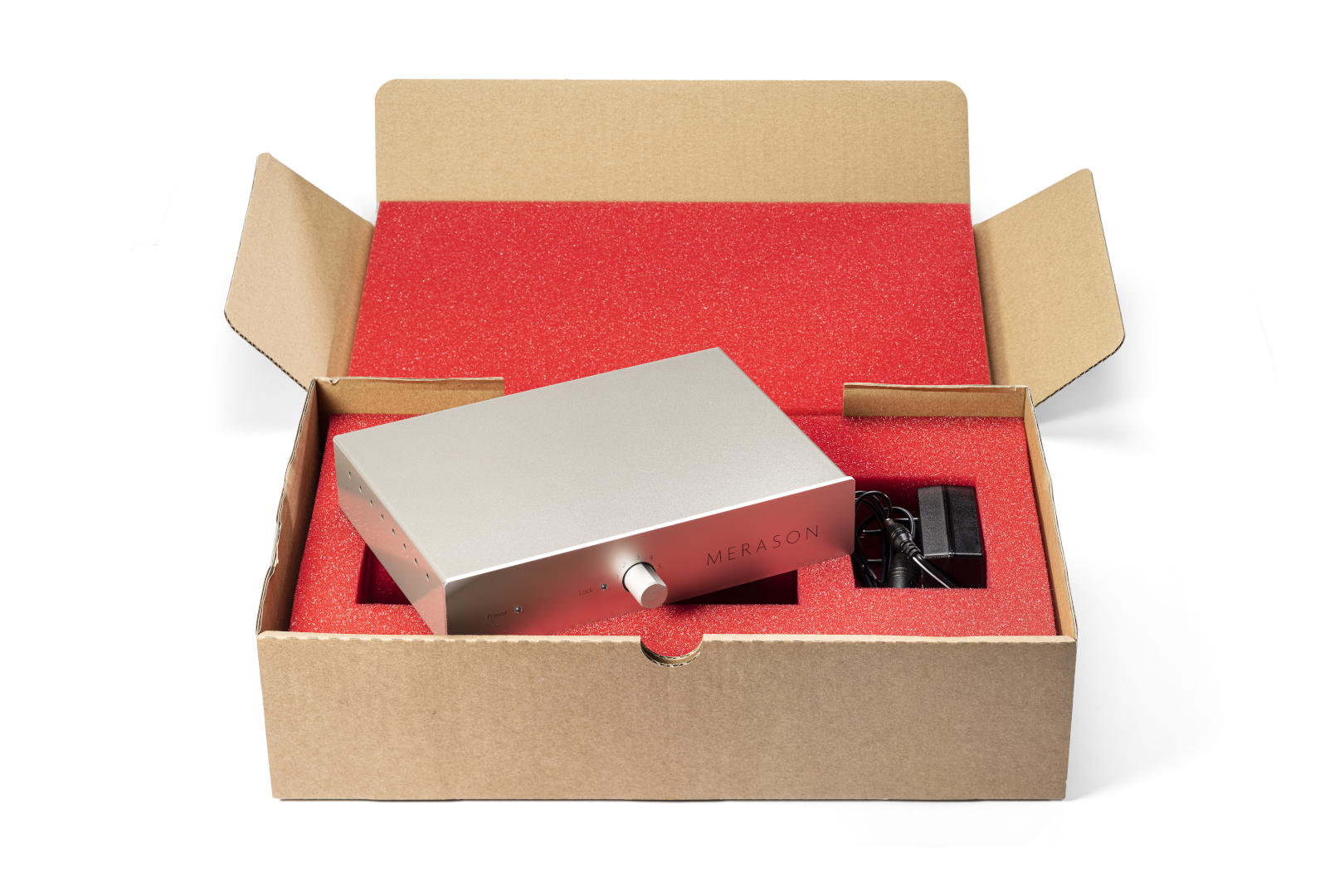
Introducing the new Merason Frerot DAC

August 5, 2020

After the MERSON DAC-1 caused a sensation in the audiophile scene, the Swiss
manufacturer Dafraud is now introducing a little brother to the DAC-1. The suitably called frérot - "little brother" - is based on the large DAC-1 in terms of sound and technology and comes with a much smaller housing. In addition, the frérot is significantly cheaper ($1,250).

In terms of sound, the MERASON frérot is synonymous with analog music playback; technically Dafraud relies on the proven BurrBrown 1794A converters as with the DAC-1 While two of these chips work in mono mode in the DAC-1, a single 1794A is responsible for both channels in the frérot. The signal processing is also carried out symmetrically in the frérot. The analog class A output amplifiers are built discretely. At the inputs, the frérot USB offers two RCA sockets for S / PFDIF signals and two optical Toslink connections. The input is selected using a high-quality Elma coding switch on the front, and the analog output signal is output symmetrically at XLR sockets and unbalanced at RCA sockets. The MERASON frérot processes only PCM data up to 24 bit / 192 kHz.
Merason_Frerot_open.png

The housing of the MERASON frérot measures only 7 x 9 x 2 (LxWxH). This means that the compact device is also suitable for use in a high-quality secondary system - for example in a holiday home, mobile home or boat. The housing is powder-coated, the lower part is made of 3 mm thick aluminum, and the cover is made of galvanized steel.

Merason_Frerot_back.png

Please contact us for more information on this wonderful product and participating dealers.

Qln_Sonora_IMG_1291_750pix.jpg
Qln_Sonora_IMG_1305_550pix.jpg
Qln_Sonora_IMG_1205_550pix.jpg
Qln_Sonora_Thorens_IMG-2665_550pix.jpg

QLN Sonora review - HFA

July 28, 2020
“While, in an absolute sense, the Sonoras do not sound entirely neutral to my ears, they are considerably more transparent and significantly more neutral and they deliver deeper bass than other full-range-driver-based speakers that I heard...but the point of these speakers is not to be technically perfect. The aim is to generate a sound that is easy to get into and that puts the content of the music first. And this is what they absolutely do. ”
— CHRISTIAAN PUNTER HiFi-Advice

You can find the full review here

innuos_zenmini_lpsu.jpg

Innuos Zen Mini + LPSU - The Audio Beat

June 16, 2020
“
Audio satisfaction can transition to audio complacency, which is never a good thing. Sometimes a new piece of gear will arrive to wake you up and give you a good swift kick. I had been content using an inexpensive computer for digital audio, certain in the knowledge that I could download any number of helper programs designed to improve the sound. Some programs bypassed Core Audio, others used special algorithms for improved sound, and still others allowed me to stream audio from Tidal or Qobuz. Each one brought better sound that somehow managed to keep me at arm’s length, to keep me from enjoying my digital music library.

With the addition of the Innuos ZENmini Mk 3 and LPSU, my complacency is gone, and I’m excited about my digital sound again. Their sound is warm and spacious with increased definition. By the time you read this review, I will have retired my old computer system and joined the ranks of happy Innuos owners. The ZENmini Mk 3 and its optional LPSU are a highly engaging pair of music-makers.”
— Mark Blackmore

Find the full review here

tab_logo.jpg
Photo courtesy of Part-time Audiophile

Photo courtesy of Part-time Audiophile

Vinnie Rossi L2i - Part-time Audiophile

May 31, 2020

We are so happy to see the amazing Vinnie Rossi L2i awarded an Editor’s Choice Award by Marc Phillips of Part-time Audiophile!

“I can tell you that this was one of the most rewarding periods of my life as an audiophile”
— Marc Phillips

See the full review here

innuos-phoenix-usb-1-4-758x426.png innuos-phoenix-usb-4.png innuos-phoenix-usb-12-580x390.png innuos-phoenix-usb-13.png innuos-phoenix-usb-11.png

Innuos Phoenix USB Reclocker - Darko

May 30, 2020
“The Phoenix isn’t an everyman hi-fi product. It’s more of a righteous demonstration of what’s possible from outboard USB correction. If you’re already committed to a network streamer and don’t wish to make the jump to one of Innuos’ ZEN devices, the Phoenix advances sound quality to put our digital front ends much closer to where we wish them to be than where they once were. Bravo.”
— John Darko

See full review here

QLN_review.png

QLN Prestige 3 - Part-time Audiophile (Editor's Choice Award)

May 18, 2020

We are very proud to see the QLN Prestige 3 awarded an Editors’ Choice Award by Part-time Audiophile!

Many thanks to Dave McNair for his brilliant assessment of this special loudspeaker- read full review here

“As an addendum, when the time came to return these I couldn’t give em up and decided to purchase. Many months later, I’m still in love with the Prestige Threes.”
— Dave McNair
Photo courtesy of HFA

Photo courtesy of HFA

GigaWatt PC-4 EVO+ Review - HFA

May 18, 2020

Read full review here

“The PC-4 EVO+ is quite unlike any other conditioner that I have used. For a change, it does actually deliver on the promise of not reducing the expressiveness or dynamics, rather, it increases the liveliness and dynamic impact while allowing the music to flow more freely and organically. Put simply, the PC-4 EVO+ acts to remove restraints without any penalties.

Do note that the unit does not deliver on its promise right away. It needs some time to settle but once it has, you will not want to part with it again!”
— Cristiaan Punter
Innuos-DSC07001.jpg
Innuos-DSC06998.jpg
Innuos-DSC07003.jpg
Innuos-DSC06999.jpg

Innuos Statement Music Server - Part-Time Audiophile

April 29, 2020
“The Innuos Statement is unapologetically great. Unapologetic to my wallet, that is. And while I cannot afford it at the moment, I will probably attempt to do so in some future iteration of my review system. The Statement is an unqualified good thing — it made my system sound better than it ever has, and all things being equal (and me being unaccountably wealthy), there would be an Innuos Statement in my review system full-time, all-the-time. It’s a brilliant tool and one that gets me closer to the music, closer to “the absolute sound” (if you believe in such things) than any computer-based transport ever has. The Innuos Statement is my current reference for State-of-the-Art and handily earns our Editors Choice Award.”
— Scot Hull

Full review here

PTA_Editors_Choice_SM.png
TAS_VINNIE_ROSSI_1.jpg

Vinnie Rossi L2i SE - The Absolute Sound

April 29, 2020
TAS_VINNIE_ROSSI_2.jpg
TAS_VINNIE_ROSSI_3.jpg
P5 without grill.png

Introducing the new QLN Prestige 5

April 20, 2020

Introduction

We are pleased to introduce the Qln Prestige Five - an unprecedented 2.5-way, floor standing loudspeaker that marks the advancement and continuation our highly successful Prestige series.

Decades of design experience has proven time and time again that what separates a good loudspeaker from an exceptional one is the midrange. For the Prestige Five, we spent years developing a new, superb sounding 7-inch Kevlar® mid-woofer that conveys instruments and vocals with unprecedented clarity, resolution and naturalness.  From there, we listened for 1000s of hours to decide on the exact woofer and tweeter to carefully balance the music spectrum and housed them in their own non-resonant and optimally-tuned enclosures.

The Prestige Five exemplifies a timeless combination of form, function and performance. It is the fruit of Qln’s four decades of speaker research, development, design and construction. A meticulous selection of matched components ensures every part of the speaker synergizes perfectly together. This was an extensive process involving multiple systems and genres of music over a long period of time to verify consistency. When you experience the Prestige Five, we are highly confident that our design approach and efforts will make perfect sense to your ears.

Driver Technology

Our 7” Kevlar® mid-woofer was custom developed by Qln together with industry renowned Danish driver manufacturer Scan Speak and offers the latest in 21st century advanced driver technology. It features an under-hung magnet system were the voice coil is in the magnet gap all the time, resulting in a totally linear motor system. Together with the extremely open basket, this allows for air flow without any compression or turbulence which offers more micro details and lowers acoustic noise typically found in standard baskets. Built-in copper rings in the magnet system offers symmetric drive and lower voice coil inductance, which results in higher dynamics in the midrange while also suppressing intermodulation distortion.

The long stroke, 7” hard cone woofer with the same unique magnet system as the mid-woofer works harmoniously with the inner volume of both drivers to produce well-controlled, powerful bass down to 26Hz. 

Likewise, the unique Illuminator tweeter offers superb vocal rendition and excellent imaging and extension at all listening positions. Its large roll surround and textile dome diaphragm provides a flat frequency response above 30 KHz with outstanding off-axis dispersion. The unique AirCirc magnet system and its rear chamber eliminates any reflections and resonances.

Crossover

The constant impedance crossover in the Prestige Five is hardwired with non-inductive capacitors bypassed with copper film capacitors for the tweeter section. For the mid-woofer, we strictly use flat foil inductors. All components are fastened with soft damping glue and inductors are baked to avoid any internal component and filter resonances. Precision metal film resistors with high power handling capabilities, low noise, and temperature stable performance are used, resulting in perfect timing within the crossover and low noise throughout the entire frequency range

Cabinet Design

Our slanted baffle provides perfect time alignment between woofer and tweeter and the truncated pyramid cabinet top with its minimized baffle area suppresses standing waves inside the cabinet as well as baffle effects which in turn improves 3D imaging.  The cabinet construction is based around Qln’s unique Qboard® technology, where structural resonances are eliminated. The bass reflex port with its trumpet shape at both ends eliminates air turbulence.  The Cabinet is de-coupled from the floor via solid feet with cones and pucks constructed out of hard, high damping materials. 

Cables and Speaker Connectors 

Internal cabling is our own and specially designed and produced in Sweden. It consists of 12 solid core pure copper wires wrapped around a polypropylene core with polypropylene isolation, bounded with a high damping camel body. All components are carefully hand selected and individually tested for any deviances. Speaker terminals are WBT Nextgen® connectors with minimal connection materials made of silver/copper for best connection to the speaker resulting in lower distortion.

Non-Resonant Behavior

Every part of the speaker has one thing in common - non-resonant behavior. From connectors, cables, crossover components, speaker drivers, the cabinet, and even the damping feet are all characterized by non-resonant behavior. This suppresses disruptive noise, vastly improving dynamics and preserving silence between tones as a result of the low noise floor. The Prestige Five presents a more dynamic and relaxing sound with remarkable clarity. Nothing is added - just pure music!

Specifications

Impedance: 4 ohms

Tweeter: 25mm wide surround, Air-Circ magnet, soft dome

Mid-Woofer: 184mm Kevlar® cone, under-hung magnet system

Woofer: 184 hard cone, under-hung magnet system 

Amplifier requirements: 50-250 Watt RMS

Sensitivity: 89 dB SPL 1-Watt 1m

Low frequency performance: -3dB 26Hz

Cabinet: Qboard® Technology

Terminal: Single wire, WBT Nextgen®

Dimensions (HxWxD): 1000x210x600mm (cabinet), 1054x315x650mm (with feet installed)

Weight: 41 kg each

Finish: Walnut Piano, Walnut Matt, White satin

MSRP - $15,995

Available in September! Please email or call for more information.

SH2.jpg
SH1.jpg
SH3.jpg
SH4.jpg

QLN Prestige 3 - Steve Huff

April 16, 2020
“This may be a bit of a spoiler but 2 days after I took them home I knew I wanted them as I never heard such a satisfying, complete, magical, sweet sounding speaker in my life. The build quality is also top notch as is the design and passion put into creating them.

I have had speakers in my listening room that range from $500 to $45k and these under $10k retail speakers sound better than ALL OF THEM, and they offer a sound I never even though was possible from a speaker of this price or size. Yes, $10,000 is A LOT OF money for a pair of speakers but believe me, there are speakers that cost over $100k and sound more like a $10k speaker.

Wouldn’t it be amazing if we had a small floor standing tower speaker that gave you the performance of the very best stand mount speakers but with bass and foundation about as good as you ever heard? Well such a thing does exist and it is called the Qln Prestige 3! ”
— Steve Huff

Full review here

202004_ed_comment_SGR-5.jpg
202004_ed_comment_SGR-1.jpg
202004_ed_comment_SGR-6.jpg
202004_ed_comment_SGR-2.jpg

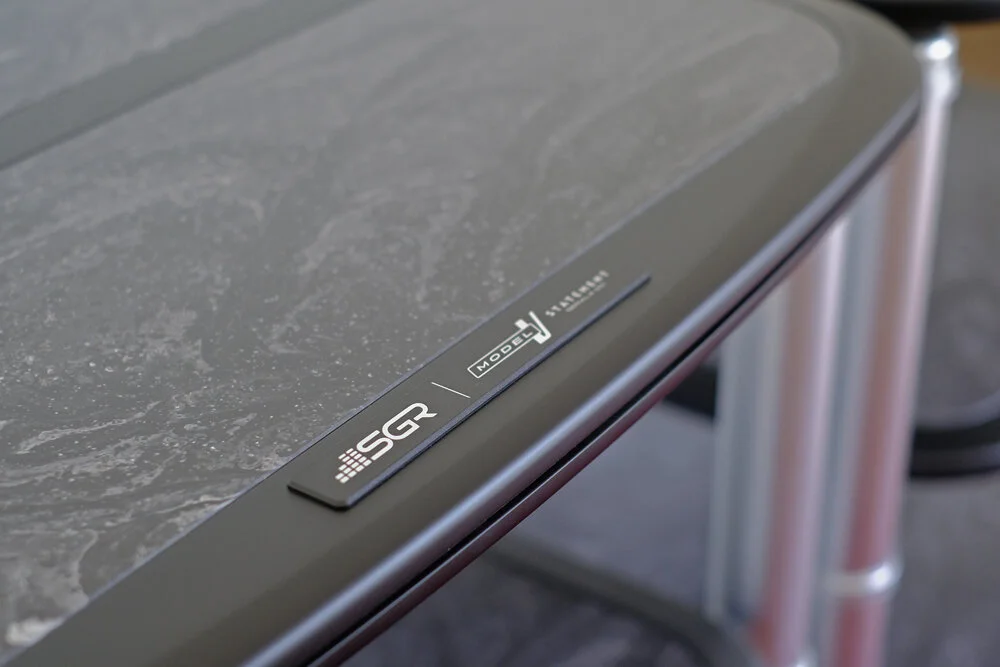
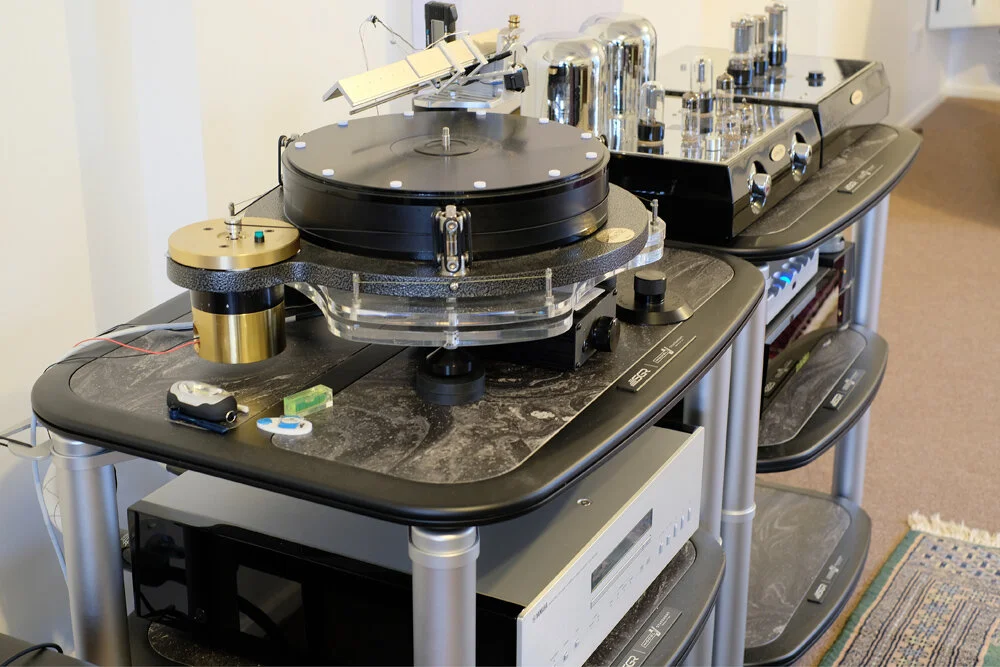
SGR Audio Model V Symphony Racks

April 1, 2020
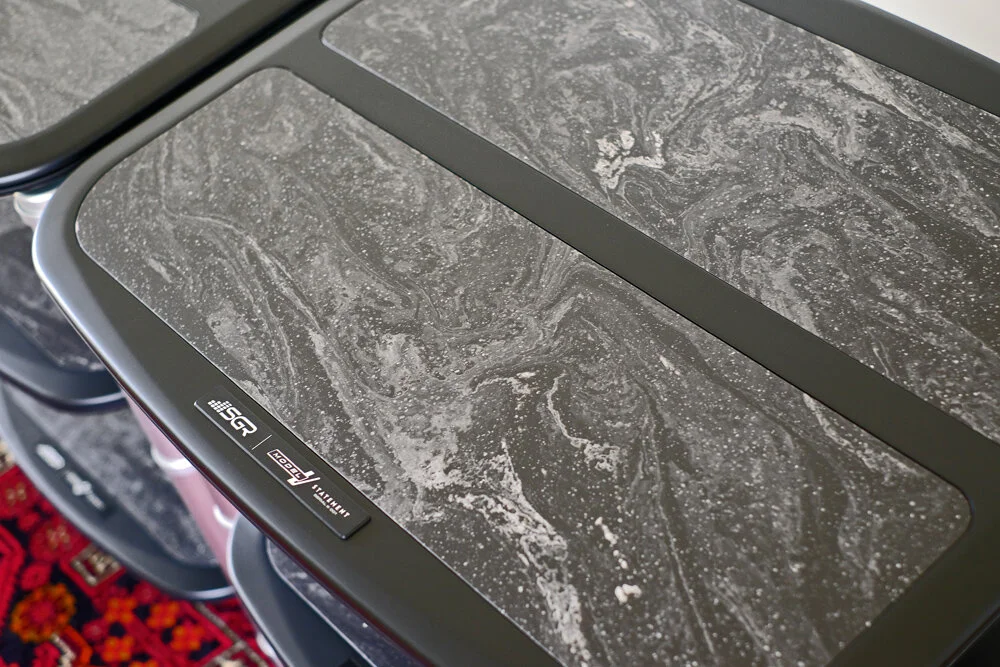
“Testing has shown us that Corian inserts are performing far better, aside from being more scratch resistant, durable and having a more contemporary look. We’d like to upgrade your units.” Booyah! Off went the shelves and after some courier dramas – that’s a whole ‘nudder story right there – and a couple of weeks at factory SGR, all and sundry returned snuggly embedded in the company’s usual excellent packaging.

The new inserts, or ‘Energy Isolation Pads’ as SGR Audio calls them, are finished in intergalactic supernova finishes in standard white or black (other colours available on request). Yes, peer into these precision cut, superbly finished inserts and you’ll conjure up George Clooney’s stranded free-fall through the cosmos. My units’ gorgeous deep black is randomly splashed with swirls of star-gas-trail white. Pictures do illustrate but don’t do justice.

In fact, the in-house metal machining is of the highest standards, with the bespoke spiking system being substantial and beautifully finished. The ‘spike’ (and also the alternative footer) is a multi-segment stainless steel and aluminium assembly specifically designed to solidly couple to solid surfaces with the intention of maximising performance (or more accurately, allowing the delivery of your electronics’ full performance potential). By the way, the same excellence in finish carries across to the constrained layer-damped sandwich platforms in the framework around – and bonded – to the Corian inserts while the aluminium posts’ machined surfaces are as smooth as a polished pearl.”
— Edgar Kramer

See the full review here

Photo courtesy of Brian Hunter

Photo courtesy of Brian Hunter

QLN Signature 3 - Audiohead

March 20, 2020
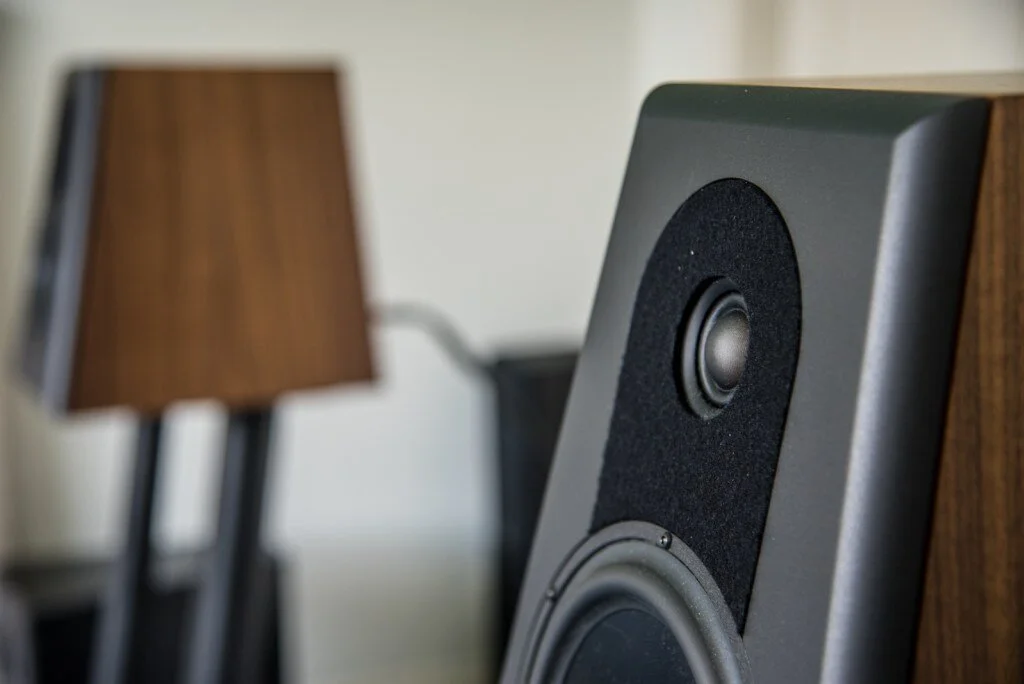
“The most remarkable thing about the QLN Signature 3 is that it simply doesn’t feel like a hi-fi speaker, it just feels like a device for reproducing music. The midrange is so clean there’s almost nothing to say about it, but not in a dry or clinical way, nor in a rich, overly warm way. The Signature 3 is a rare speaker that doesn’t seem to impart a ton of personality onto the music, and also seems to take an interesting perspective on the ‘they’re here’ and ‘I am there’ presentation choice. Rather than being inherently forward or relaxed the QLN does seem to have an uncanny presence in the room yet generally defers to the baked-in ambient cues in the recordings. The balance ends up being that I sometimes find spookily realistic sounding audio illusions jumping out even in distance mic-ed classical recordings, or hear low level ambient spatial cues in heavily produced modern music.

If it seems like I’m having a hard time saying enough good things about the QLN Signature 3, it’s because I am. This is a rare speaker that really rises above the pack as one that impresses on audiophile qualities, yet proved not only easy to live, but hard to live without.”
— Brian Hunter

Read the full review here

Photo courtesy of Brian Hunter

Photo courtesy of Brian Hunter

← Newer Posts Older Posts →

Latest & Greatest

Featured
g7-scaled.webp
September 8, 2026
Gigawatt PowerMaster Review - Part Time Audiophile
September 8, 2026
Read more →
September 8, 2026
b_850_0_16777215_10_images_content_tests_26-07-07_qln_IMG_9180.jpg
August 7, 2026
QLN Interview - HiFi Statement
August 7, 2026
Read more →
August 7, 2026
Master 7.jpg
May 28, 2026
New QLN Master 7
May 28, 2026
Read more →
May 28, 2026
May 20, 2026
AXPONA 2026 Stereophile Interview
May 20, 2026
Read more →
May 20, 2026
DAC2-livingroom3.webp
April 6, 2026
New Merason DAC2!
April 6, 2026
Read more →
April 6, 2026
07.jpg
March 5, 2026
NORSE X1 & X5 review!
March 5, 2026
Read more →
March 5, 2026
January 7, 2026
XACT S1 EVO Review
January 7, 2026
Read more →
January 7, 2026
ST_1125_WellPleased_IMG_3639 copy.jpg
December 10, 2025
Capital Audio Fest - 2025 Recap
December 10, 2025
Read more →
December 10, 2025
P3 G2 flyer pic.jpg
November 11, 2025
New QLN Prestige Three Gen 2!
November 11, 2025
Read more →
November 11, 2025
XACT_S1EVO_blk_frontb-2048x1151.png
August 8, 2025
XACT Music Servers/Streamers & Network Switch
August 8, 2025
Read more →
August 8, 2025

Powered by Squarespace